
Commercial Modified Bitumen Roofing in Gainesville, FL
Inspect and repair commercial modified bitumen roofs in Gainesville. Review plies, cap sheet, flashings and drainage before choosing restoration or replacement.
Roof Systems: Commercial Modified Bitumen Roofing
A Gainesville commercial roof with modified bitumen needs attention to its layers, seams and transitions, not just the visible cap sheet. These roofs use bitumen modified with polymers and reinforced plies, with system details that may be installed by torch, hot asphalt, cold adhesive or self-adhered methods. We identify the assembly and inspect its current condition before planning repair or replacement. The installation method matters for safety, building access and the work sequence.
Layers: Identify the Modified Bitumen Assembly
Modified bitumen systems combine asphaltic material with reinforcing sheets and a finished cap surface. SBS modifiers add elastomeric characteristics; APP modifiers have different heat and flow behavior. Products and installation methods vary, so we review available labels, roof records and project documents before describing the system. A cap sheet alone may not reveal the number or condition of underlying plies.
We check how the roof is attached, what substrate supports it and where it changes at walls, drains, curbs and edges. A blister, split or open lap can involve the surface layer, a seam or moisture beneath the roof. We record what can be seen and note where a test opening is needed. A layered system should not be patched as though every separation has the same cause.
Properties around Downtown Gainesville include a mix of historic storefronts, public spaces and retail; the actual roof details vary by building. The Downtown Gainesville district context helps plan access around occupants and nearby streets, but inspection establishes the roofing assembly and its condition.
Inspect: Check Laps, Cap Sheet and Flashings
We inspect laps for separation, exposed reinforcement, cracking, fishmouths and repairs that no longer bond. At penetrations and curbs, we check how the base flashing turns up and terminates against the adjacent material. Drain bowls, scuppers, wall transitions and metal edges can carry water below the field surface if their details have opened. Photos and roof-section labels help the owner compare findings over time.
Gainesville recorded 104 thunderstorm days and 82 heavy-rain days in 2022. We inspect exposed laps, flashings, and drains after a storm, then document current damage separately from earlier wear when the evidence allows.
Modified bitumen may have a granulated cap sheet, reflective surfacing or another approved finish. Loose surfacing, exposed asphalt or ponding can change how a repair should be prepared. A roof inspection can review the whole section and identify any moisture questions; selected test openings can confirm the layers at their locations.
Repair: Tie New Material into Sound Layers
A small puncture or localized open lap may be repairable when the surrounding plies remain sound. We remove loose material, prepare the surface and apply a compatible patch or flashing detail with the specified overlap. If the repair exposes wet insulation, damaged cover board or deck deterioration, we document the extent and identify work needed before closing the section.
At a drain or wall, the repair should connect to the existing assembly without leaving a raised edge that catches runoff. We examine the route water follows toward outlets and check whether another flashing or metal detail must be addressed. Where a leak's path is not clear, leak investigation can connect the interior report with roof observations.
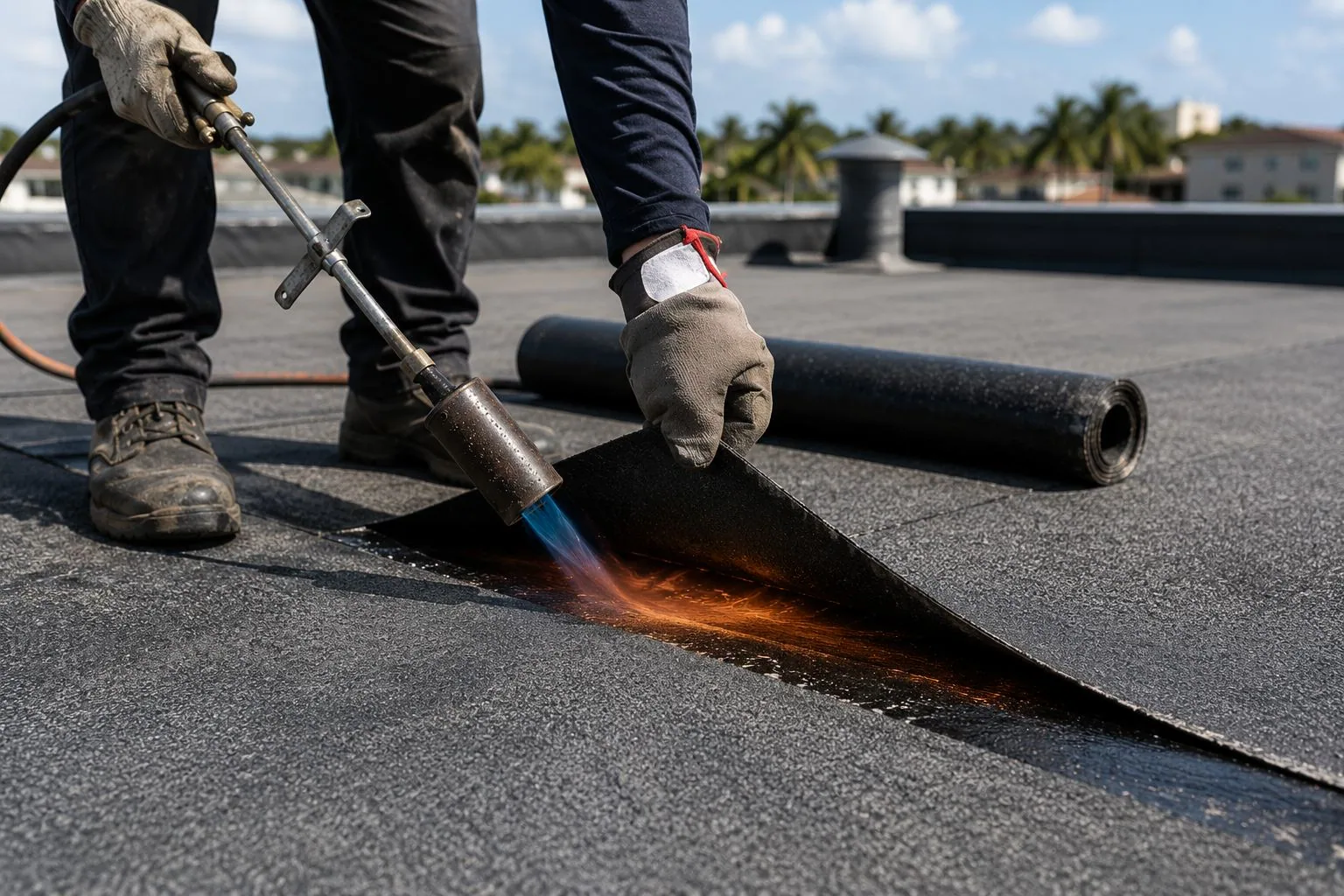
Cost and timing vary with ply count, attachment, roof access, surfacing, repair area and the method required for the new material. The work may need controlled hot work, fire watch, ventilation or restrictions near building air intakes when the specified method involves heat or open flame. We confirm applicable site rules before mobilization instead of assuming every modified bitumen repair uses a torch.
Install: Control the Method and Work Area
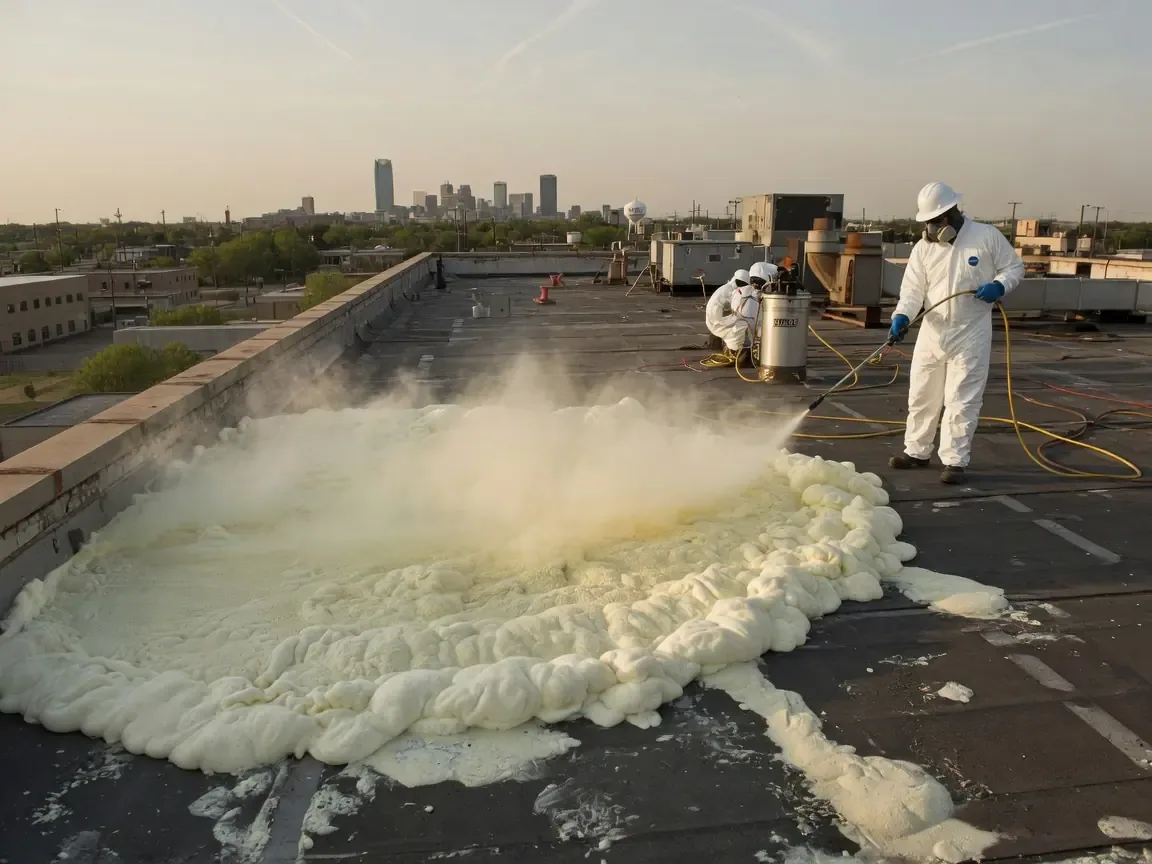
Installation method depends on the product, substrate and project specification. The crew prepares each area, installs the specified base and cap materials, and builds flashings at transitions. If hot asphalt or torch application is specified, the project needs appropriate fire prevention and work controls. Self-adhered or cold-applied materials have their own surface and temperature requirements. We follow the approved system detail and verify completed seams before the next layer or detail covers them.
Gainesville's climate includes high daytime temperatures and frequent storms, which can change material handling and the available installation window. We check actual roof conditions and daily weather. Each active section has a defined stop point and a temporary closure if work must pause. The plan also accounts for drains, equipment, pedestrian routes and interior operations beneath the roof.
At the UF Health medical district or a downtown occupied property, access may need coordination with facility staff and service providers. The roofing method and work limits are confirmed with the specific building contact. We keep hot-work areas clear of unapproved storage and protect roof openings before leaving.
Options: Compare Repair, Recover and Replacement
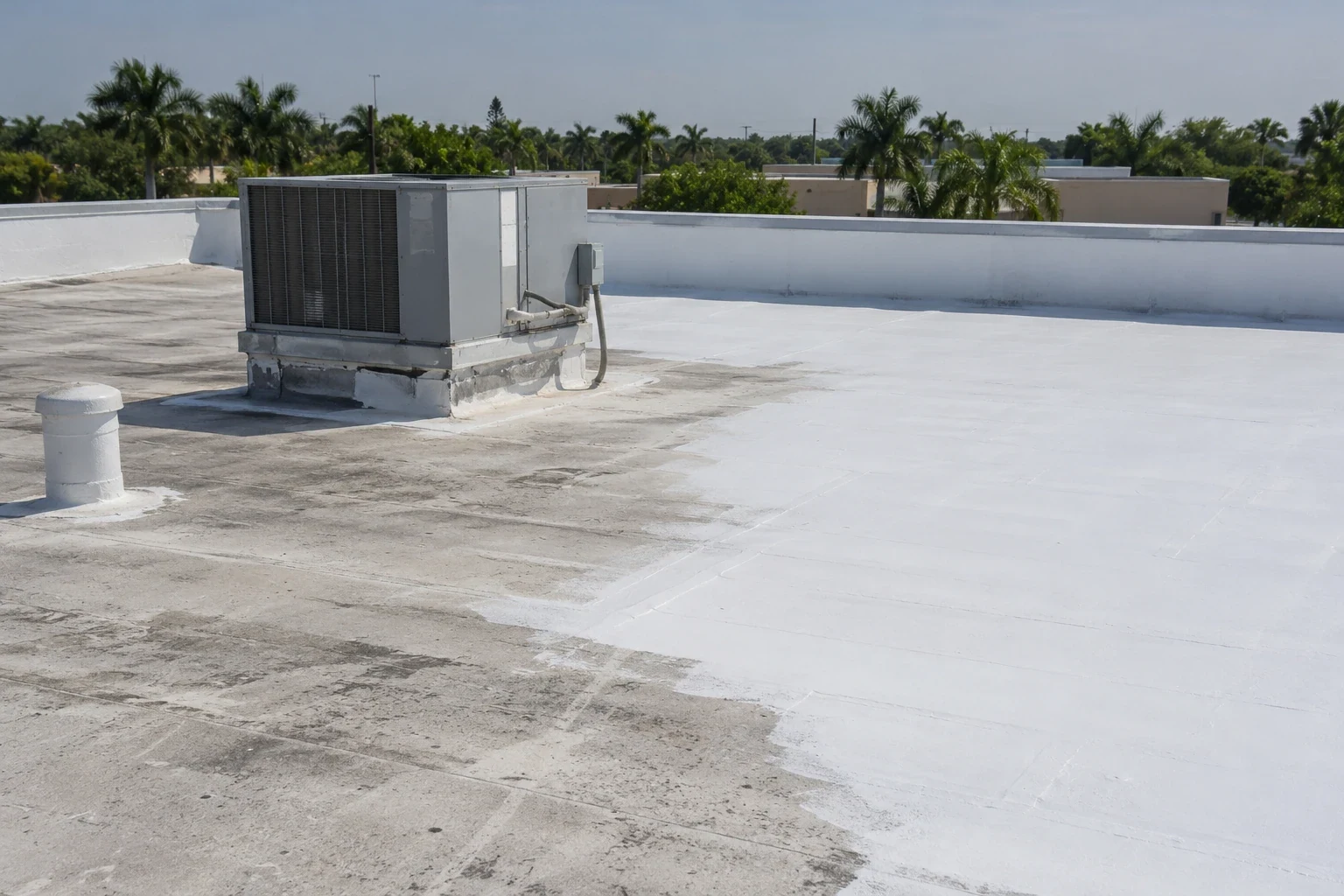
Repair may extend service when deterioration is limited and surrounding materials can accept a compatible patch. A recover may be considered if existing layers are dry, attached and allowed by project requirements. If moisture, failed seams or widespread deterioration extends across the roof, replacement can address the assembly from the deck upward. We base the comparison on the inspected layers, not just a roof's age. Prior resurfacing or an earlier recover also changes tear-off, attachment and edge height. We review the records and visible build-up, then use a test opening when the layers cannot be confirmed.
A recover review checks whether an added system is appropriate. A replacement plan can define tear-off, insulation, deck review and new roof details. Owners comparing membrane alternatives may also review EPDM roofing or built-up roofing alongside the project's performance and installation criteria.
For maintenance, we track laps, flashing, drains and prior patches. A scheduled inspection can identify a seam that needs attention before water reaches occupied space. For Gainesville planning, provide the building address, roof records, reported leaks, site contact and access window. We will inspect the system and prepare a scope that identifies what can be repaired and what needs further testing.
Modified bitumen uses reinforced asphalt sheets, commonly installed with heat-welded, self-adhered or cold-applied methods selected for the specified assembly. The method affects sequencing, substrate preparation and the controls needed around rooftop equipment and occupied areas. We confirm the existing sheet and attachment where records or exposed edges allow, then match the repair to the actual construction. At laps, a repair must extend far enough to reach sound material and restore a continuous watertight transition. At drains and curbs, the detail may involve several layers and cannot be solved by applying surface sealant over a loose edge. A replacement scope should state the removal limits, insulation condition, cover board and flashing approach so the owner can compare bids on equivalent work. If the roof remains in service during construction, daily tie-ins and protected openings should be identified before the first section is opened.
Frequently Asked Questions
Are all modified bitumen roofs torch-applied?
No. Installation may use torch, hot asphalt, cold adhesive or self-adhered products. We identify the existing assembly and follow the selected system's approved method and site controls.
Can you patch a blister in the cap sheet?
We inspect the blister and surrounding layers first. The repair depends on whether the material is bonded, whether moisture is present and what the underlying plies show.
What does SBS or APP mean in a roofing specification?
They identify different polymer modifiers used in bitumen products. We match the specified product and installation details rather than substitute one formulation for another.
Can a modified bitumen roof receive a coating?
That depends on the surface, moisture, attachment and coating compatibility. We inspect the assembly and preparation needs before discussing a restoration system.
Related Roofing Work
Review a Gainesville Modified Bitumen Roof
Share the property address, roof plans or records, building use, leak areas, site contact and work window. We will identify the assembly, inspect its layers and explain repair or replacement options.