Commercial Roofing for Manufacturers in Gainesville, FL
Plan Gainesville manufacturing roof repairs around production lines, rooftop equipment, material handling, drainage and verified assembly conditions.
Industries We Serve: Commercial Roofing for Manufacturers
Production managers need to know whether water above a line has affected equipment, product, or an active process before releasing a repair area. We locate the reported issue, identify equipment and processes below it, and verify the roof section before proposing work. Gainesville's prolonged heat, frequent thunderstorms and heavy rain put runoff paths and exposed details on the inspection list. The plant manager's production calendar and safety rules guide access; the roof condition determines the repair.
Connect Roof Sections to Production Areas
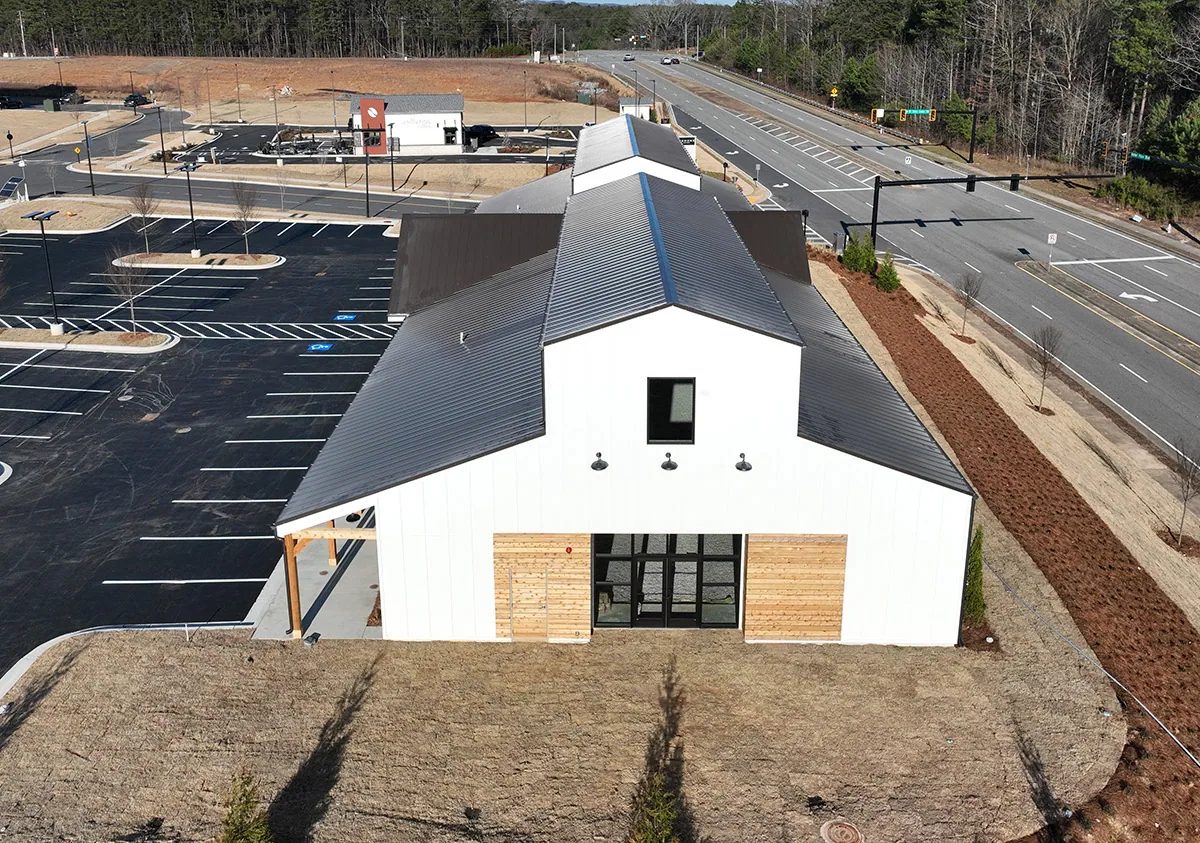
Manufacturing facilities may contain process equipment, offices, shipping bays, laboratories, and storage beneath connected roof areas. We ask the site contact to mark the affected line or room, identify sensitive equipment, and note shutdown or sanitation limits. On the roof, we inspect the system, seams, curbs, penetrations, drains, and perimeter details above the report. The written record ties observations to a roof section and the operating area below it, while marking any cause that still needs testing.
Regional production activity spans Airport Industrial Park and the Progress District. East Gainesville's Gainesville Technology Entrepreneurship Center supports technology and light-manufacturing activity, and San Felasco Tech City in Alachua includes a Siemens office and warehouse. We confirm roof type, access and operating restrictions at the specific facility before setting work. A GTEC-area roof visit or a site along the airport corridor begins with its own address, records, and contact.
For a multi-building operator, a managed-property work plan can keep tenant and site contacts organized, while a logistics facility review may emphasize receiving and dispatch. A production site needs its own line schedule, safety requirements, equipment constraints, and roof access map.
Trace the Failure Before Specifying Materials
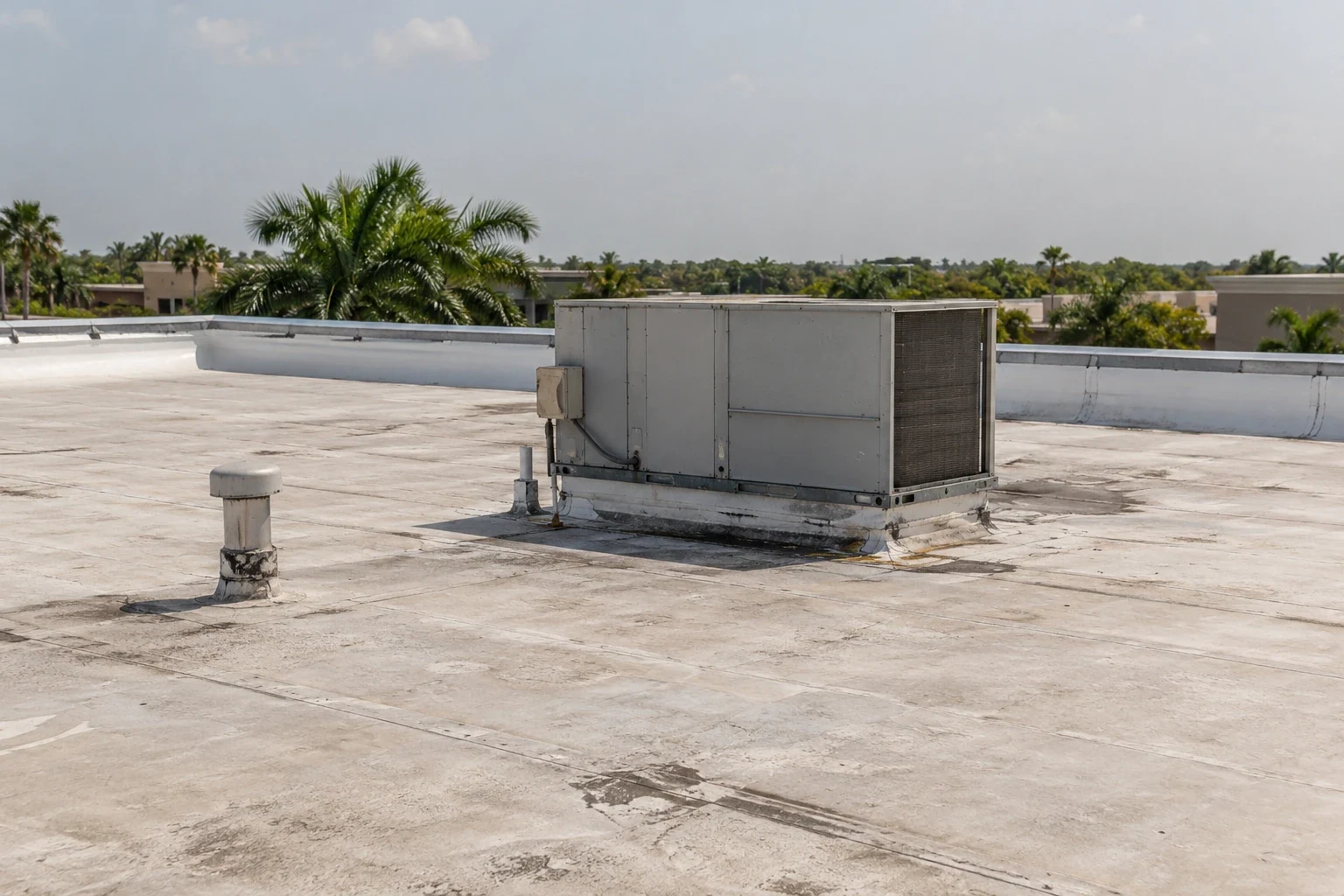
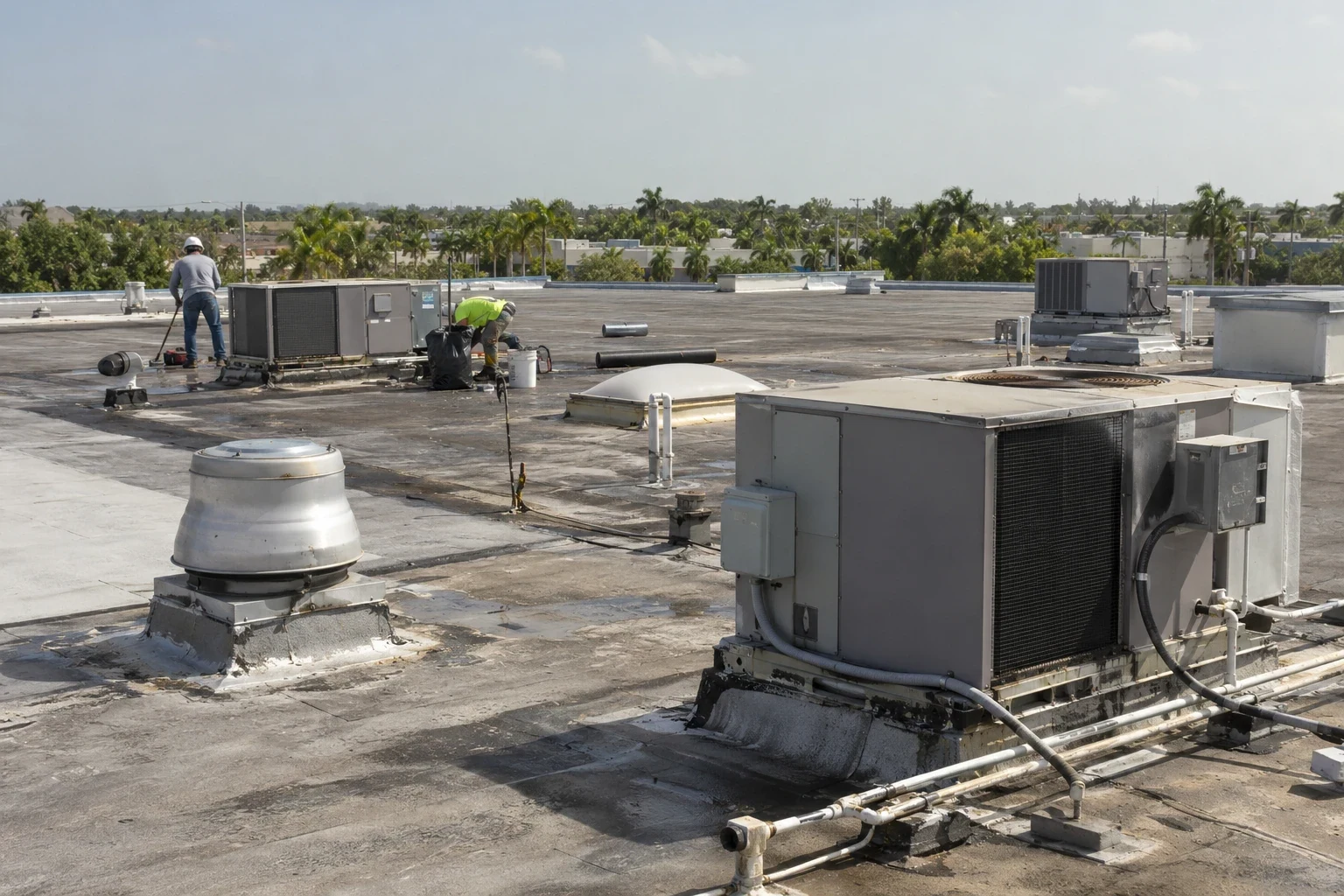
We confirm whether the roof is membrane, metal, built-up, modified bitumen, or another system before selecting repair materials. The inspection may include equipment curbs, exhaust penetrations, fasteners, edge metal, drains, and prior patches. If a leak report aligns with a recent equipment installation, we inspect the transition and nearby field membrane without assuming the installer caused the problem. Photos show the affected detail and any adjacent conditions that may change the scope.
Prolonged Gainesville heat puts exposure on membranes and sealants. During inspection we look for open seams and brittle details, then establish whether the visible wear connects to an actual failure. We check open seams, loose attachment, coating wear, and evidence of moisture under the membrane. A marked roof condition inspection can be coordinated with the plant contact, and an authorized sample cut exposes the insulation and deck for evaluation.
Gainesville's 2025 rainfall total was 46.80 inches; one 24-hour period brought 3.06 inches. Heavy runoff tests drains, scuppers, and overflow paths, while wind-driven rain can find weaknesses at curbs and wall transitions. A drainage assessment checks outlets and low areas; a moisture test determines whether wet material extends beyond the visible opening. We list each finding separately so an outlet issue does not stand in for a full roof diagnosis.
Protect Equipment and Keep the Shift Plan Clear
The operations contact identifies line changeovers, equipment lockout needs, material routes, forklift lanes, and work zones that must remain clear. We confirm roof access and lifting points with the safety representative, then map the sequence to avoid disrupting production beyond the agreed area. If the roof can be divided into sections, each task receives a start and stopping boundary, interior protection plan, and handoff to the site's contact.
During active water entry, emergency response is available at any hour, including weekends and holidays. We coordinate with plant staff on immediate protection below and assess whether roof access is safe. Temporary stabilization is recorded separately from permanent repair, which follows after the system and wet-material boundary are verified. If production needs to continue, the plan identifies what area is active and what equipment should remain outside the work zone.
In 2022, Gainesville had thunderstorms on 104 days and heavy rain on 82 days. Weather can interrupt membrane or coating work, so we confirm forecast conditions and secure exposed areas before leaving. A storm follow-up documents roof impacts and any interior report after the event. The site contact can then align the findings with production and maintenance records.
Compare Repair and Capital Options
A localized repair may address a seam, penetration, or fastener when surrounding roof materials remain sound. If test openings show wet insulation, deteriorated deck, or failure across multiple sections, a broader repair or replacement may be appropriate. We define the confirmed boundary, document the test, and state what needs further review. We compare repair and renewal alternatives using the same production constraints and measured roof areas, not a general age estimate.
A recover or coating may be considered when the existing assembly, surface, drainage, and project requirements support it. Replacement may include tear-off, insulation, edge details, equipment supports, and protection for production below. A restoration scope identifies prep work and repairs; a replacement scope describes the new assembly. Cost and schedule drivers include test results, deck repairs, penetrations, roof access, material lead time, weather, and plant shutdown windows.
For Gainesville work, permit submissions dated December 31, 2023 or later fall under Florida Building Code, 8th Edition (2023). Project staff confirm the provisions that apply to the facility's proposed assembly and work. We document what the roof inspection establishes so engineering and operations staff can evaluate proposed scope against production needs.
Record the Work for Maintenance and Operations
Closeout identifies the building and roof section, system, repair materials, test openings, drains or edges addressed, and remaining actions. Photos tie the work to the production or support area below, subject to the site's documentation rules. We note if access was restricted, what protection was used, and whether a follow-up test or maintenance visit remains. That record helps a plant engineer connect future water reports with prior roof work.
For a Gainesville manufacturing roof assessment, provide the address, production use, roof plans, active leaks, equipment and process restrictions, shutdown windows, safety contact, and preferred access. We will verify the assembly and prepare a measured scope that accounts for the operation below.
A production roof plan starts with the line below it. The facility team can mark shift changes, exhaust or make-up-air equipment, hazardous process areas, material staging lanes, and any production cell that cannot tolerate water or dust. We inspect flashing and seams around process penetrations, trace drainage without disrupting discharge controls, and identify test areas before opening the assembly. Progress Corporate Park and the Gainesville Technology Entrepreneurship Center represent different scales of work, so a site plan must describe the actual building, its access, and its operating constraints rather than assume a standard plant layout.
Frequently Asked Questions
Can roof repairs fit between production shifts?
Often, when the roof layout, weather, and safety requirements support a defined access window. Share changeovers, shutdowns, equipment constraints, and line areas that cannot be interrupted before we sequence the work.
How do you protect a production line below a leak?
The plant contact identifies equipment and process risks, then we plan interior protection and roof access around those areas. We document temporary stabilization separately from the permanent repair.
Will a new rooftop unit require a broader roof review?
We inspect the curb, flashing, nearby seams, and any related work records. The scope addresses the observed condition and leaves the cause open when further testing is necessary.
What does a test opening tell a plant engineer?
It shows insulation and deck condition at the tested point. We record the location and materials found, then use that evidence to set the repair boundary or recommend additional sampling.
Related Roofing Work
Arrange a Gainesville Manufacturing Roof Review
Send the plant address, production use, roof records, active leak locations, equipment restrictions, safety contact, and shutdown or access windows. We will document the roof section and prepare a measured scope around operations.