
Commercial Roof Recover in Gainesville, FL
Assess whether a Gainesville commercial roof can support a recover system with moisture testing, code review, drainage checks and an operating plan.
Commercial Roofing Services: Commercial Roof Recover
Retail tenants can keep working while a roof is renewed, but a recover only makes sense when the existing assembly can carry it. In Gainesville, FL, we begin by checking roof layers, moisture, drainage, attachment and the building's use. A second system above wet insulation or a weak substrate hides a defect instead of correcting it. For a request at Butler Plaza, the owner confirms tenant access and sequencing needs while the roof still has to pass technical checks. Celebration Pointe also sits beside I-75 and Archer Road with retail, dining, entertainment and apartments, so we confirm the specific building and staging conditions before selecting an overlay. We record what is present, then compare recover with tear-off and repair. A roof inspection helps establish that baseline.
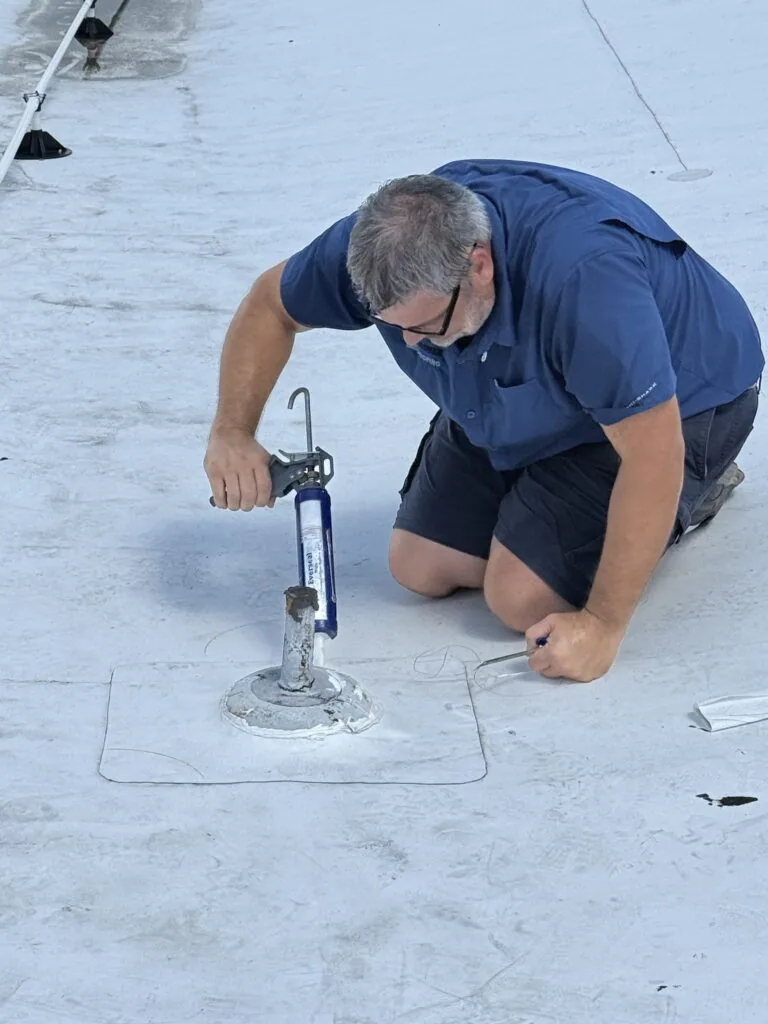
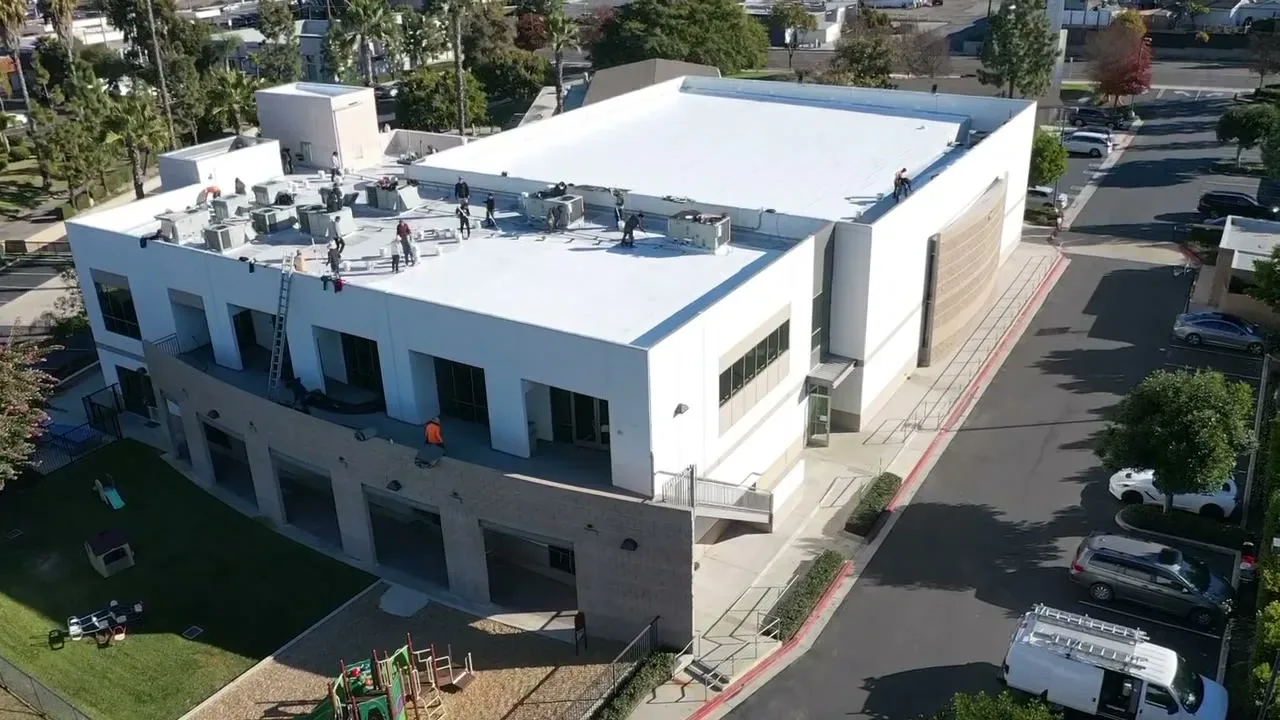
Compare: What a Recover Changes
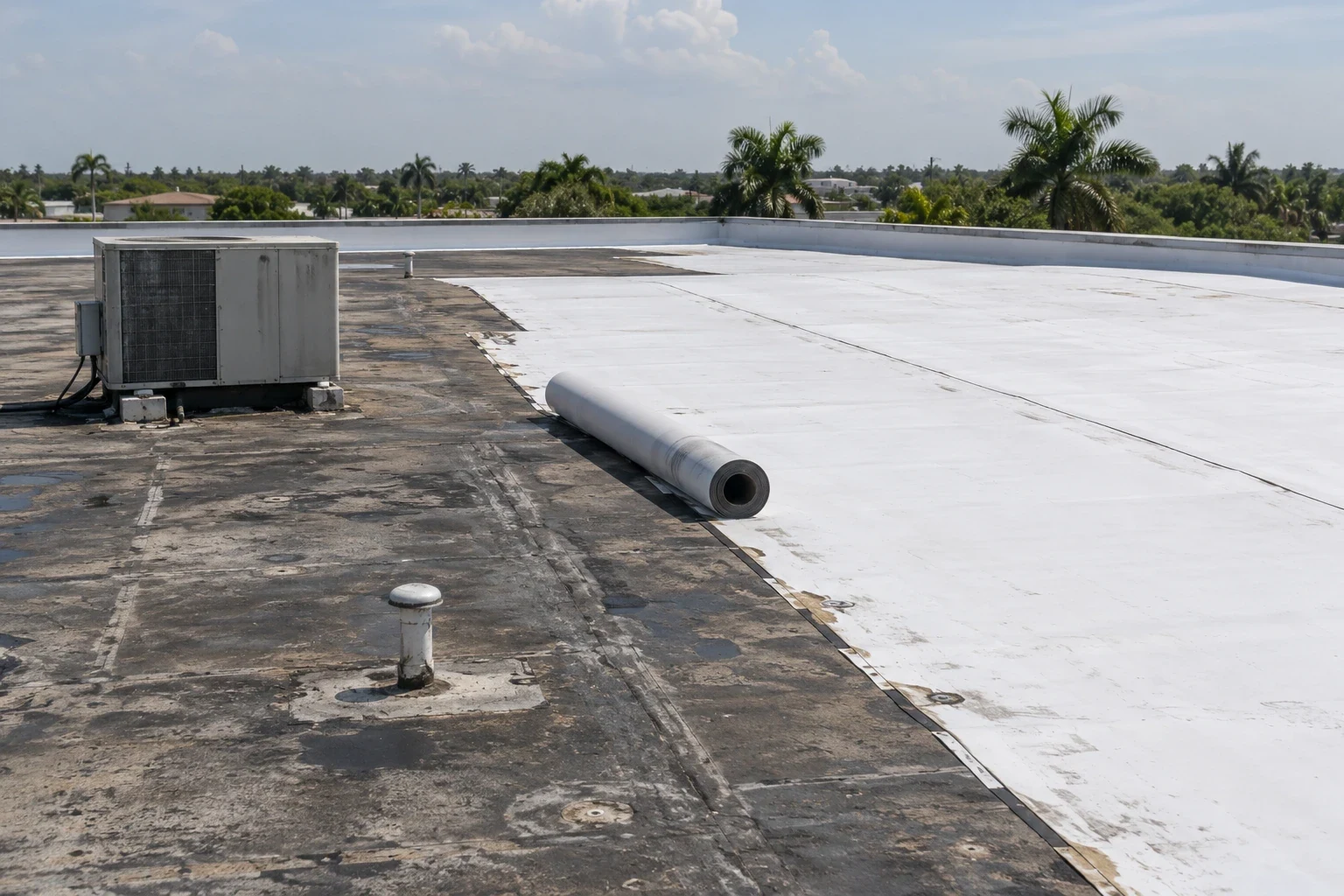
A recover places a new roofing system over an existing assembly that remains in place. It can reduce demolition and keep more of the building enclosed during work, but those benefits depend on the roof below. The existing layers need enough integrity to accept the new attachment or approved bonding method. Added weight, drainage height, perimeter transitions, equipment curbs and local code requirements also affect whether the plan is workable. We assess these conditions before describing a recover as an option.
Replacement by tear-off may be the better route when wet insulation is widespread, the deck needs repair, too many layers already exist or attachment cannot be verified. The Gainesville Building Division applies the 2023 Florida Building Code 8th Edition to permits received since December 31, 2023. That code context belongs in the design review, together with current conditions and project criteria. We can compare recover with a full roof replacement and identify which questions need tests or design input before the owner chooses.
Inspect: Find Moisture Before It Is Covered
Moisture is one of the central recover questions. Water can travel within an assembly, so a ceiling mark may not line up with the wet insulation above it. We inspect seams, penetrations, drain bowls, equipment curbs and previous repair areas, then use suitable moisture survey methods or test openings to verify uncertain sections. The map should separate confirmed wet material from sound areas and from locations where further testing is still needed. A recover scope should not assume that every roof section has the same condition.
Gainesville's 2022 record included 104 thunderstorm days, 82 heavy-rain days and a peak gust of 62 mph. That history makes drainage paths and low spots useful inspection targets, but it does not diagnose a specific membrane. We check whether water can reach drains and scuppers after the new assembly is installed, including around curbs and transitions where added thickness may change the route. For uncertain areas, an infrared moisture survey or test opening can support the decision to retain or remove material.
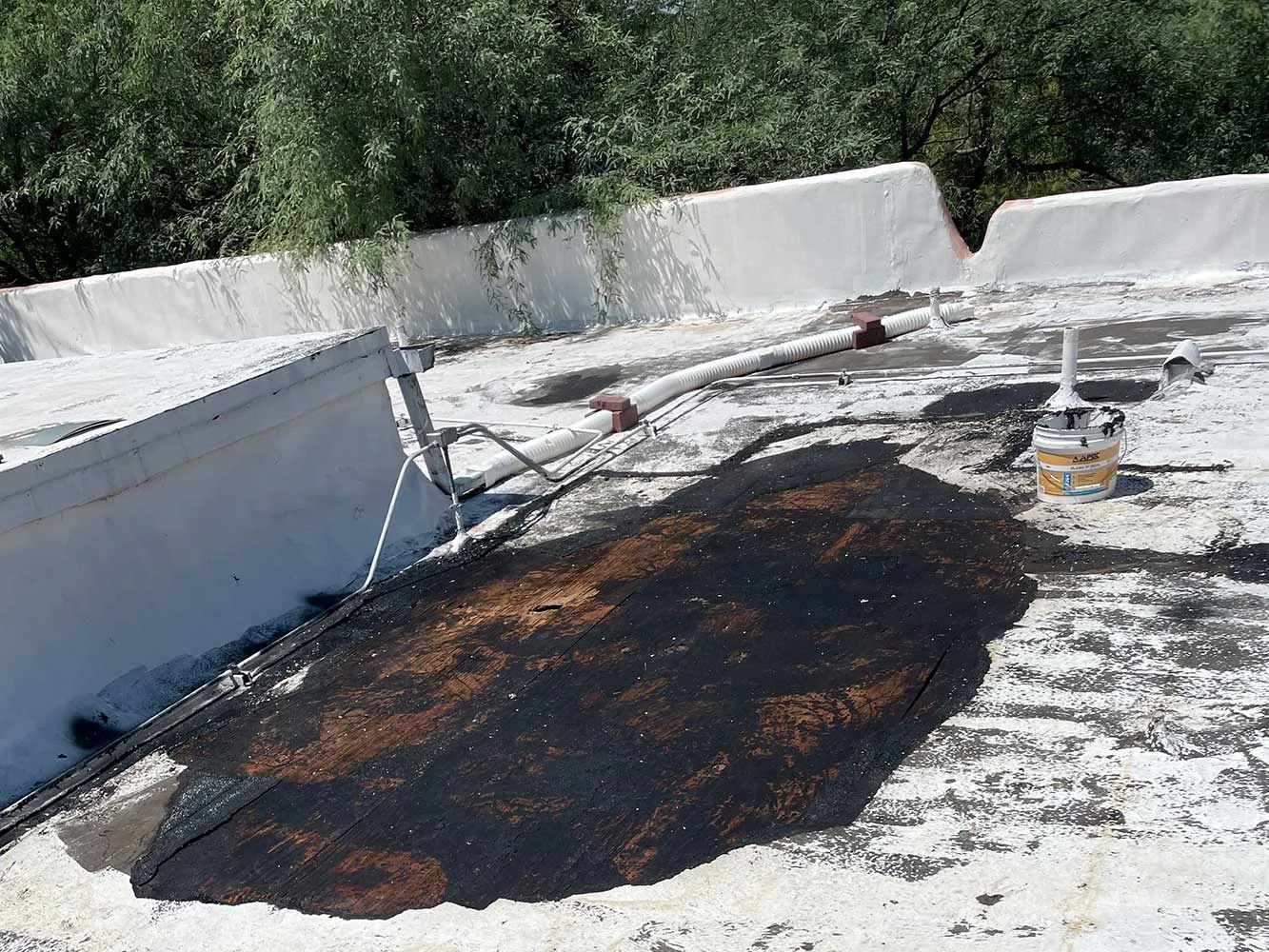
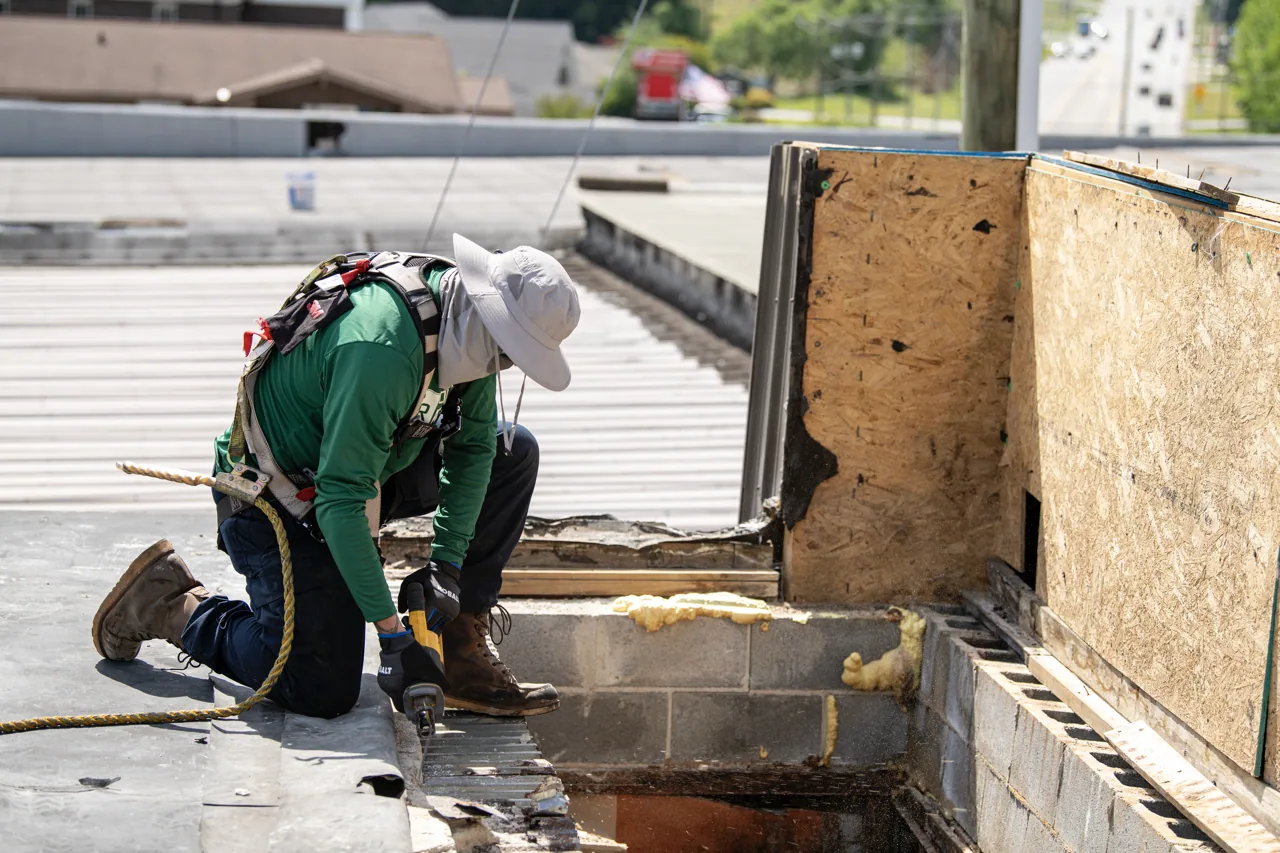
Identify: Confirm the Base and Attachment
The existing roof must provide a stable base. We identify the visible membrane, metal or coating, note repairs and changes in the assembly, and inspect for blisters, splits, loose seams, corrosion or movement. Where the deck cannot be seen, records and selective openings can establish what is beneath the surface. We also review fastener pullout or bonding requirements against the actual substrate. A recover designed for one base condition should not be carried unchanged onto another.
Assembly choice matters. TPO, PVC, EPDM, modified bitumen and coating systems use different materials and installation details. Compatibility, attachment pattern, perimeter restraint and flashing transitions all matter as much as the sheet or liquid product. A TPO recover assembly may be considered where the substrate and design allow it; the same is true of a silicone coating system when the existing surface and slope are suitable. We explain the assumptions behind each option so the owner can compare useful service life, maintenance demands and future access.
Coordinate: Work Above an Occupied Property
A recover still requires roof access, material staging and clear responsibility for temporary conditions. We confirm business hours, loading areas, customer routes, rooftop equipment access and the site contact before scheduling. Work can be phased by section, with tie-ins protected at the end of each shift. At a retail center, site activity may affect when a lift or delivery can enter; at a research facility, access limits may center on equipment or sensitive spaces. The plan must reflect the specific property.
We coordinate notifications, safety boundaries, daily progress notes and any required shutdowns with the owner or manager. The site contact identifies areas that cannot be blocked and how occupants receive updates. When rain is expected, the crew's daily limit should leave time to finish edges and secure transitions. If an active leak appears while the recover assessment is underway, a targeted repair can address a confirmed defect without treating it as proof that the whole roof needs the same work. For multiple locations, a condition report keeps findings distinct by address and roof section.
Close Out: Leave the Layers Understandable
After installation, the closeout record should identify the existing base that remains, the new system above it, attachment or bonding details that were used, and the transitions inspected. Photos and a roof plan help maintenance staff know where drains, curbs and perimeter details were addressed. We list any areas that were excluded, any open questions and the conditions that should trigger a follow-up inspection. This matters with a recover because future work begins with more than one layer in the assembly.
Routine maintenance should keep drains clear, remove debris and document new punctures or seam damage. A later leak investigation should distinguish the new membrane from the original roof rather than assume the point of entry is obvious. We can schedule a maintenance interval based on the installed system, building access and owner priorities. For a facility with controlled access, the building's approval process may also shape the inspection window. The record gives the next facility contact a clearer starting point.
Frequently Asked Questions
How do you decide if a roof can be recovered instead of torn off?
We verify the existing layers, moisture, deck or substrate condition, drainage, attachment and applicable code limits. The review also accounts for how much material would be added and whether the perimeter and penetrations can be detailed correctly. If test openings find wet insulation or the base cannot hold the new system, tear-off may be needed in those sections or across the roof. We show the evidence behind the recommendation before setting the scope.
Does a recover stop an active leak?
A recover is not a substitute for locating the leak and confirming the assembly below it. We trace active water entry, repair defects that need immediate attention and determine whether moisture has reached insulation or the deck. If affected material remains under the new roof, the leak may continue unseen. That is why the moisture map and repair record must be reviewed before deciding to cover the existing system.
Will the new roof make the drains too low?
Added thickness can change the path to a drain or scupper and may affect drain bowl height, flashing and equipment transitions. We measure the existing layout and review how the proposed system changes those details. A project near Butler Plaza still depends on the building's own slopes and outlet locations, not its retail neighbors. We include drain and edge adjustments in the scope when the verified assembly requires them.
Can recover work happen while tenants remain open?
Often it can be phased, but the answer follows roof access, delivery timing, noise, weather and each tenant's operating needs. We agree on staging and protected paths with the property contact, then keep open roof sections within the time available to secure them. A recover may reduce demolition activity, but it still requires coordinated access and daily protection of the building.
Related Roofing Work
Check the Existing Assembly
Share the Gainesville address, roof records, leak locations, building hours and site contact. We will inspect moisture, attachment and drainage conditions and outline whether recover or removal deserves the next step.