
Commercial Roof Leak Repair in Gainesville, FL
Trace and repair commercial roof leaks in Gainesville with interior reports, roof section mapping, moisture checks and a documented repair plan.
Commercial Roofing Services: Commercial Roof Leak Repair
A water mark over a clinic room or active office needs two answers: where water entered and what material has been affected. In Gainesville, FL, we record the interior location and timing, then inspect the roof above and around it. Water may travel along a deck, insulation joint or support before reaching the ceiling, so the opening indoors is only one clue. Near the UF Health medical district, occupied rooms and equipment can narrow the access window. We agree on that window with the site contact, protect the space and map the roof findings before selecting a repair.
Locate: Follow the Water Path
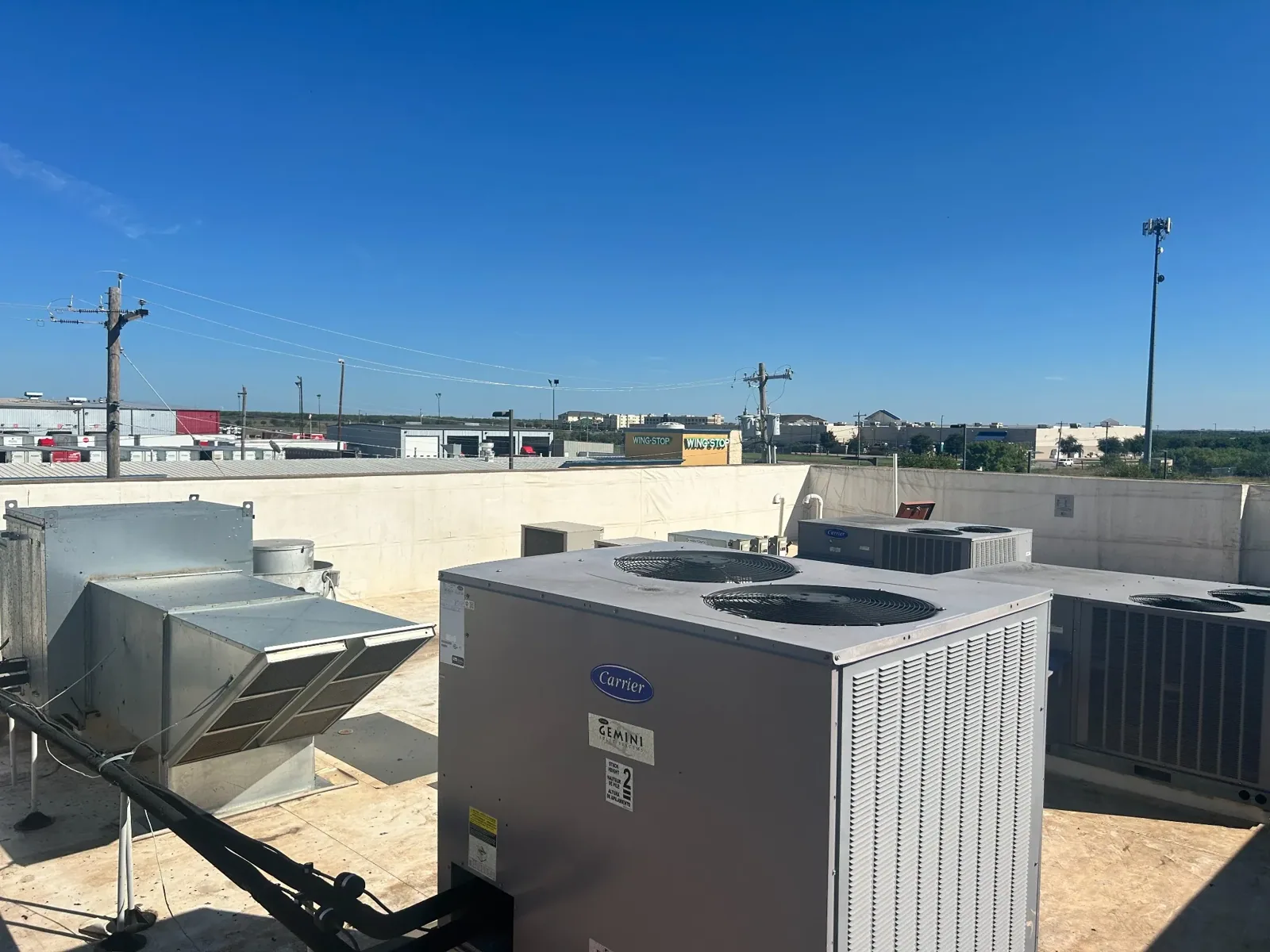
We start with the report from inside: when the leak appeared, whether it follows rain or equipment use, and which rooms or roof sections lie above. On the roof, we check drains, scuppers, curbs, seams, penetrations, wall transitions and past repair areas. A drain that backs up may send water toward a seam; a failed curb flashing may leak only when wind drives rain toward that side. We compare clues with the roof layout rather than assuming the closest detail is the source.
Gainesville recorded 46.80 inches of precipitation in 2025, including 3.06 inches in 24 hours. We inspect the building’s drainage path and nearby details to locate the entry point. We inspect how this building drains and where water could enter. If a roof has several levels or additions, we mark each section separately so the investigation follows the correct assembly. A roof inspection can widen the review when the leak report points to more than one area.
Downtown Gainesville combines older storefronts, plazas, arts venues and a walkable street grid. On a leak visit there, we confirm the property address and affected section before setting an access route through occupied space. That local context informs the visit plan, while the water path and roof assembly determine the repair.
Inspect: Verify What Is Wet
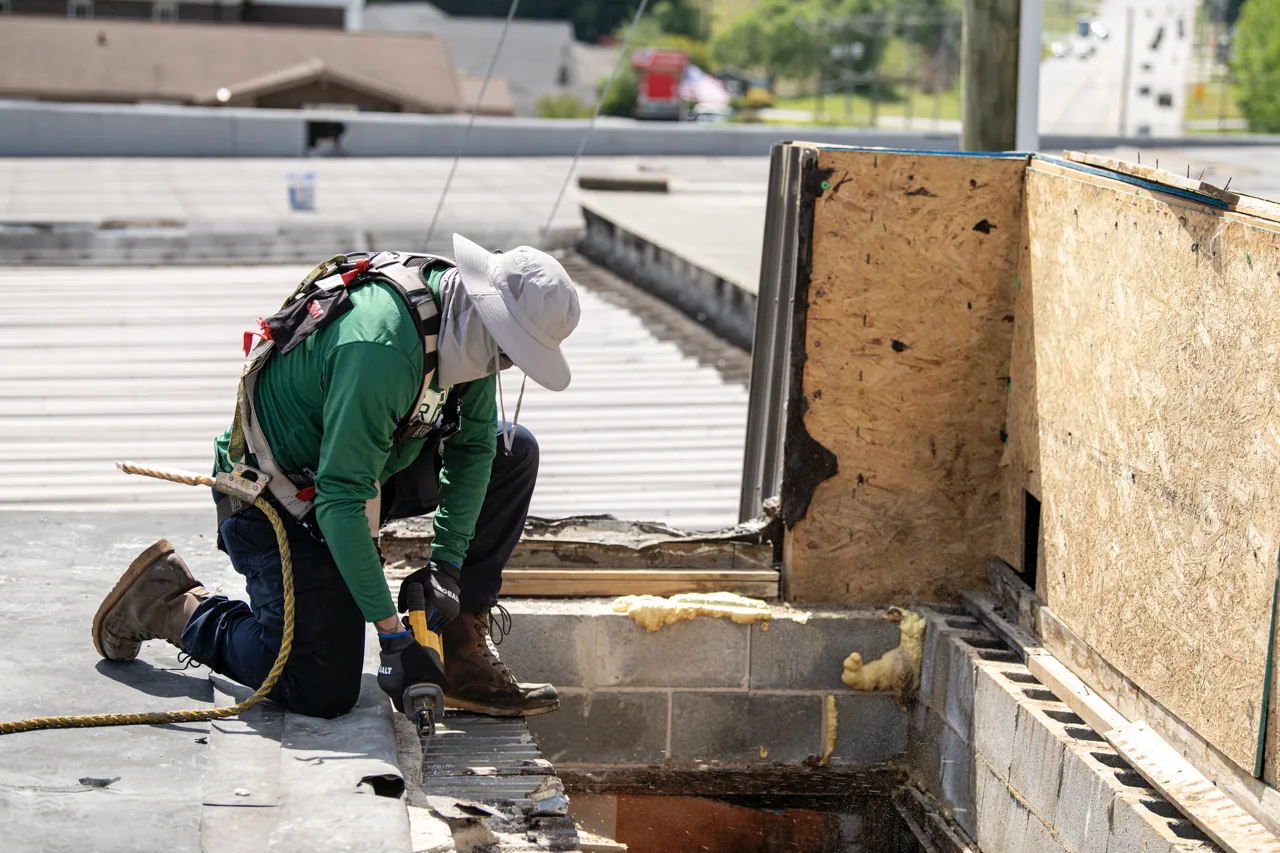
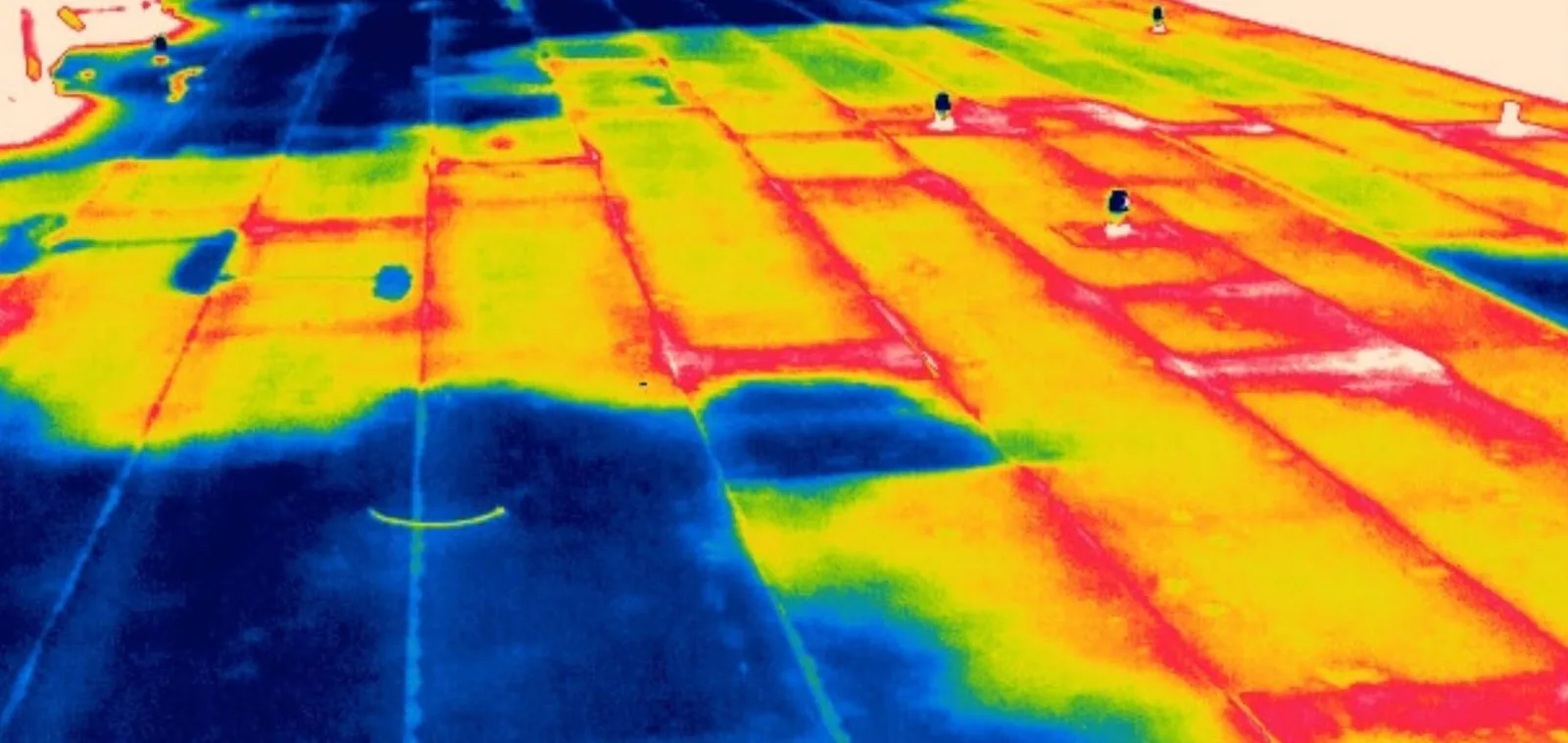
After tracing the likely path, we check whether water has moved into insulation or the deck. A visible seam opening may be repairable at the surface, but a soft area or repeated leak can signal damage below it. We use moisture survey methods where suitable and make test openings when a direct look is needed. The record distinguishes confirmed wet material from suspected areas, then notes any location where more testing would change the scope.
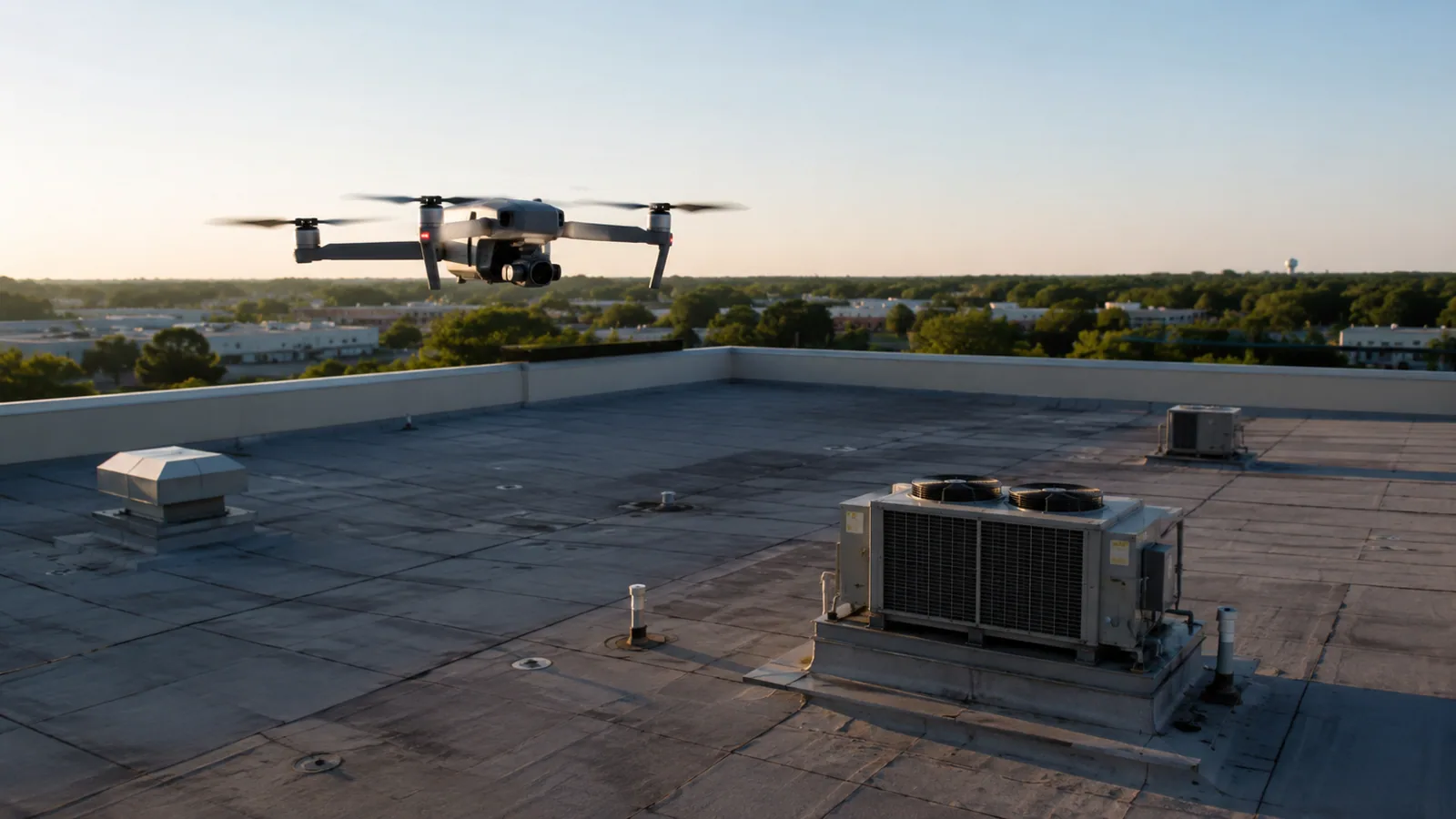
The University of Florida’s Gainesville campus includes academic, research, and support buildings. We confirm the actual assembly before choosing a repair material, especially where additions or previous reroof work have left different systems side by side. When imaging can help map moisture across a broad section, an infrared survey may be paired with test openings to verify the readings. The result guides whether wet components need removal or can remain outside the affected boundary.
Contain: Protect the Interior While We Work
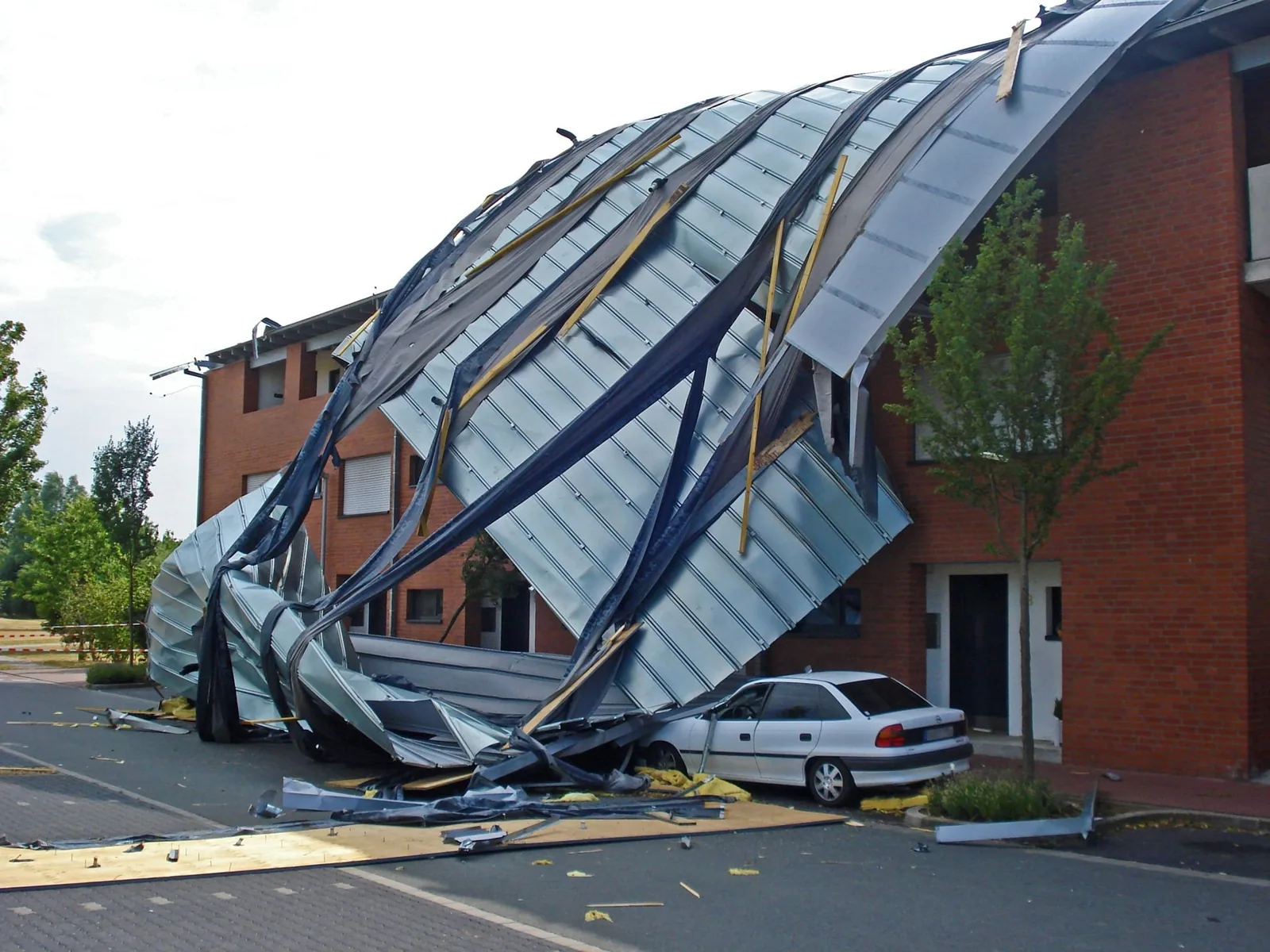
Active water entry needs practical protection while the roof source is being confirmed. We coordinate with the site contact on room access, sensitive equipment, ceiling protection and any temporary movement of occupants. If rain is approaching, we set a safe temporary cover at the roof and state whether it is a dry-in measure or the permanent correction. Interior buckets or plastic may limit damage for a short period, but they do not replace roof work. We keep the owner informed when a temporary measure needs another visit.
Emergency service is available around the clock, including nights, weekends and holidays. After-hours calls follow the same basics: identify the building, the affected area, safe access and the person who can meet the crew. A leak in a medical space may need quick isolation of the room or equipment before roof access begins. If immediate response is required, our emergency roof repair can address active entry and establish what permanent work remains. We photograph conditions when safe and preserve observations needed for a full repair scope.
Repair: Correct the Detail, Not Just the Symptom
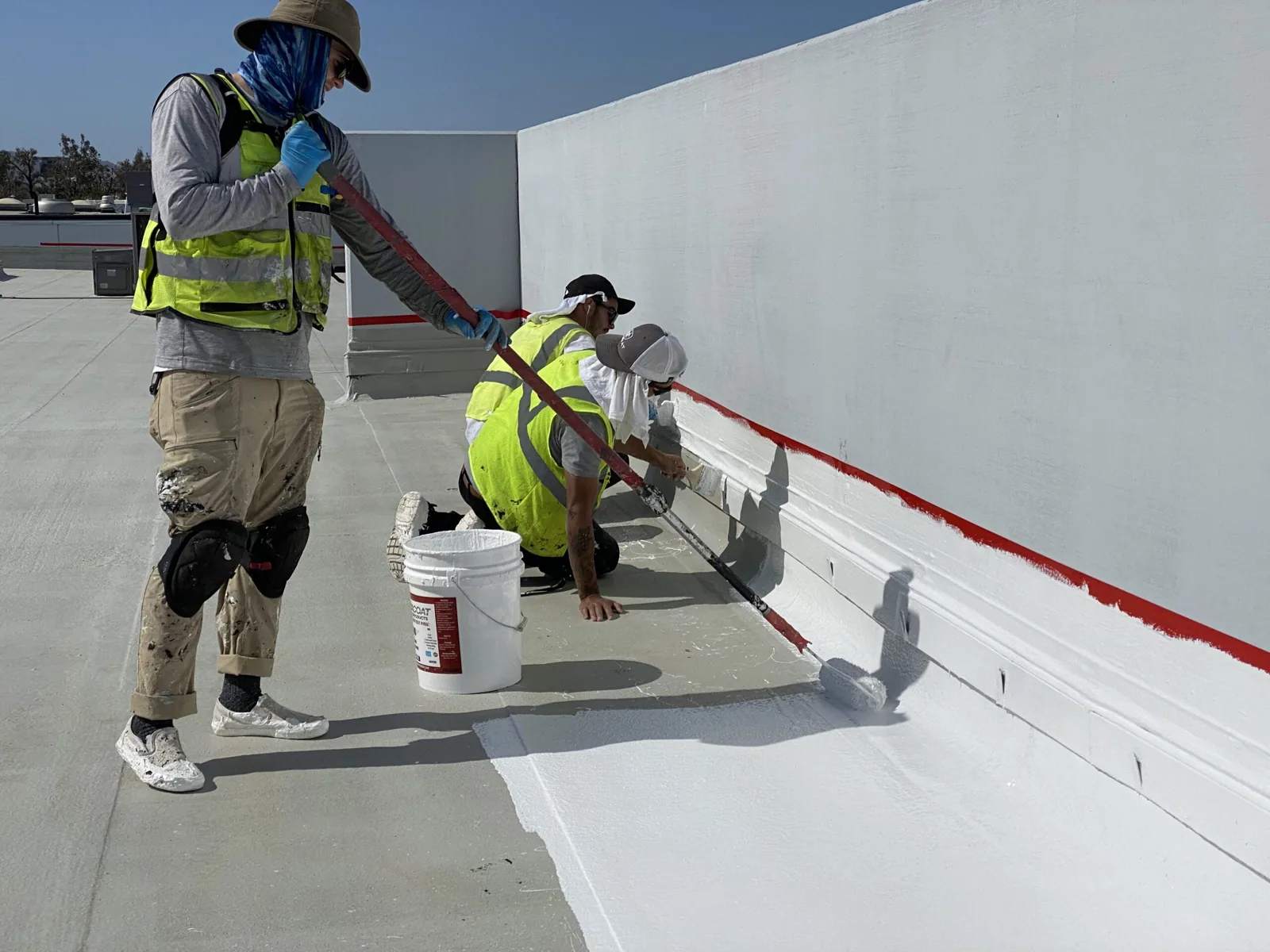
Once the source and material are confirmed, we prepare the area and use a repair method that suits the roof system. A membrane seam may need cleaning and welding or compatible adhesive work; a penetration may require new flashing or a transition detail; metal roofing can need attention at panel laps, fasteners or trim. Sealant alone is not a universal fix. The repair should connect to sound material and leave the drain path and adjacent details working as intended.
We mark the repair boundary, state what was removed or retained and photograph the completed detail. If moisture extends beyond the exposed defect, the owner receives that finding before the scope grows. A TPO roof section calls for material-specific seam work, while other systems require different preparation. Where ponding is part of the leak pattern, a drainage review may be needed alongside the patch. The permanent correction should address the route water used, not cover evidence that another issue remains.
Verify: Check the Repair and Set a Follow-Up
Before leaving, we review the repair area and adjacent transitions, clear debris from the work path and confirm that temporary protection has been removed or recorded. The closeout identifies the roof section, materials used, photos, interior area reported and any recommended follow-up. When weather or access prevents a final check, we state that plainly and arrange a return window with the site contact. That record helps facilities staff distinguish a new leak from the condition addressed during this visit.
Gainesville's storm history includes a tornado near Paynes Prairie and tropical-storm impacts from Idalia. After severe weather, we compare the building’s current roof condition with its own service records and photographs. After heavy rain or wind, a walk of the repaired section and nearby drains can catch a new opening before water reaches the interior. If leaks repeat at different points, a condition report can combine locations, photos and unresolved moisture questions. We can also set a maintenance check around the property's normal access hours.
Frequently Asked Questions
Why is the ceiling stain away from the roof leak?
Water can travel before it becomes visible indoors. It may follow a deck, insulation joint, beam or pipe and emerge at a lower point than the roof opening. We compare the room location with the roof plan and inspect nearby penetrations, seams and drainage details. If the path is still unclear, moisture readings or a test opening can narrow the search before we close the assembly.
What should I do when water is coming in during a storm?
Move people and equipment away from the affected area when safe, and contact the site lead so interior protection and roof access can be coordinated. Give us the address, location of water, active conditions and a safe access contact. We can set temporary protection and document what it covers. A permanent repair follows once the roof surface and affected assembly can be inspected and prepared.
Can you find a leak without cutting into the roof?
Often we can narrow the source through visual inspection, water-path clues and moisture survey tools. A test opening is useful when the assembly below a surface defect must be confirmed or when readings need verification. We explain where an opening would add information and record what it shows. The investigation should use the least disruptive method that still answers the repair question.
How do you handle repeated leaks in different rooms?
We place each report on the building and roof plan, compare timing with rain and equipment use, and check whether the locations share a roof section or drain path. Several interior marks can result from one source, while separate rooms may have separate failures. The report groups confirmed conditions and indicates where further testing is needed before repair quantities are set.
Related Roofing Work
Trace the Leak Before It Spreads
Provide the Gainesville address, building use, room locations, timing, roof records, site contact and a safe access window. We will map the interior report to roof conditions and document the repair path.