
GAF Commercial Roofing Systems in Gainesville, FL
Review GAF commercial membrane and asphaltic roofing options in Gainesville, with assembly checks, repair planning and work coordinated around building access.
Roofing Manufacturers: GAF Commercial Roofing Systems
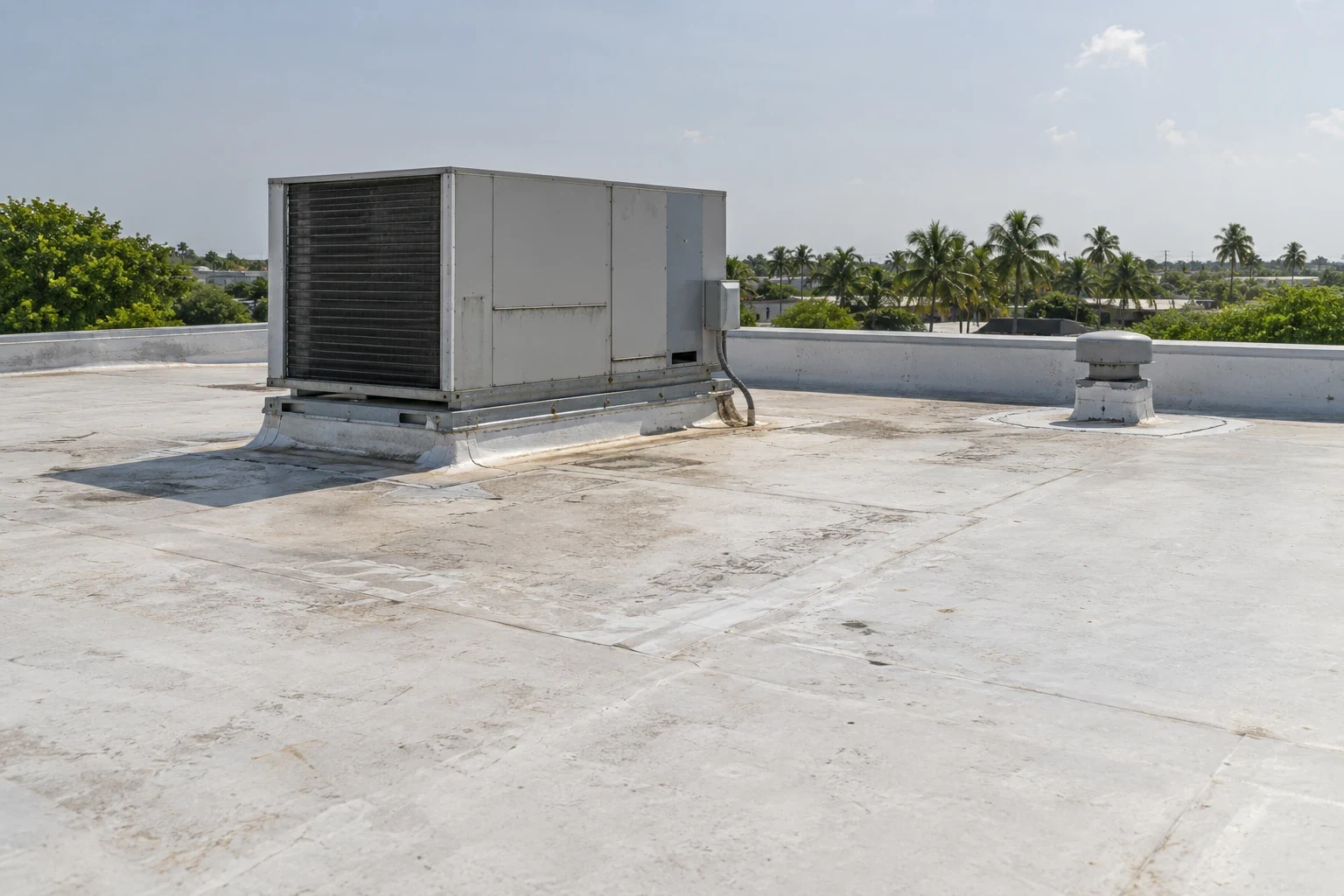
A GAF roof decision starts with the assembly already on the building, not the label on a repair invoice. We inspect the membrane or built-up system, its insulation, attachment, flashings and drainage, then identify whether the proposed work fits the verified materials. GAF lists commercial TPO, PVC and KEE membranes alongside asphaltic systems and coatings. In Gainesville, FL, heat and heavy rain make surface condition and drain paths practical inspection points. A property near the UF Health medical district or Gainesville Regional Airport still needs its own roof survey before a scope is chosen.
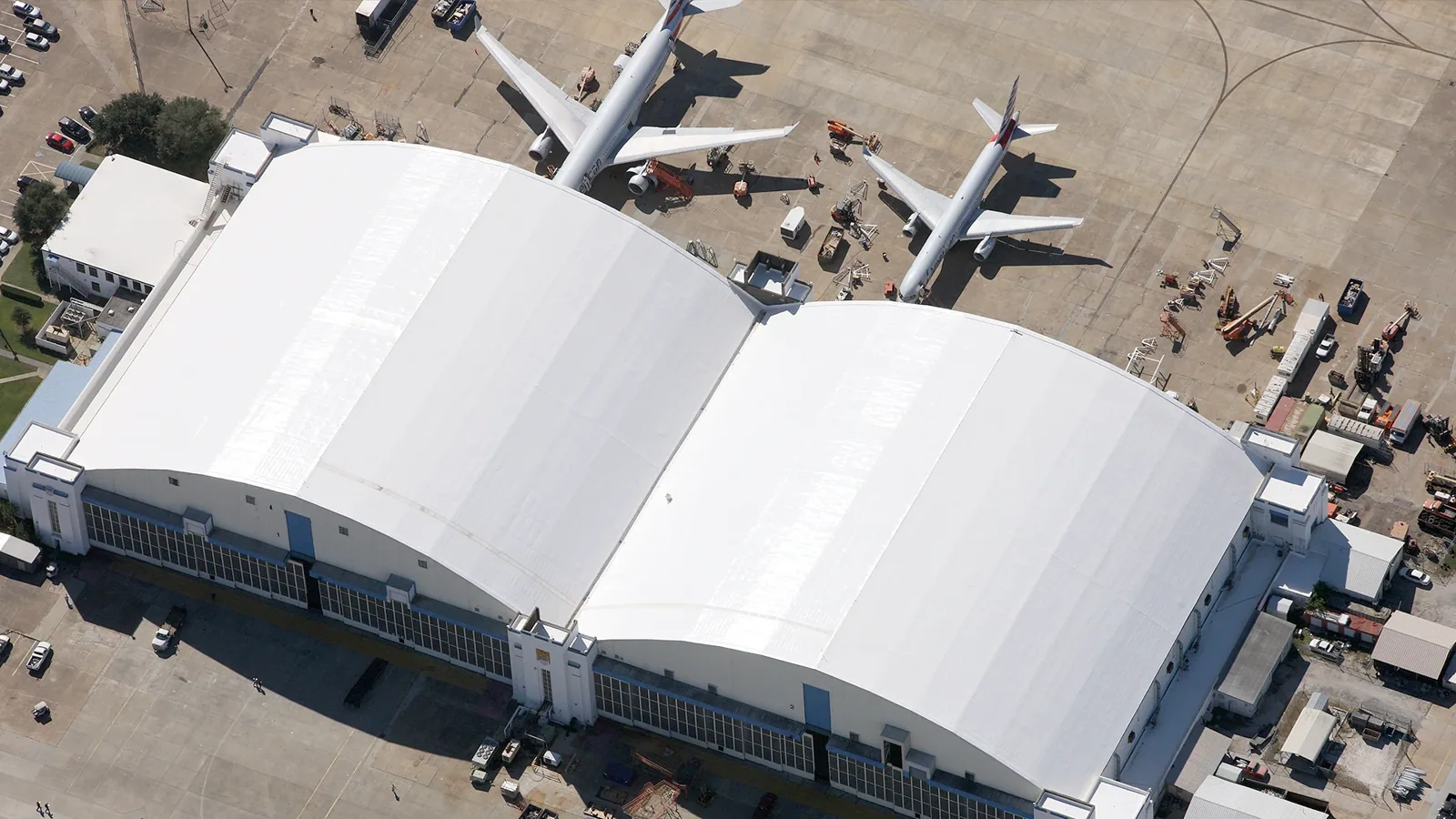
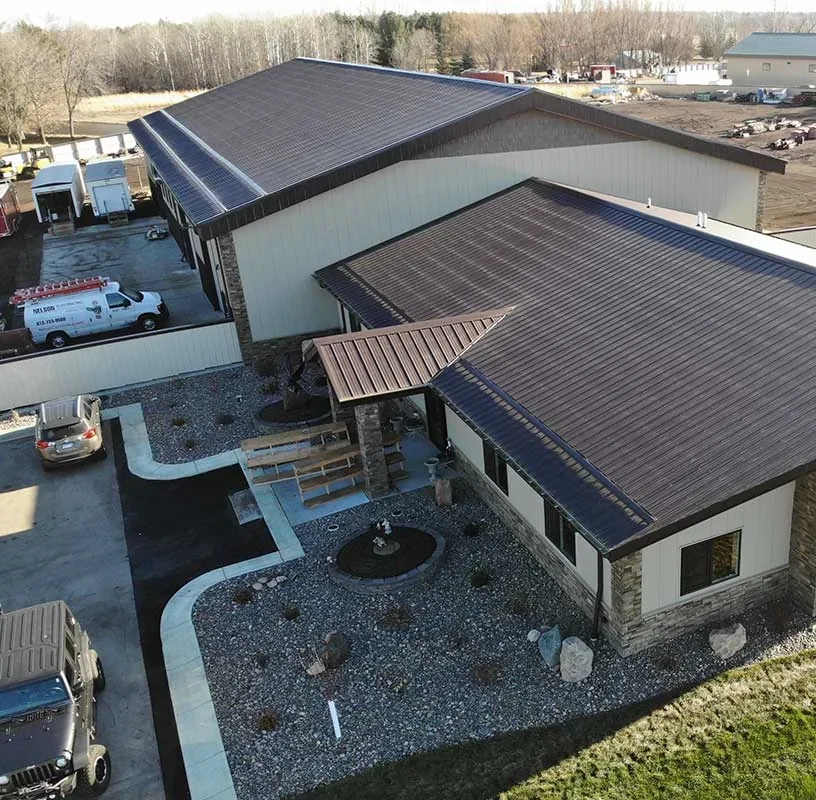
Identify: Confirm the Existing GAF Assembly
Owner records, product labels, roof plans and prior closeout documents can help identify the system, but we compare them with visible roof conditions. GAF's commercial product range includes EverGuard TPO and PVC membranes, PVC KEE options, asphaltic assemblies and liquid-applied products. The chosen assembly may be mechanically attached, adhered or configured with another specified method. We verify the membrane, substrate and details before recommending compatible repair material or a replacement tie-in. A roof inspection records the evidence and any component that remains uncertain.
The Gainesville climate context makes condition tracking useful. Gainesville recorded 133 days at or above 90°F in 2025, and one 24-hour period brought 3.06 inches of rain. At a specific GAF roof, our inspection checks surface wear, open welds, punctures, loose terminations and blocked drains. We look for surface wear, open welds, punctures, loose terminations and blocked drains on the actual roof. A TPO system review can focus on thermoplastic membrane condition and the details where sheets join.
Inspect: Follow Seams, Transitions and Drain Paths
On thermoplastic membrane, we inspect welds at field seams and flashing transitions, then check for contamination, separation, patch edges and movement at curbs. On an asphaltic roof, the review shifts to surfacing, laps, penetrations, drainage and signs of water beneath the plies. A roof coating needs its own adhesion and substrate review before it becomes a repair or restoration option. We note what is visible and where a test opening or moisture survey would clarify the assembly below.
Gainesville Regional Airport includes aeronautical facilities and Airport Industrial Park, with access from Waldo Road and NE 39th Avenue. The Gainesville Regional Airport area and the Archer Road medical area have distinct access contacts and operating requirements. Those local settings affect work planning, not the selection of a particular membrane. If the reported issue is an open flashing, a transition repair assessment can establish the detail before material is specified.
When the roof records name a GAF system, the field review should still confirm the membrane family, attachment and installed details. GAF's commercial range includes TPO, PVC, KEE, asphaltic and liquid-applied systems, so a brand name alone does not identify the repair method. We compare the visible surface, seams, flashings and roof transitions with the records available, then note any gap between the documents and the assembly observed. That matters at a drain, curb or perimeter where the repair has to tie into the system already in place. A measured scope can separate a localized detail repair from a broader area that needs testing or replacement planning.
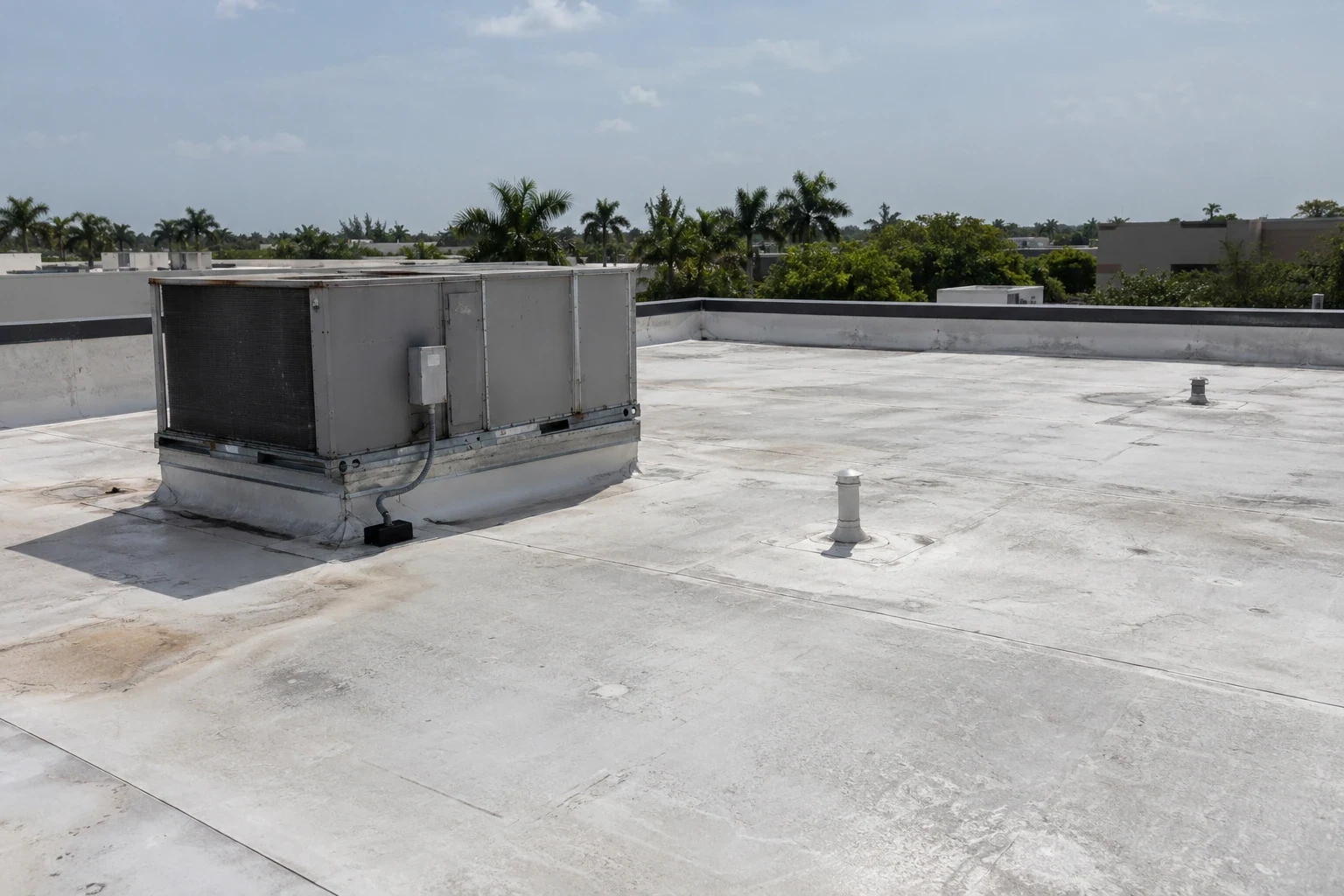
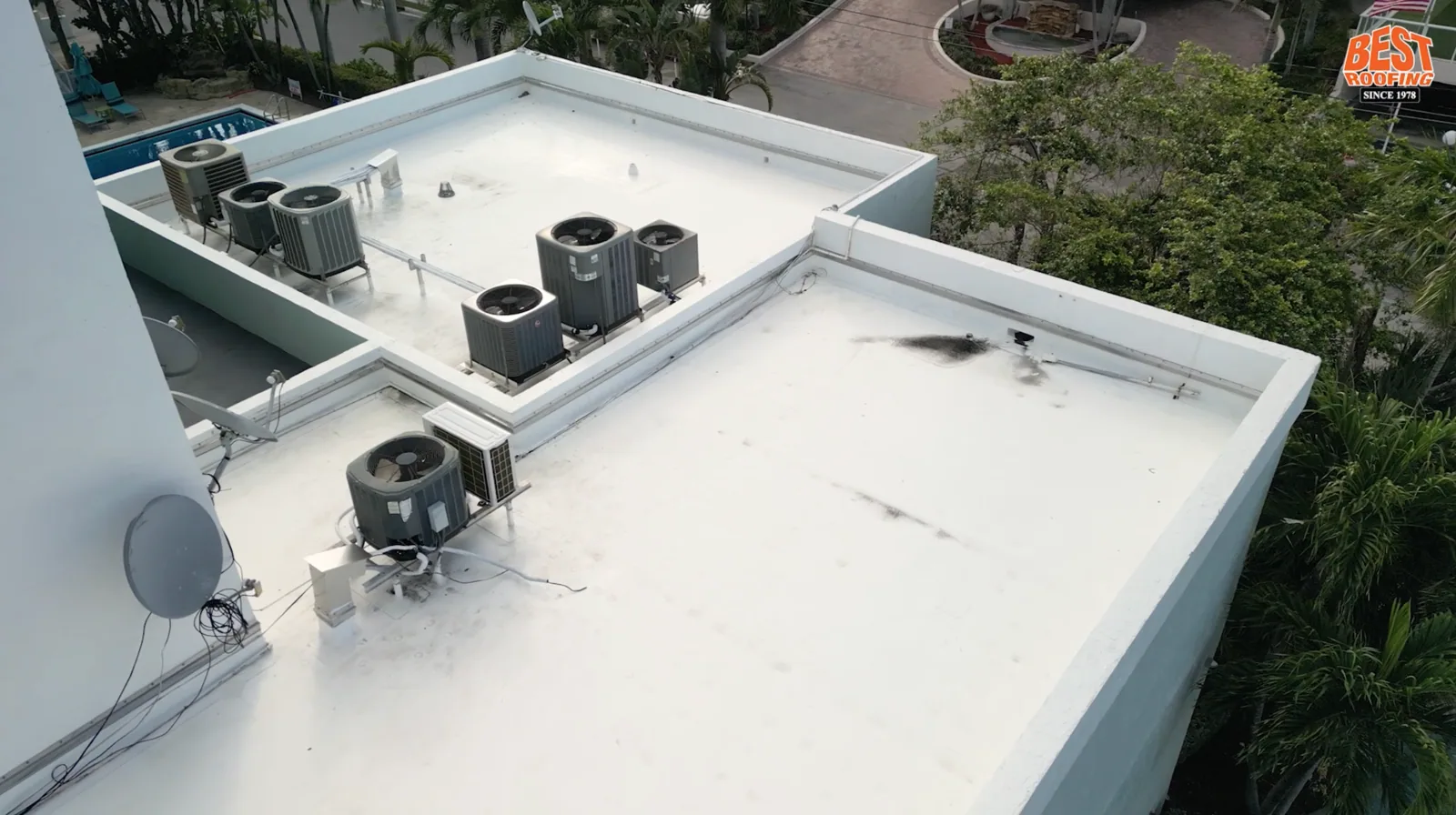
Compare: Match the Repair to the Roof
A localized membrane repair may suit a limited puncture or failed weld when surrounding material is sound and dry. If moisture extends below the surface, we measure the opening and identify the insulation and deck condition before setting the boundary. For asphaltic systems, repair methods depend on the plies, surfacing and compatibility of the materials. A coating or recover can be considered only after the roof condition, drainage, attachment and project criteria support it. The owner receives a defined scope with material and tie-in locations rather than a product name alone.
For a coating, we look for a sound, clean substrate and check whether trapped moisture, loose surfacing or ponding would undermine the application. The scope may call for repairs before coating, and not every assembly can accept the same product. A recover also depends on drainage, load, insulation and the existing layers. We identify these conditions first so the recommendation explains what must be corrected and what remains in place.
GAF also offers multiple system types, so choosing by brand alone does not resolve the project. The design depends on deck, slope, insulation, wind and fire requirements, penetrations and building use. A PVC membrane option may be compared with a modified-bitumen assembly when the existing conditions allow both to be evaluated. Our recover assessment checks whether the existing roof can remain beneath a new system.
Coordinate: Plan the GAF Work Sequence
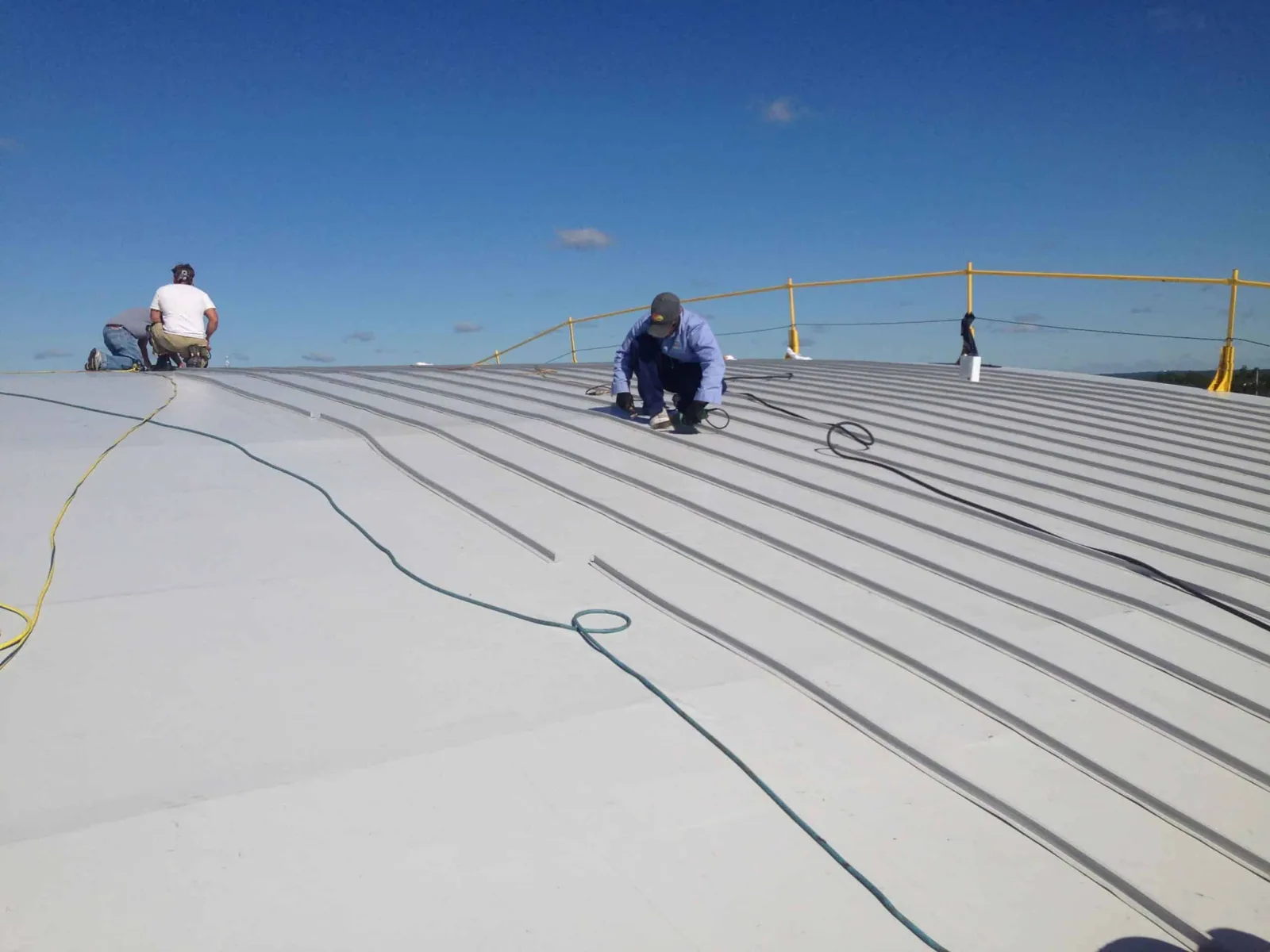
Before mobilization, the site contact identifies roof access, occupied rooms, equipment shutdown needs, staging areas and any restricted hours. A hospital-adjacent facility on Archer Road may require coordination around clinical support areas, while airport property follows its own site access process. We divide work by roof section, limit the time an assembly remains open and secure a watertight stopping point before crews leave. Rain or high surface temperatures can change the window for adhesives, coating application or membrane welding.
At an airport-area building or an occupied clinic, the site manager can identify service roads, controlled entries, equipment routes and areas where materials cannot be staged. We confirm those requirements before the roof is opened, then assign a contact for daily access and weather decisions. This keeps a manufacturer-specific assembly plan tied to the facility's actual operating limits.
Gainesville recorded 104 thunderstorm days and 82 heavy-rain days in 2022, which makes weather planning part of the field sequence. We check forecasts, keep drains clear and communicate when conditions require a change. For urgent water entry, our emergency roofing response is available overnight, on weekends and holidays, with temporary work documented apart from permanent repairs. A Carlisle SynTec system review or Johns Manville assembly review can provide a separate manufacturer comparison when the owner is considering alternatives.
Close Out: Leave a GAF Repair Record
At completion, we record the roof section, system identified, repair materials, preparation, tie-in detail and any test opening. Photos show both the repair and the surrounding field so a later inspection can recognize the work. If the assembly identity or concealed condition could not be confirmed, the closeout states what remains open. The owner can keep the report with project documents and use it during maintenance rather than relying on a product label alone.
For a Gainesville GAF roof review, send the building address, use, roof plans, product or warranty papers, leak areas, site contact and access window. We will inspect the existing assembly, compare repair paths and prepare a measured scope based on conditions found. If a larger project is appropriate, we can document removal limits, tie-ins and operating constraints before work is scheduled.
Frequently Asked Questions
Does a GAF label identify the entire roof system?
Not always. Records may identify the membrane while leaving the insulation, attachment or later repairs unclear. We inspect accessible areas and label what can be verified before pricing a repair or replacement.
Can a GAF membrane be patched with any TPO or PVC?
No. The repair material and method must suit the actual membrane, surface condition and detail. We identify the existing material and prepare the tie-in before selecting a compatible repair approach.
Is a GAF coating appropriate for an older roof?
That depends on the existing surface, moisture, adhesion, drainage and project requirements. We inspect those conditions and identify testing needed before treating a coating as an option.
Can work proceed while a Gainesville building is occupied?
Often, with a defined work section, access window and interior protection plan. The site contact identifies rooms and operations that need special coordination before the crew begins.
Related Roofing Work
Schedule a Gainesville GAF Roof Review
Send the address, building use, roof plans, GAF product records, leak areas, site contact and access window. We will verify the assembly and prepare repair or replacement options.