
Commercial Roof Flashing Failure Repair in Gainesville, FL
Repair Gainesville roof flashing failures with traced leak paths, compatible transitions, documented test areas and work planned around access.
Roof Damage Repair: Commercial Roof Flashing Failure Repair
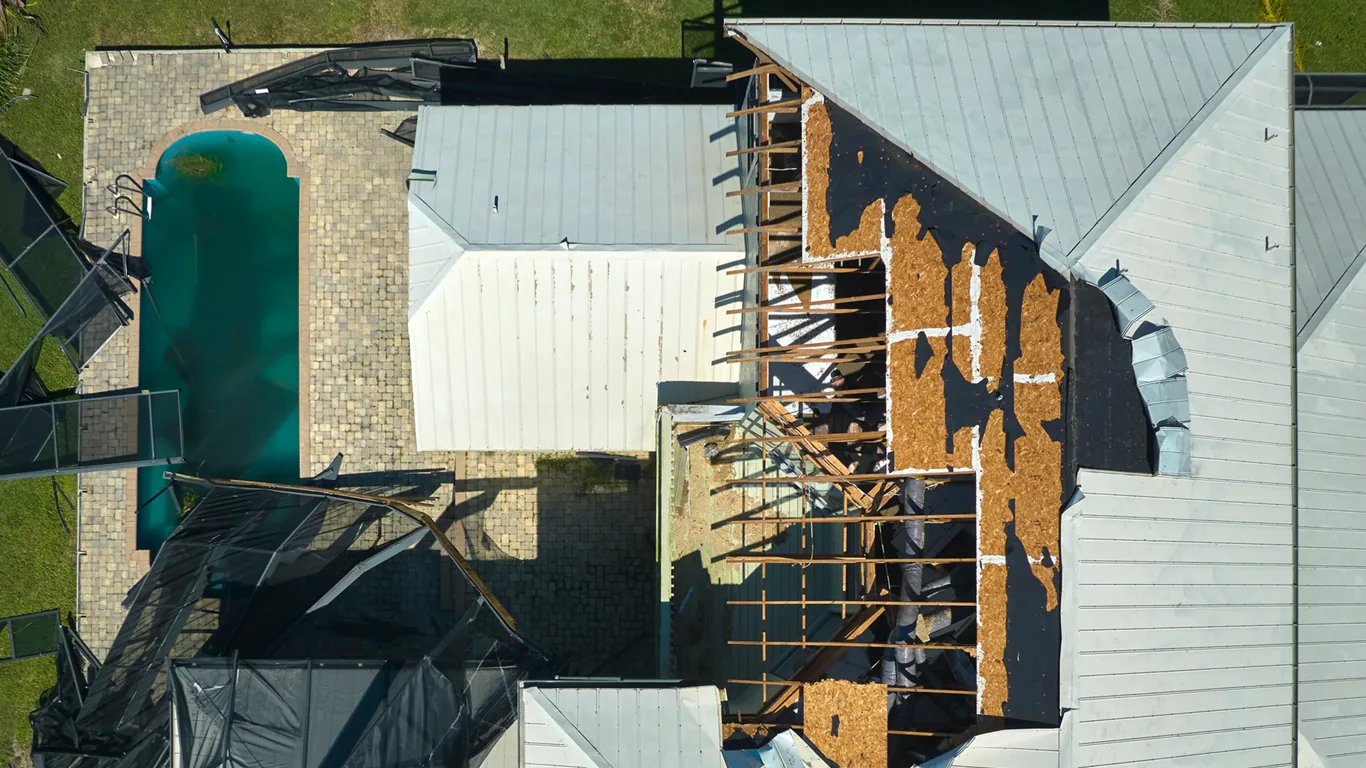
A failed curb corner can send water along a roof deck before it reaches the room below. We trace the report to the flashing detail, confirm the roof material, and inspect nearby seams, walls, and drains before choosing a repair. In Gainesville, FL, summer storms and heavy rain can drive water against transitions that appear dry during a short visit. The condition record identifies the entry point we can verify and marks any path that still needs testing.
Identify the Transition That Opened
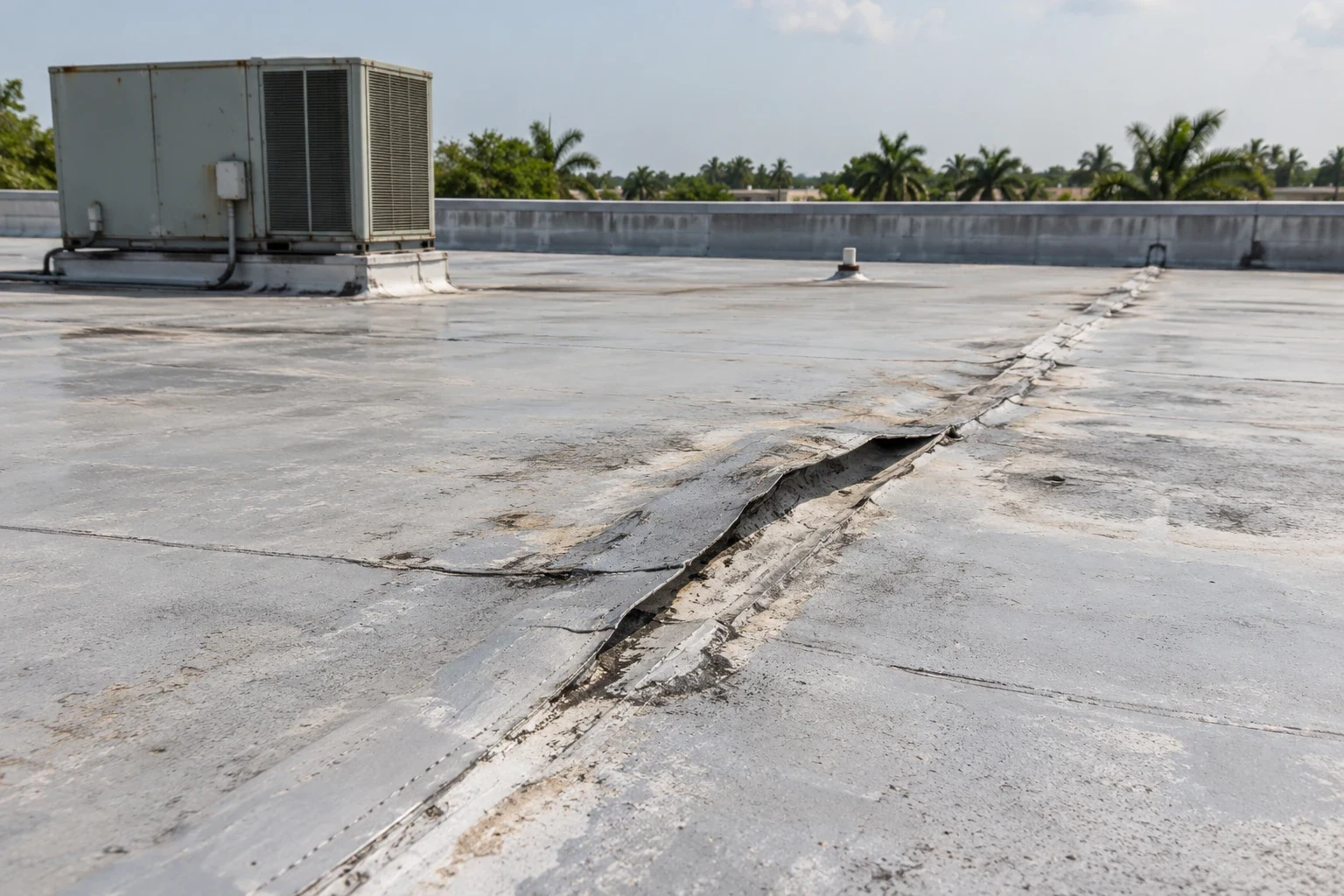
Flashing seals the points where a roof meets a wall, curb, skylight, vent, drain, or equipment support. Failures can come from a split membrane corner, loose counterflashing, movement at a curb, corroded metal, incompatible patch material, or a termination that no longer holds. We inspect the detail in context, including the adjacent field membrane and the direction water could travel. Photos show the termination and its relationship to the reported interior stain.
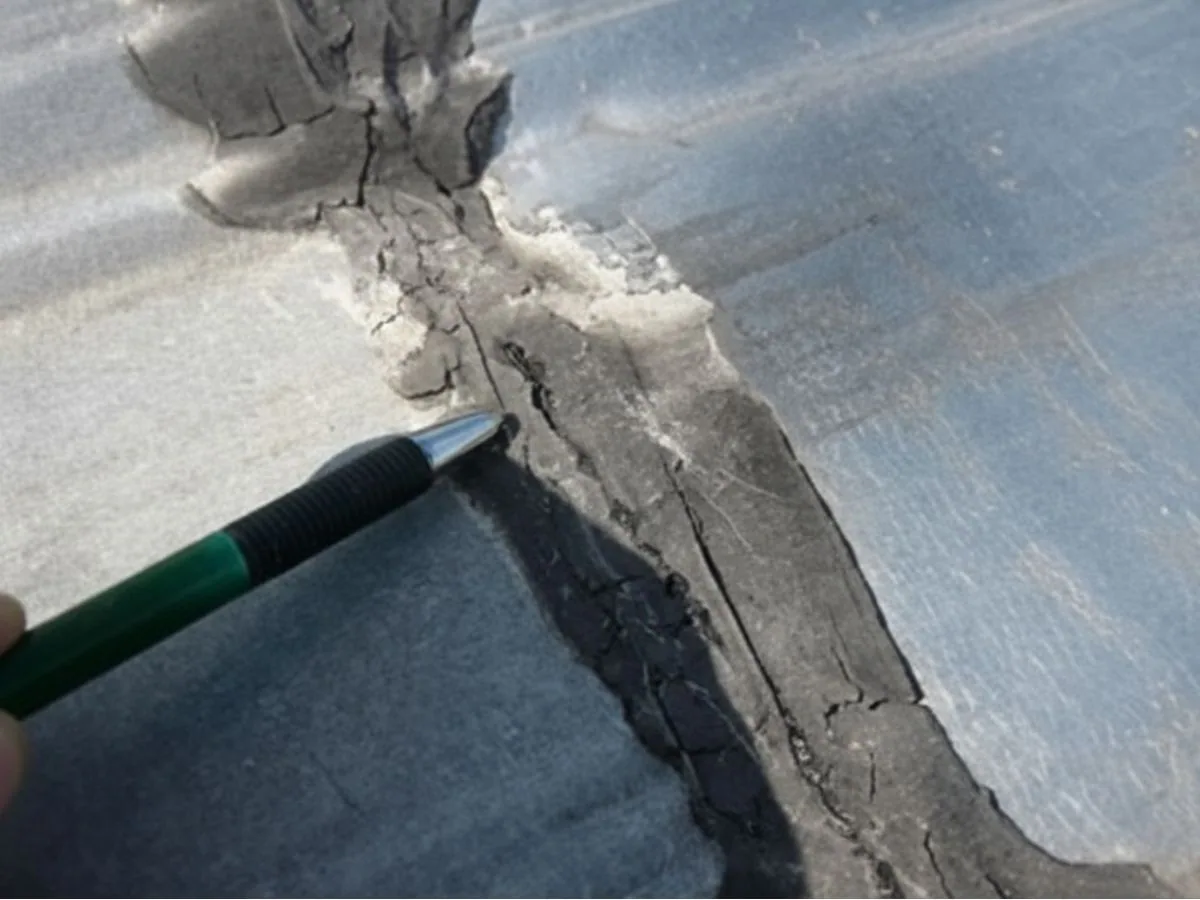
Long periods of sun and heat can age exposed sealants and membrane details, but appearance alone does not establish failure. We look for separation, open laps, cracks, loose fasteners, and signs of water below the assembly. A roof inspection documents the existing materials and observed defect before a repair is specified.
Alachua County businesses use I-75, US 41, US 441, and US 301 for regional connections; those routes can inform delivery planning, but only a roof inspection can establish a failed flashing detail. A commercial roof visit in the Archer Road district begins by identifying which curb, parapet, or wall transition is in scope.
Check the Material Beneath the Flashing
We verify whether the roof uses TPO, PVC, EPDM, modified bitumen, built-up materials, metal, or another system. Flashing repairs need compatible materials and a sound substrate. A patch over wet insulation or loose membrane can move the leak instead of closing the entry point. Where the boundary is uncertain, a test opening can show the insulation and deck at a selected location. We record what was found and close the opening securely.
Water can enter at the uphill side of a curb and travel to the low side before showing inside. We inspect both sides, the corner, adjacent seams, and nearby drains. The roof plan ties the reported room to the inspected detail. If a drain is also restricted, we document it separately rather than treating it as part of the flashing repair. A ponding-water review can address persistent water at a low point, while a seam inspection targets a split field lap.
Gainesville's frequent thunderstorms and heavy downpours can drive water against curb and parapet transitions. We inspect counterflashing, coping, and curb edges for movement after a reported event, then document which joint opened rather than inferring failure from weather alone.
Rebuild the Detail, Not Just the Visible Gap
A lasting repair removes loose or incompatible material, prepares a sound surface, and restores the flashing transition with products suited to the verified roof. The work may require a membrane corner patch, new termination, replacement metal, or a curb detail rebuilt to shed water. We state the repair boundary and tie-in method so the owner can see which materials remain and where new work begins.
If moisture has spread under the field membrane, the scope may include insulation removal and replacement before the flashing is restored. We identify removal quantities and deck condition rather than assuming the full area is wet. A membrane puncture repair can address a separate opening in the field, and a drainage service can correct a nearby outlet issue. The repair report keeps these work items distinct.
When water is entering through a flashing detail, emergency service can be engaged at any hour; permanent work follows after the joint and surrounding materials are verified. We coordinate access with the site contact, protect the interior as directed, and record any temporary seal or cover separately. Permanent flashing work follows after the detail and surrounding materials can be inspected and prepared safely.
At a wall or parapet, the repair must control water at both the roof surface and the vertical transition. We check whether a membrane turns up far enough to meet the termination, whether metal counterflashing sheds water over that edge, and whether movement has opened a joint or corner. At a pipe, curb or equipment support, the shape of the penetration determines whether a boot, formed corner or custom flashing detail is appropriate. If a roof has several materials meeting at one location, we mark each transition rather than applying one product across the entire junction. A test opening can help confirm whether water reached the insulation or deck, but the sampled result applies to that point. The work description identifies the repaired height, perimeter, tie-in and any substrate replacement so the owner can see how far the new detail extends.
Plan Access and Weather Protection
Before work begins, the facility contact identifies roof hatch access, occupied areas below, equipment shutdown needs, lift routes, and any restricted time. If the flashing is over a customer entrance or a clinical room, interior protection and access notices should be set before material removal. We keep an exposed joint open only while it can be protected and restore a watertight stopping point before the crew leaves.
Gainesville's 2022 weather record includes frequent thunderstorms and heavy-rain days. Rain during repair can affect adhesive work, membrane welding, and surface preparation. We monitor the forecast and reschedule when conditions do not support the specified materials. The site contact receives a handoff stating whether the transition is complete or temporarily secured.
For a roof with several failed details, we can group work by elevation or building section while maintaining separate photo references. A phased work plan can help keep access clear around tenants. Each sequence lists the curb or wall being repaired and the next inspection point.
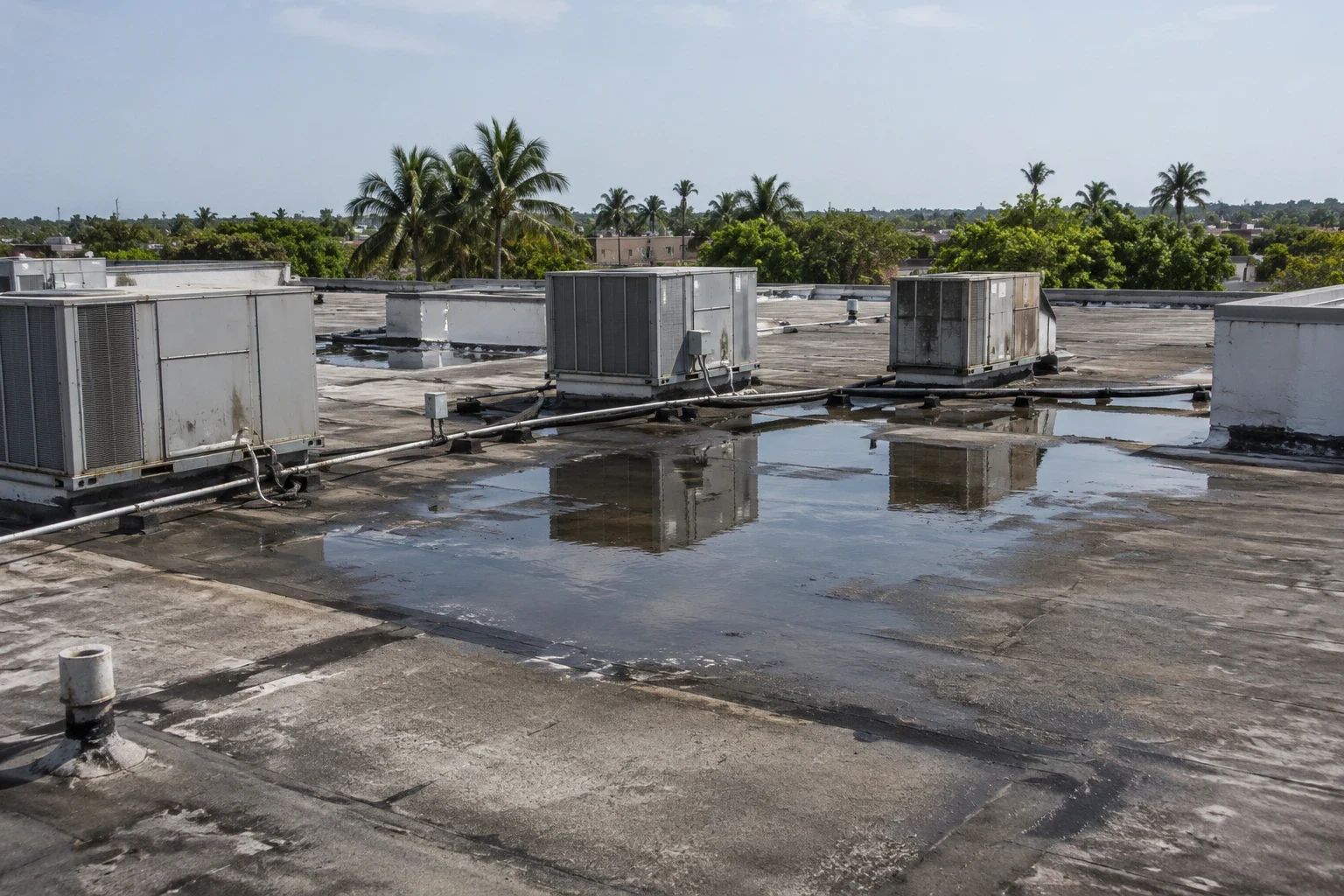
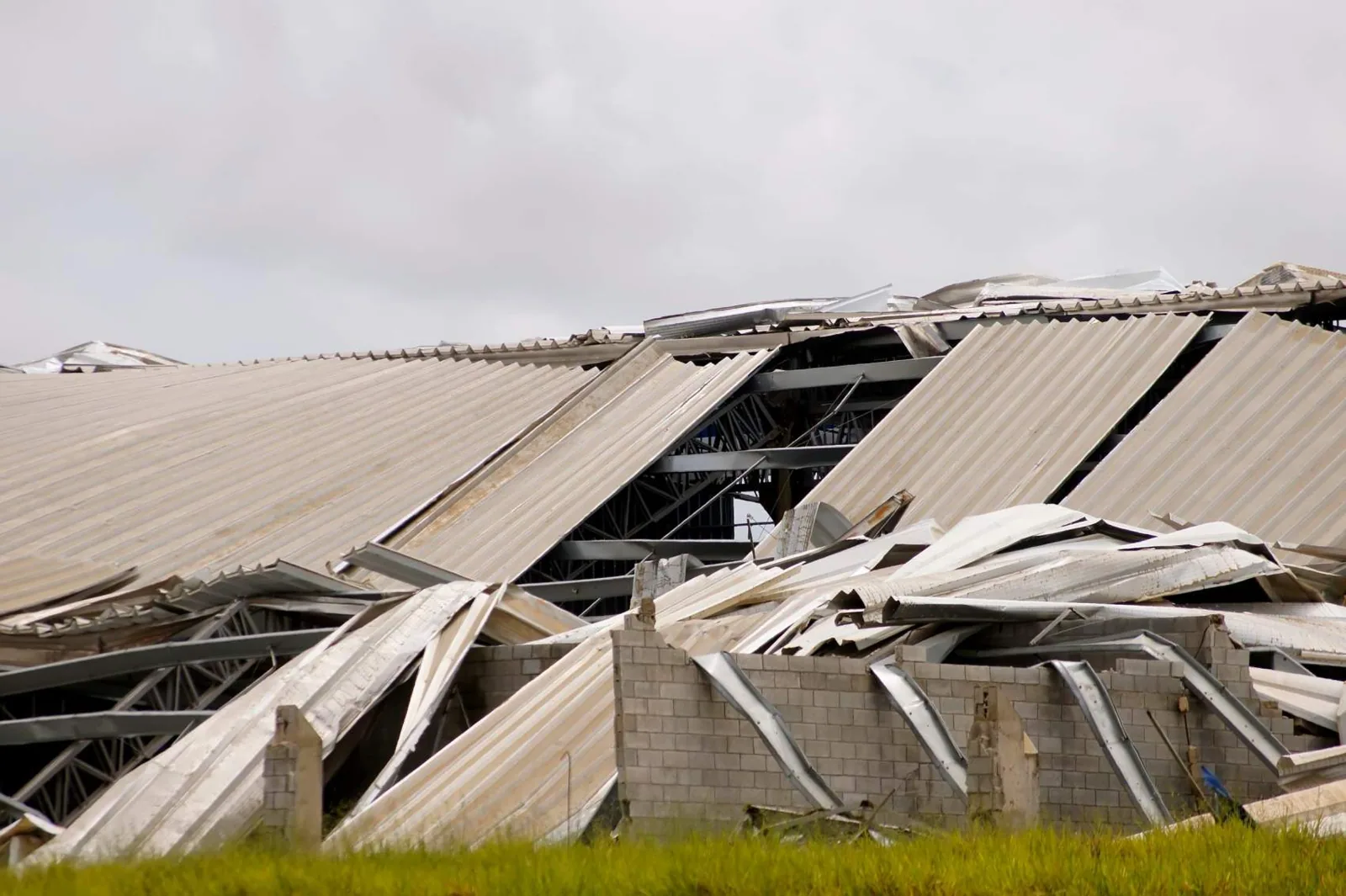
Show the Repaired Transition in Context
The closeout record names the building, roof system, repaired joint, materials, preparation, and tie-in. Photos show the flashing before work, the substrate when opened, and the completed detail. We note any adjacent condition that remains for follow-up and whether a test opening found wet insulation or a sound deck. This gives facilities staff a clear reference when a later leak report occurs near the same area.
For a Gainesville flashing repair, provide the property address, roof plan, reported room, curb or wall location, roof records, access contact, and preferred window. We will inspect the transition, verify compatible repair materials, and prepare a measured scope for the conditions found.
Frequently Asked Questions
Can flashing be repaired without replacing the membrane?
Often, if the field membrane and substrate around the detail remain sound. We inspect the tie-in and surrounding materials before limiting the scope to the flashing.
Why does water show up away from a curb leak?
Water can move along the deck or insulation before reaching an interior opening. We compare the room report with the curb, seams, slope, and nearby drains to trace the likely route.
Does new sealant solve a loose counterflashing?
Not by itself if the metal or termination has moved. The repair needs to restore the attachment and water-shedding transition, with sealant used only where the system detail calls for it.
What if wet insulation is found below the flashing?
We mark the test location, document what the opening shows, and define the removal boundary before completing the detail. Added wet material is measured and reported separately.
Related Roofing Work
Schedule a Gainesville Flashing Repair Inspection
Send the address, roof system, reported room, curb or wall location, roof plans, active leak details, site contact, and access window. We will document the transition and prepare a compatible measured repair scope.