
Aircraft Hangar Roofing in Gainesville, FL
Coordinate Gainesville hangar inspections and repairs around aircraft movement, apron access, weather, clearance limits and verified roof conditions.
Property Types We Roof: Aircraft Hangar Roofing
An open hangar door brings aircraft and equipment close to roof edges, lighting, and overhead work. Before inspection, we identify the hangar bay, aircraft movement schedule, access route, and any clearance restriction the operator needs us to follow. In Gainesville, FL, summer storms and heat make drainage, fasteners, and perimeter details useful inspection points, but the roof assembly and field evidence determine the work. We coordinate with the facility contact so ladders, lifts, and materials stay clear of active apron operations.
Map Apron, Bay, and Roof Access
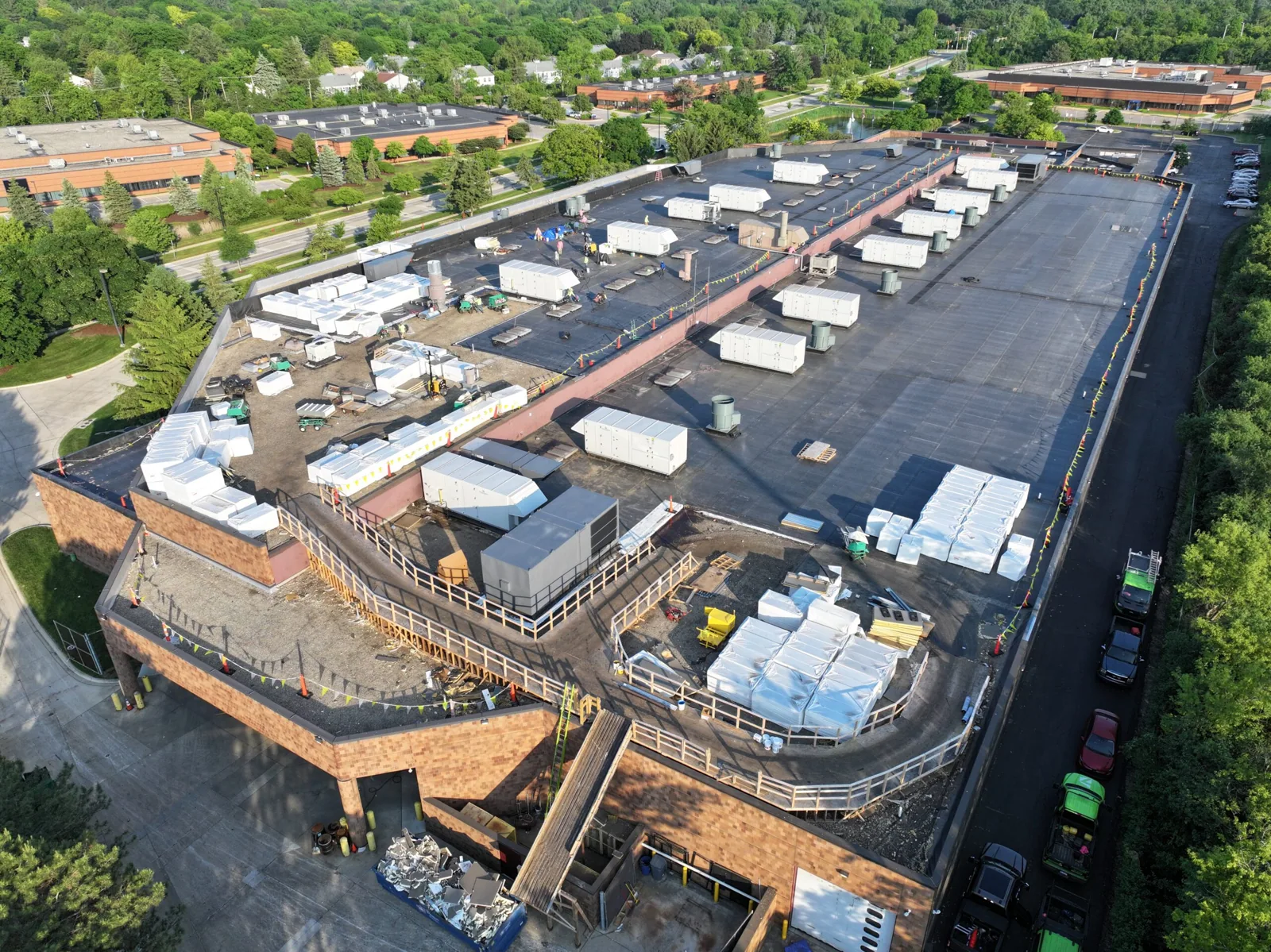
Hangar roofs may span large clear areas where access from inside is limited by aircraft, doors, lighting, and support equipment. We establish which bays are in use, whether aircraft can be repositioned, and where a lift or fall-protection setup can safely operate. The site contact confirms any airfield or tenant access rules before a crew is scheduled. A marked roof plan should show doors, roof hatches, curbs, skylights, drains, and areas the operator has identified as restricted.
Airport planning assigns 1,715 acres to aeronautical uses and 285 acres to its industrial park within a roughly 2,000-acre footprint. Waldo Road / SR 24 and NE 39th Avenue / SR 222 serve the airport and Airport Industrial Park. These facts frame the local access network, while the airport operator and hangar manager provide property-specific routes and instructions. A Gainesville Regional Airport roof review begins by confirming the building, responsible contact, and approved entry procedure.
Hangar geometry can change from one bay to the next, especially where doors, canopies or later additions meet the main roof. We mark those transitions and identify which areas can be reached from a safe work position. The Airport Industrial Park is a separate commercial geography from aeronautical land, so each assessment stays tied to the building records and access contact for that property. Drawings and field measurements establish the span, panel direction, drains and edge conditions that shape the repair plan.
Inspect the Roof From a Safe Boundary
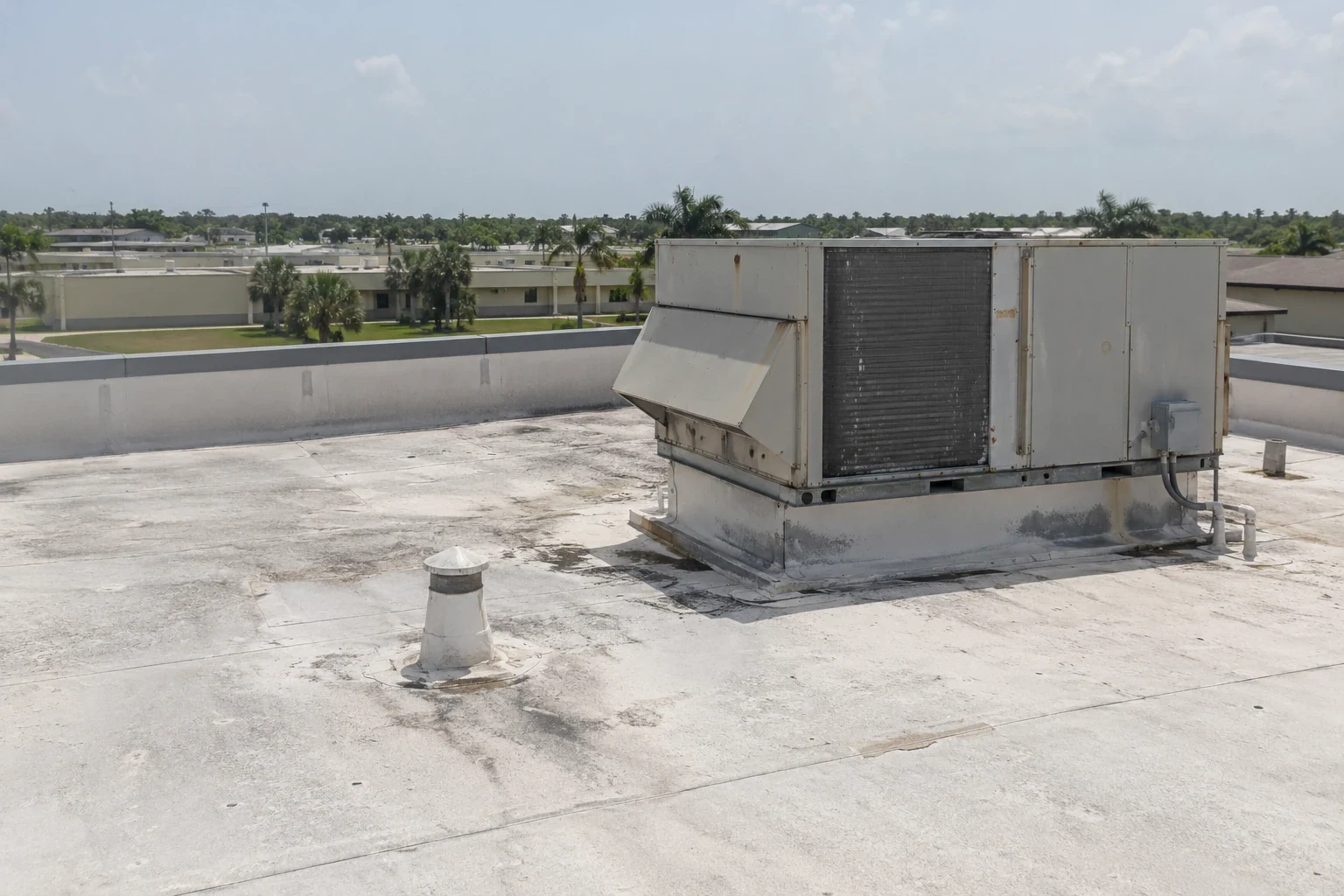
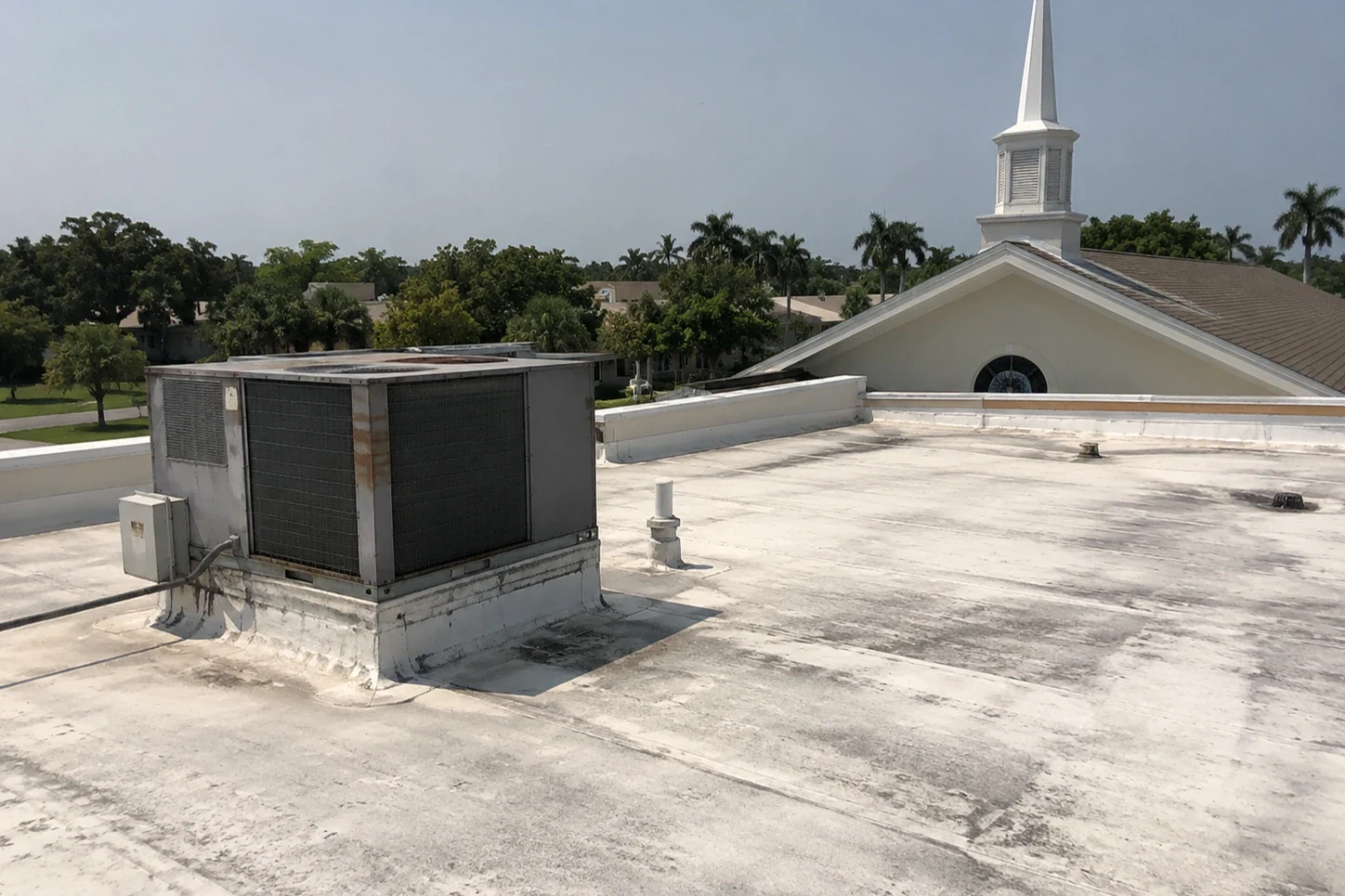
We confirm whether the surface is metal panel, membrane, or another assembly and look at the details most likely to admit water: panel laps, fasteners, ridge and eave transitions, drains, gutters, curbs, and wall connections. Hangar doors create large moving openings, so adjoining seals and structural interfaces deserve specific observation. The inspection notes visible damage, corrosion, loose attachment, sealant condition, and any interior staining without treating one observation as proof of a broader failure.
Gainesville's 2022 weather summary counted 104 thunderstorm days, 82 heavy-rain days, and a 62 mph peak gust. Wind-driven rain can challenge exposed edges and door transitions, while heavy runoff can reveal blocked gutters or drainage. We photograph each finding and identify where a closer look or test is needed. A commercial roof inspection records the checked section and access limitations; a perimeter metal review can focus on edge attachment and water-shedding details.
If a leak report appears after a storm, we compare the timing and location with the roof evidence. Hurricane Idalia produced tropical-cyclone winds in Alachua County in August 2023, and Gainesville Regional Airport recorded a gust of 40 mph. That record gives local weather context, but an event report does not diagnose damage on a particular hangar. A storm follow-up inspection documents the present condition, separates confirmed new damage when possible, and identifies any area needing testing.
Protect Aircraft and Keep the Bay Usable
Before repair, the operator identifies aircraft parking positions, fuel or maintenance activities, overhead-sensitive equipment, and the time required to clear the work area. We agree on who can authorize access and how a bay is handed back at the end of a shift. Materials should not pass through an aircraft movement route without approval. If the roof layout allows work by section, a bay-by-bay sequence can keep other operations available while one area is closed.
For active water entry, emergency response runs at all hours, seven days a week, including holidays. The facility contact first directs people and aircraft under the property's safety procedures. We assess roof access, stabilize the opening when safe, and record temporary measures separately. A permanent repair follows after the affected assembly and wet insulation boundary are understood. That keeps a rapid response from implying that the whole roof has been cleared.
Aircraft hangars share some planning needs with a warehouse roof project or a manufacturing facility assessment, such as material staging and equipment access. The aircraft operator adds clearance, apron, and bay constraints that belong in the specific work plan. We note those instructions, arrange the access window with the site contact, and secure each open area before the bay returns to use.
Choose Repair, Recover, or Replacement
A fastener or seam repair may resolve a localized issue when nearby panels, membrane, and supporting materials remain sound. If corrosion, loose attachment, widespread moisture, or repeated leakage extends across sections, a broader project may be warranted. Where the interior deck or insulation is concealed, test openings can confirm condition at selected points. We map the repair boundary and state the evidence so the operator can weigh access impact alongside cost and timing.
A recover or coating can be considered only if the existing assembly and surface meet project requirements and drainage remains serviceable. Replacement may involve door-adjacent details, perimeter metal, insulation, curbs, and staged protection of the bay below. A targeted roof repair can address a limited failure; a replacement scope defines removal and new construction. The estimate reflects roof height, span, materials, lift access, weather, and any special sequencing the operator requires.
For applications arriving on or after December 31, 2023, Gainesville uses Florida's 2023 eighth-edition building code. The design and permitting team confirms how the edition applies to the building and proposed roof assembly. We identify the system we can verify and keep any field assumption visible for review with the owner's design or facilities team.
Return the Bay With a Useful Handoff
Closeout notes should show which roof section was repaired, materials used, edge or drainage details addressed, test openings completed, and any open item that needs follow-up. Photos identify work locations in relation to bays and roof features. We confirm temporary protection has been removed or recorded, and give the site contact the documentation needed to update building records. If aircraft movement limited inspection, the report states that limit instead of treating the inaccessible area as clear.
To plan a Gainesville hangar roof visit, provide the address, hangar or bay identifier, roof plans, active leak locations, aircraft schedule, access and clearance rules, site contact, and preferred work window. We will confirm the assembly, inspect the defined area, and prepare a measured scope around the facility's operations.
Frequently Asked Questions
Do aircraft need to leave the hangar for a roof inspection?
It depends on access and the areas being checked. The operator identifies aircraft positions and clearance restrictions, then we determine whether a roof-side inspection can proceed or a bay needs to be cleared for safe access.
How do you prevent repair work from interfering with aircraft movement?
We agree on bay closures, lift placement, material routes, and handoff times with the facility contact before mobilization. The sequence is tied to the operator's instructions and active movement schedule.
Can wind damage be assessed without replacing the whole roof?
Yes. We inspect edge attachment, panels or membrane, penetrations, and adjacent details, then define the damage found. A larger scope is considered only when the field evidence supports it.
What should the closeout include for an airport facility?
It should identify the building and bay, roof section, repair materials, photos, test openings, access limits, and unresolved items. The facility can attach that record to its maintenance history.
Related Roofing Work
Arrange a Gainesville Hangar Roof Inspection
Share the hangar address, bay identifier, roof records, leak locations, aircraft schedule, access and clearance instructions, site contact, and preferred work window. We will document the roof condition and prepare a measured scope.