
Apartment and Multifamily Roofing in Gainesville, FL
Plan Gainesville apartment roof repair around resident notices, occupied units, drainage, access routes, rooftop equipment and the verified roof assembly.
Property Types We Roof: Apartment and Multifamily Roofing
An apartment maintenance team needs to know which units sit below the reported roof area before repairs begin. We identify the building, unit or common room, active leak location, and resident access limits, then inspect the roof section above it. In Gainesville, FL, heavy rainfall and hot conditions can test drains, seams, and equipment flashing. The property contact helps plan notices and protection so roof work accounts for residents, service staff, and the daily use of shared areas.
Resident Areas and Building Layout
A roof leak can affect an apartment, hallway, stairwell, laundry area, leasing office, or shared amenity. We record the unit or room, the time water appeared, and any change after rain stops. On the roof, we check the corresponding section and nearby seams, drains, curbs, and parapet edges. Water may travel beneath the membrane before reaching a ceiling, so a stain alone does not set the repair boundary.
Celebration Pointe's City Walk includes apartments beside retail, dining, and entertainment. College Park / University Heights includes historic residences, row houses, apartments and condominiums near the University of Florida. Those property types bring different ownership, access, and resident-notice arrangements. A City Walk apartment roof review or a visit in College Park / University Heights starts with the address, property manager, roof records, and actual building layout.
Multifamily properties may have more than one roof level, shared walls, balconies, equipment screens, and separate entry doors. We inspect the membrane and transitions serving the affected building, then identify any shared area that also needs work. A hotel roof plan can have similar room protection needs, while apartment work is coordinated around resident notice, leases, and access to individual units.
Inspection: Map the Roof Section Above the Unit
We identify the membrane or metal system and inspect seams, patches, drains, scuppers, penetrations, skylights, parapets, and curbs. We compare those conditions with the interior report and note whether the roof surface is dry, ponding, or visibly damaged. If a vendor recently installed or serviced equipment, we review that timeline and inspect the related flashing. Photos tie each observation to the roof plan and help property staff connect findings with maintenance tickets.
Gainesville had 82 heavy-rain days in 2022. At the property, we inspect outlets and low areas, then check the drain path and overflow details for the cause of water entry. We check the drain path and overflow details, then determine whether the issue is cleaning, flashing, slope, or wet insulation. A drainage review can address outlet conditions, while an infrared survey can help choose test openings when moisture may be hidden below the membrane.
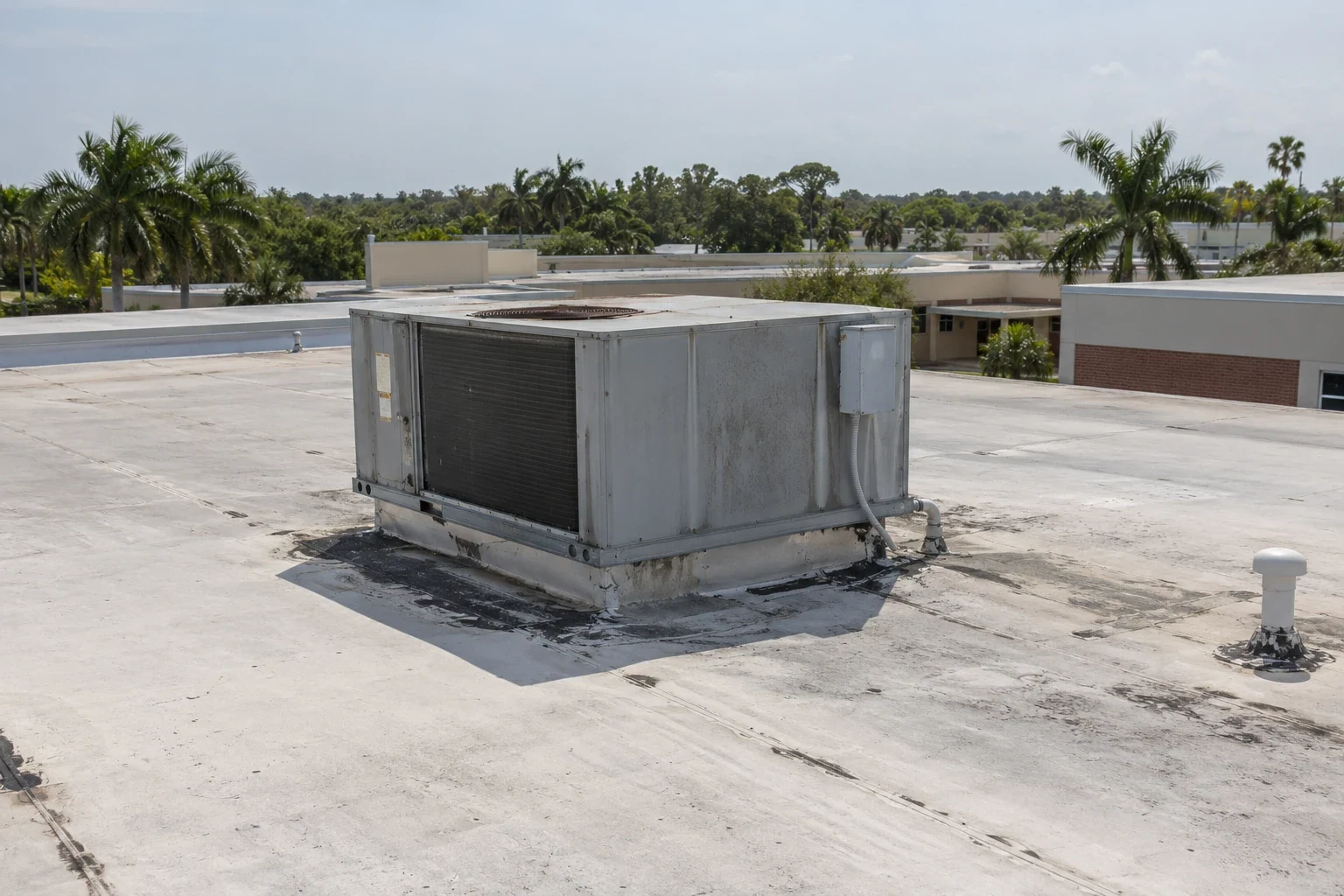
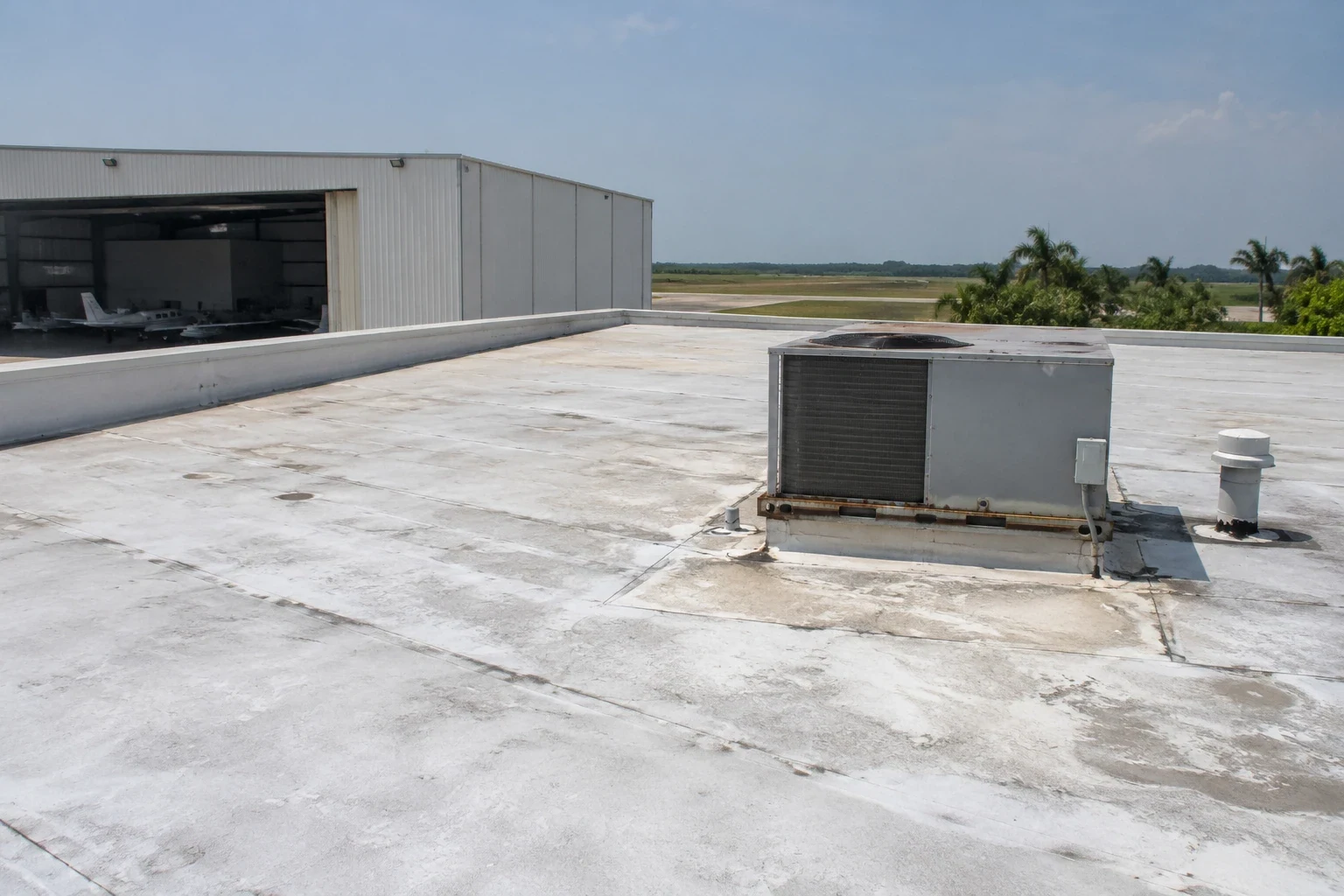
Apartment buildings can have rooftop HVAC units or other equipment serving multiple units. We check the curb corners, supports, and membrane connection without assuming how the equipment is controlled. A curb and equipment inspection can define that roof interface and identify where coordination with the mechanical vendor is needed.
Repair: Protect Units and Shared Spaces
A limited puncture, seam opening, or flashing failure may be repaired while residents remain in other parts of the property. We identify the work zone, protect the interior below where needed, and use materials compatible with the existing roof. If a test opening finds wet insulation, we measure how far removal needs to extend and inspect the deck at the opening. The proposal separates confirmed work from areas that remain closed or inaccessible.
Before entering a unit or common room, we coordinate with the property manager and follow the property's notice and access procedures. Work may require a ceiling check, temporary barrier, or relocation of belongings directly below an opening. We do not need resident access for every roof repair; when it is needed, the manager can define the notice period and contact process. Photos and a repair boundary help staff explain what changed after the visit.
Repeated leaks or widespread wet areas may justify comparing localized repair with recover or replacement. A replacement assessment can identify whether work should be staged by building, roof level, or occupied section. A commercial office roof scope may also involve shared tenants, though multifamily planning needs direct resident communication and unit access coordination.
Coordinate: Notices, Parking, and Roof Access
We confirm the property manager, resident notice method, roof hatch, key or escort requirements, parking, loading area, and any quiet hours. A lift may need temporary access through a lot or courtyard, so the site contact identifies parking spaces and pedestrian routes that must remain available. If roofing material is removed, the path from roof to disposal area is planned to avoid resident entries and common amenities.
Gainesville's summer storms may change the workday sequence. We check weather before opening the roof, keep the drain path clear, and secure the work area before a pause. Residents should know which building or roof zone is active and whether temporary noise or access limits apply. For urgent water entry after hours, emergency response is available every day, including holidays; we stabilize the opening and provide the manager with the next repair step.
For properties with several buildings, we keep each roof plan and work record separate. A shared site contact can help sequence work around lease turnover, scheduled maintenance, and resident events. We state the expected access window and closeout point before moving crews to another section, so the property team knows which building has returned to normal operation.
Close Out: Keep Each Building's Roof History Clear
The closeout record lists the building, roof section, material installed, test openings, drainage work, and remaining conditions. Photos connect the repair to the unit or common area when that location is known. We note resident access that occurred, temporary protection removed, and any follow-up testing still needed. That record can be stored with the property's work orders and used when the next resident reports a stain.
For a Gainesville apartment roof review, provide the property address, affected unit or common area, roof history, leak locations and dates, resident access rules, property contact, and preferred work window. We will inspect the roof section, coordinate notices and protection, and prepare a measured scope that reflects the building's operating needs.
In an apartment property, a roof repair may affect several occupied units, common corridors, balconies, or shared mechanical space. Management identifies leaseholder notices, pet or gate rules, parking, and the route for lifts or material. We connect each reported ceiling mark to its roof section, then plan protection and repair around tenant access. Downtown Gainesville and the campus area include residential buildings with differing access patterns, so we confirm the building's own rules rather than assume a standard notice process. A marked closeout helps maintenance staff distinguish completed work from units that still need interior follow-up.
Frequently Asked Questions
Will residents need to leave their units during roof repairs?
Not usually for work done entirely above the roof, though a unit restriction may be needed if the ceiling or interior must be opened. We coordinate that requirement with the property manager before scheduling access.
How do you handle the same leak report from several units?
We map each report by building, unit, and room, then compare those locations with the roof plan. Several interior marks may share one roof path, or they may need separate inspections.
Can roof work proceed while residents use the amenities?
Often, if material staging, lift locations, and pedestrian paths are coordinated. The property contact identifies event hours and shared spaces that need temporary access limits.
What should we include in a resident leak ticket?
Record the unit, room, time, active weather, stain location, and whether the condition changed after rain. Photos from inside can help us match the report to a roof section.
Related Roofing Work
Arrange a Gainesville Apartment Roof Inspection
Share the address, building and unit or common area, roof records, leak dates, resident access rules, property contact, and work window. We will document the roof section and repair options.