
Commercial Roof Condition Reports in Gainesville, FL
Get Gainesville roof findings mapped by section, with photos, observed defects, test limits and next actions that facilities staff can use to plan work.
Roofing Capabilities: Commercial Roof Condition Reports
A ceiling stain in a medical building needs a field record that connects the interior report to a roof section and the next inspection step. Our condition reports identify the roof system we can verify, map observed defects, and pair photos with written findings. In Gainesville, FL, the UF Health medical district and the Malcom Randall VA campus include clinical, research, logistics and support functions. At a downtown property near Depot Park, access and occupancy may look different. The report gives each building a specific record instead of carrying one assumption across the portfolio.
Frequently Asked Questions
What does the report include?
It identifies the property and roof sections inspected, verified materials, visible conditions, photographs, access limits and recommended next steps. Testing needs and unconfirmed items are labeled separately.
Can the report say what caused a leak?
We describe the likely entry point when field evidence supports it and note any uncertainty in the water path. Concealed materials or an inaccessible detail may require another test before cause is clear.
Will you include repair quantities?
We include measured limits where the defect can be established. If wet insulation or deck damage may extend beyond the visible area, we identify the test needed before final quantities are set.
Can you document roofs with several buildings?
Yes. We label each building and roof section, then keep its photos, findings and open actions together. The site contact can supply naming conventions or plans used by the facilities team.
Related Roofing Work
Inspect: Record What the Roof Shows
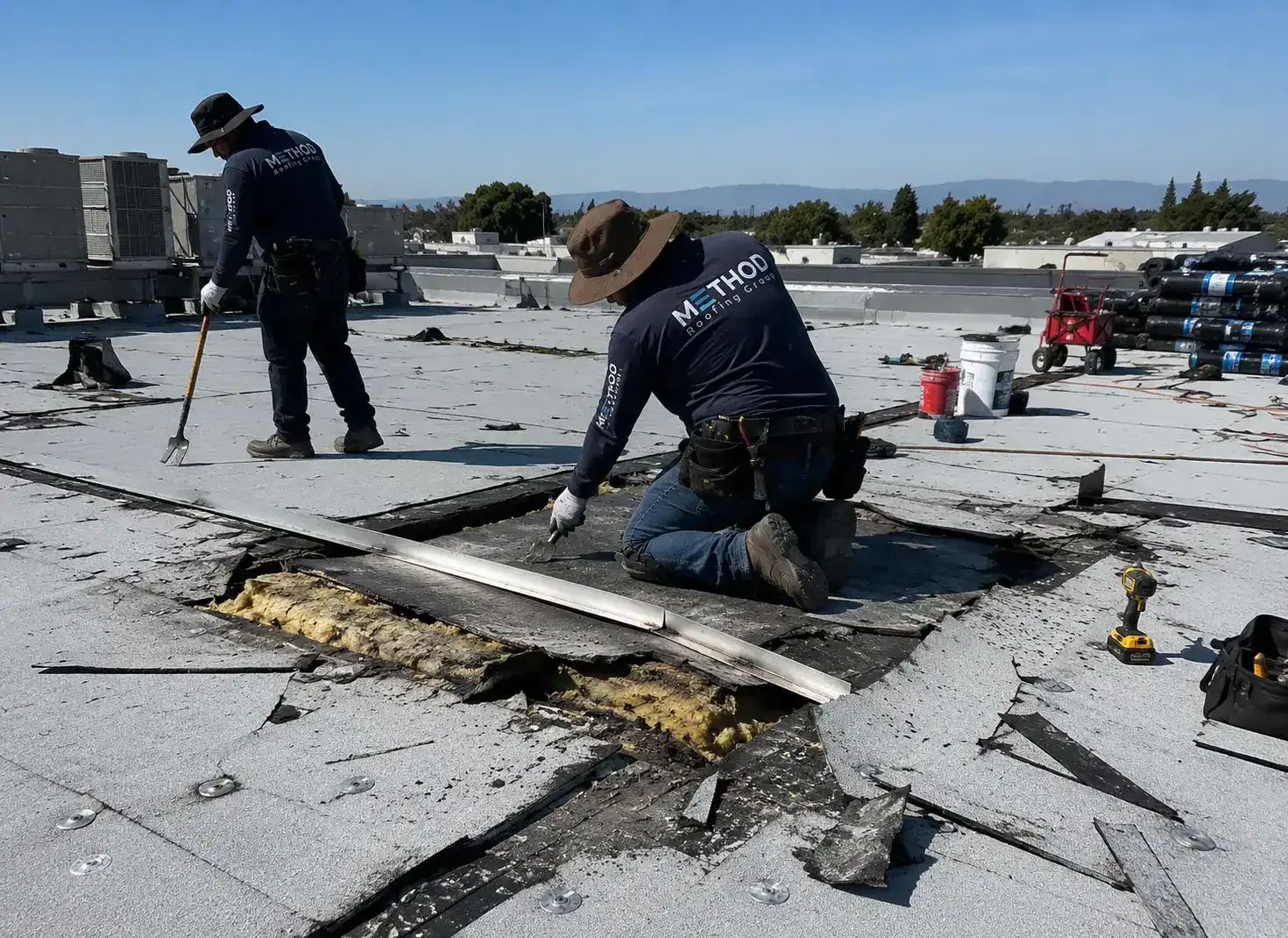
We walk accessible roof areas and note seams, flashings, penetrations, drains, edge attachment, rooftop equipment and visible repairs. Each finding includes its location, the observed condition and why it matters to water entry or continued service. Photos show the detail in context, with a roof plan or marked sketch when the property has several sections. The report distinguishes a visible defect from an area that needs moisture testing or a test opening before repair quantities can be set.
We note the roof surface around the defect, not only the apparent opening. A loose termination may connect to a seam, curb or wall transition, and a drain concern may involve the bowl, strainer, scupper or overflow path. If equipment service has left a patch or penetration, the record identifies it as a separate detail. These observations help the owner understand what was included in the visit and what remains outside its boundary.
The 2025 Gainesville climate summary records 46.80 inches for the year; 3.06 inches fell within its largest 24-hour period. We use that rainfall context when reviewing drains and leak paths, then identify the entry point from field evidence. We trace the reported interior area toward roof conditions and mark an uncertain path for follow-up. A commercial inspection can focus on a reported leak, while a moisture survey can help locate suspected wet insulation across a broader field.
Coordinate: Set the Visit Around Occupancy
Before arrival, the site contact identifies roof access, occupied rooms below, equipment restrictions and areas where a temporary opening would need interior protection. In the UF Health district, patient care and clinical operations may govern an access window. Near the University of Florida campus, a building contact can identify labs, residence halls or support areas with separate access requirements. We record the restrictions that limit what can be inspected and state when another visit is needed.
Where a roof is shared by several tenants, we confirm which interior reports correspond to the work area and who can authorize access. A facility may need notice before a ceiling tile is moved or a room is entered. The visit record notes those access conditions and any area that could not be checked from above or below. If a lift, escort or shutdown is required, we identify that dependency before scheduling another inspection.
A December 2019 tornado was documented near Paynes Prairie in Alachua County. During a follow-up, we tie observed displacement, debris marks and water evidence to the property and roof section inspected, then state which conditions require testing or an earlier maintenance record to establish timing. A post-tornado roof assessment can include an event-specific inspection record.
Compare: Explain Severity and the Next Step
Findings should tell the reader whether to repair now, maintain, test further or monitor. We describe the evidence for that recommendation and the consequence of leaving it unresolved, such as recurring water, damaged insulation or an exposed edge. Where wet material is suspected, we identify a possible test location and explain that its result may change the removal boundary. A measured repair scope can follow when the defect and tie-in limits are established.
When a report covers a large roof, we group findings by section and note whether water can travel from one area to another. The grouping keeps repeated observations from becoming one vague property-wide statement. It also helps the owner assign a follow-up visit to the specific slope, drain line or perimeter under review.
A rating is useful only when the report explains how it was reached. We can note active leakage, repeated patch failure, broad surface wear or access limitations, then separate confirmed condition from owner-provided history. For a property near the Depot Building, Catalyst Building or Bo Diddley Plaza, our Downtown Gainesville inspection begins with its address, roof section and site contact before recommending work.
Document: Keep Findings Ready for Decisions
The report names the inspection date, areas reached, roof material observed, photos taken, test work performed and open questions. At closeout, the designated facilities lead receives the dated report, marked plan and original photographs in a form that can be stored with maintenance and capital records. It also records any section that could not be accessed and what is required to review it. If an owner needs a repair budget, we can distinguish measured quantities from conditions that need an opening or design review. A capital review can use the same evidence while comparing timing across buildings.
Each photo should answer a practical question: where the condition sits, how it relates to adjacent details, and whether the visible evidence supports a repair recommendation. We can pair a wide view with a close detail so a facilities manager can orient the finding without relying on memory from the roof walk. When the report contains multiple findings, each item has a separate location label and action, making a service request easier to dispatch.
Work that proceeds after inspection should be added to the property file with completed locations, installed materials and closeout photographs. That history helps the next reviewer tell a repaired area from an original condition. A roof asset register can keep reports and maintenance notes under the correct building and section. For a Gainesville visit, provide the address, roof plans, reported leak areas, records, site contact and access window; we will return findings tied to what the field inspection established.
A report is useful when another facility contact can walk the roof and find the same item. We mark each observation on a plan, identify the nearest drain, curb, seam, or perimeter condition, and connect photographs to a numbered roof area. If a stain appears below a roof penetration, we record the path checked and whether water entry was reproduced or only reported. In Gainesville's frequent heavy-rain periods, a follow-up inspection after the next significant event may answer a question that a dry-day visit cannot. We leave that step explicit instead of treating an unresolved area as a confirmed repair.
Request a Gainesville Roof Condition Report
Provide the property address, building use, roof plans, active leak areas, available records, site contact and preferred access window. We will inspect and document observed conditions and next steps.