Commercial Roof Warranty Management in Gainesville, FL
Track Gainesville roof warranty records, service activity and open issues by building, with inspections and repair notes matched to owner documents.
Roofing Capabilities: Commercial Roof Warranty Management
A roof warranty file is only useful when the service history can be matched to the correct building, system and repair area. We organize owner-held documents, inspection notes and completed work by roof section, then check visible conditions against the requirements available for review. Gainesville, FL, has institutional properties along Archer Road, including UF Health and the Malcom Randall VA Medical Center, as well as research buildings near Innovation Square. Different contacts may manage those facilities, but each roof record needs the same clear link between the document, the assembly and the work performed.
Identify: Match the Document to the Roof
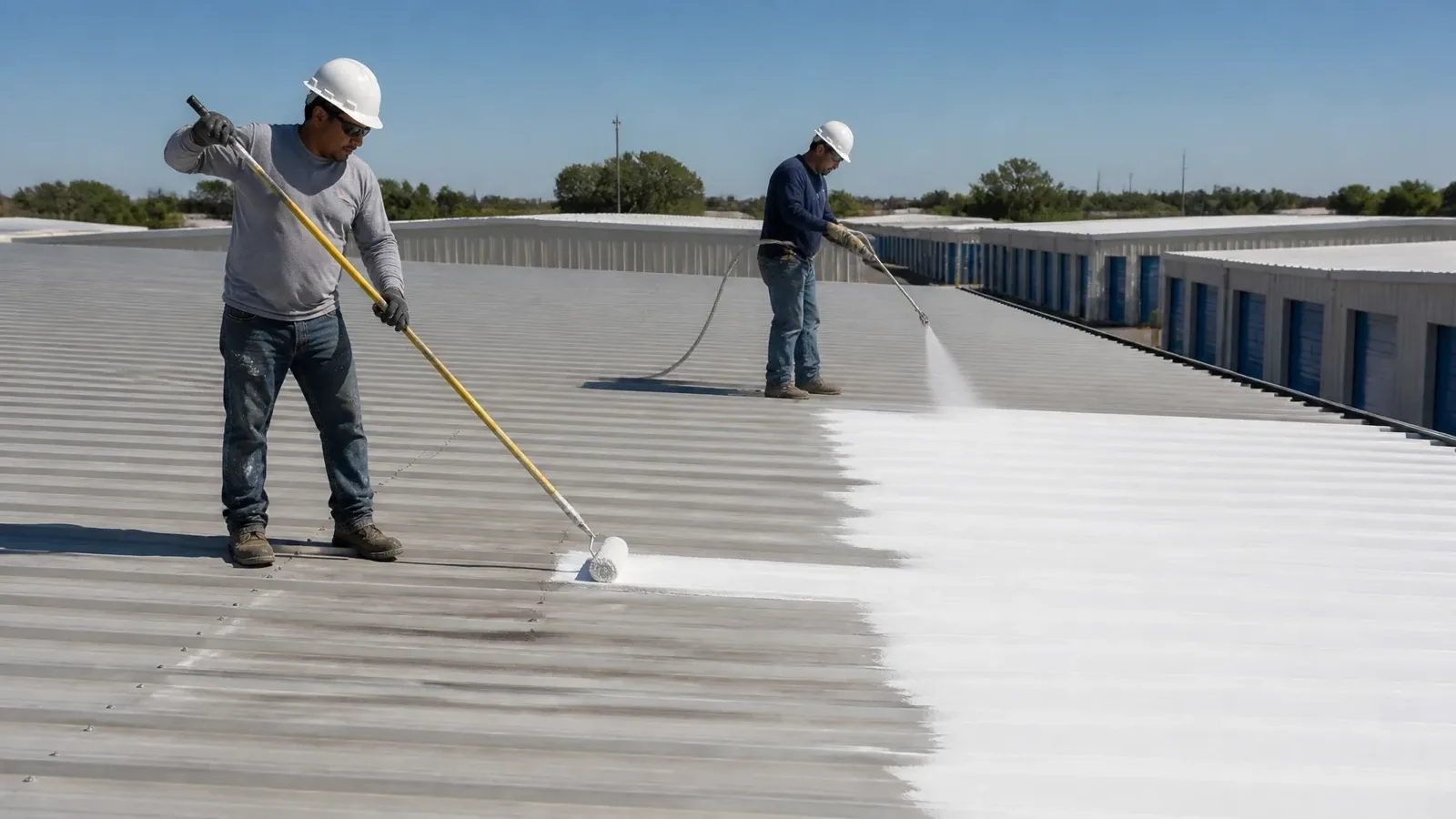
We begin with the warranty copy, roof plans, closeout package, contractor records and the owner's description of the affected area. The file should identify the building, system, installation or repair scope as stated in the documents, and any manufacturer or service contact the owner has recorded. The written warranty sets its term and coverage; a product name alone does not settle either. If a record is missing, we mark the gap and compare the physical roof with the information the owner can provide.
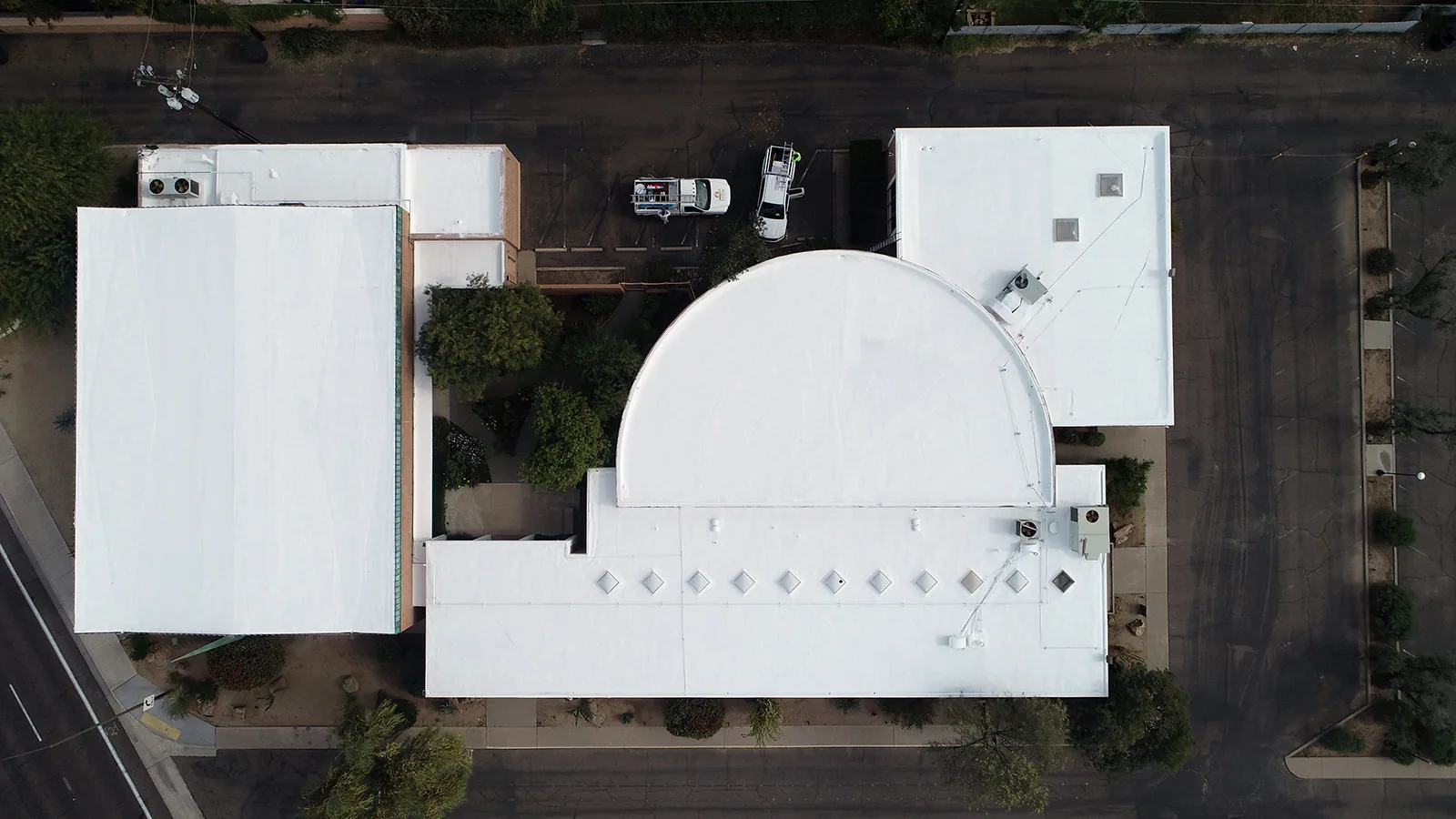
On a multi-building property, the same roof material may have different installation dates or repair histories. A plan can also predate new curbs, replacement sections or changes to rooftop equipment. We label which section a document appears to cover and whether field conditions support that match. A roof asset record can retain the document location, inspection date and known service activity beside the relevant building.
Inspect: Check Conditions that Affect Service
At the roof, we look for open seams, damaged flashing, punctures, blocked drainage, loose edge metal and prior patches that may need review. We photograph the detail and compare it with available installation or repair records. Gainesville recorded 133 days at or above 90 degrees in 2025, and prolonged surface exposure can make sealants and membrane details worth checking during routine visits. Heat totals do not determine whether a particular condition is covered; the document and the observed roof condition do.
Where a leak has been reported, we map the interior area against nearby penetrations, seams and drain paths. If moisture under the membrane is suspected, a selected test opening may be needed before the repair boundary is known. We can perform a roof inspection or provide a moisture survey to document the conditions identified by the visit. The notes state which areas were accessible and what remains concealed.
Document: Preserve Each Service Event
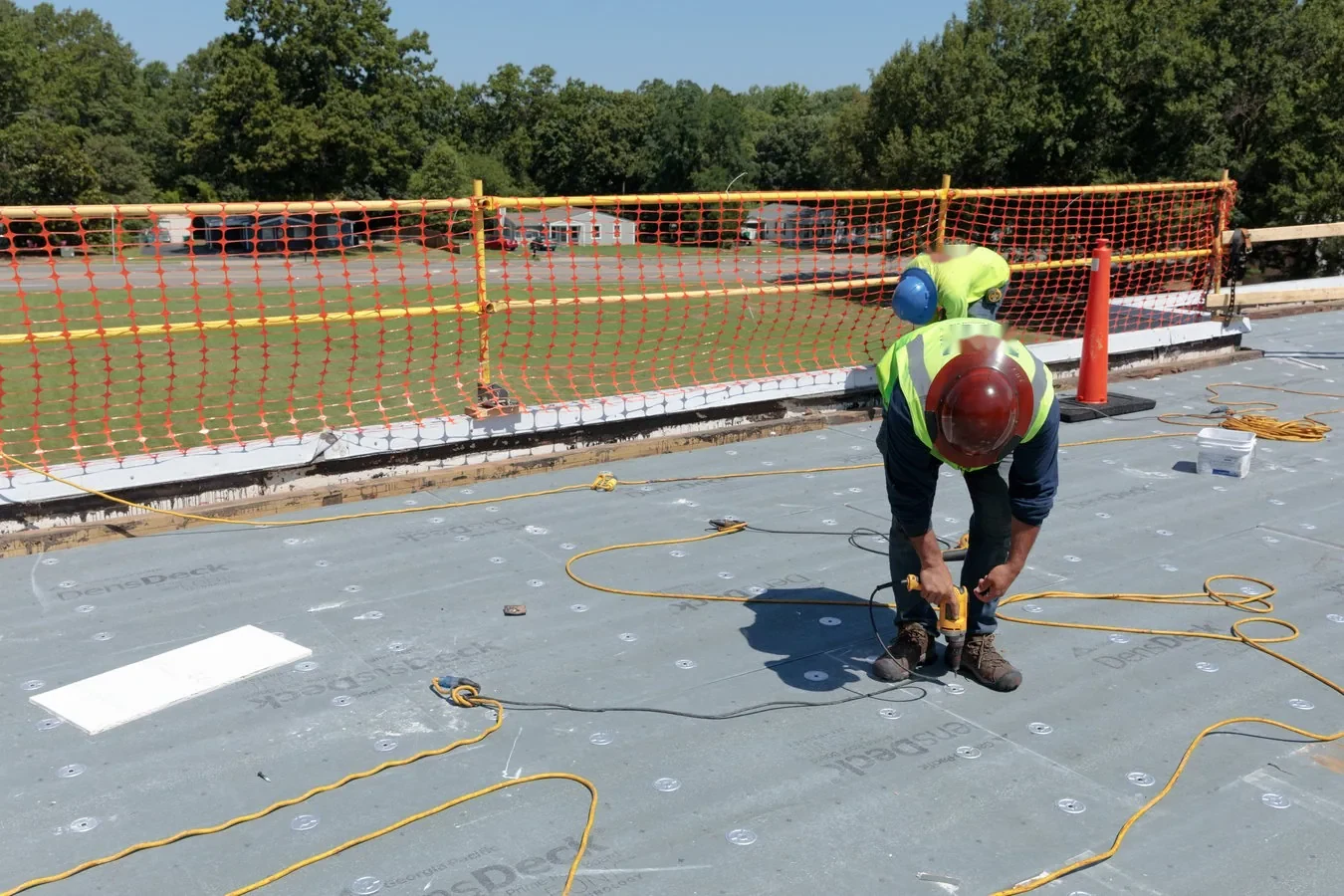
For a service visit, we record the date, roof section, reported issue, visible condition and work performed. Photos show the area before and after the repair when available, and the closeout note identifies materials and tie-in locations. Any test opening, temporary protection or condition outside the repair area is listed separately. This gives the owner a readable service trail if another leak occurs near the same detail. A written condition report can set the baseline when the current record is incomplete.
We can also prepare a chronology from the files the owner supplies, with dates for inspections, repairs, reported leaks and follow-up. If the documents conflict about a roof section or system, we identify the difference and request confirmation instead of merging the records into one unsupported history. The chronology can list open items such as a missing closeout photograph, an untested wet area or a pending service response, so the facility contact knows what is available before the next review.
Gainesville's 2022 weather record includes 104 thunderstorm days and 82 heavy-rain days. After a storm, we document new findings and compare them with earlier records without treating the regional weather history as proof of cause or coverage. If an issue is active, our emergency response can be arranged any hour, including weekends and holidays, to protect the opening when access and conditions permit. The follow-up file separates temporary stabilization from permanent repair and any manufacturer review the owner chooses to pursue.
Coordinate: Keep Repairs within the Review Path
Before work, the owner or facility manager can identify approval steps, required notices and any service contact named in the file. We check the available instructions for any advance-review step and flag questions for the service contact named in the file. The written scope defines the affected area, materials, preparation and tie-in. When the scope could extend beyond that boundary, we state what needs inspection or authorization before proceeding.
For occupied buildings, the site contact also sets roof access, interior protection and the work window. A medical space on Archer Road may require coordination around patient and support operations, while a research property at Innovation Square can have separate building contacts. We record access limits and any area we could not inspect. A maintenance program can schedule documented follow-up visits and keep recurring observations with the correct roof file.
Close Out: Make the Next Review Easier
After work, the owner receives a record of the inspected area, repair method, materials, photographs and any unresolved condition. We note whether a water test or additional evaluation remains outstanding and identify the contact who can provide missing documents. The roof file should distinguish completed roofing work from a claim decision or manufacturer determination, which is made by the party responsible under the document. A claim documentation package can organize inspection evidence when the owner is also discussing an insurance matter.
When a repair is completed, the report should preserve enough detail for a later inspection to recognize the work. We identify the patch limits, adjacent seams or transitions, surface preparation and whether testing was performed. If a separate item remains outside the approved work, it stays visible in the closeout rather than disappearing into a general note that the roof was repaired.
For a Gainesville warranty review, provide the property address, roof plans, warranty documents, prior repair records, current concern, site contact and access window. We will organize the records we receive, inspect accessible conditions and document recommended next steps. The owner can keep the report with the closeout materials and use it to prepare for the next service visit.
Warranty administration works best when records describe the current roof condition and the work performed since installation. We document maintenance visits, repair locations, replaced materials, drain cleaning, and any areas that still need review before future work proceeds. A roof on a Gainesville medical or research property may involve restricted access and detailed shutdown coordination, so the facility record should also identify who approved the visit and which areas were reached. We do not infer coverage from a product name; the owner and manufacturer documents control that question. Our Diligence Notes help the owner prepare a focused inquiry with location-specific evidence.
Frequently Asked Questions
Can you tell us whether a leak is covered?
We can inspect the roof and compare visible conditions with documents supplied by the owner. The party responsible under the warranty determines coverage; our report records the evidence and repair needs.
What if the warranty paperwork is incomplete?
We inventory what is available, identify missing pages or closeout records, and match the file to the roof section as far as field evidence allows. Unknown dates or terms remain marked as unconfirmed.
Should we repair a leak before contacting the manufacturer?
The document may specify a service or notice process. We review the available instructions with the owner and can help stabilize active water entry, while recording temporary work separately from permanent repair.
Can service records be tracked across several buildings?
Yes. Each visit can be tied to the building, roof section, date, condition, work and photos. That keeps records distinct even when a property has several systems or service contacts.
Related Roofing Work
Organize a Gainesville Roof Warranty Review
Send the roof documents, building address, plans, repair history, current concern, site contact and access window. We will inspect accessible areas and prepare a clear service record.