
Commercial Roofing for Insurance Restoration in Gainesville, FL
Document Gainesville commercial roof storm damage, temporary protection and repair scopes with dated photos, measured quantities and clear condition records.
Industries We Serve: Commercial Roofing for Insurance Restoration
After a storm, the owner needs to know what changed on the roof, what is protected, and what work remains. We inspect the reported building, record visible conditions by roof section, and prepare a measured repair scope with photos. In Gainesville, FL, thunderstorms, heavy rain, hail, and tropical weather can affect different roof details. Weather history establishes context; current field evidence documents the property. The insurer and owner determine coverage and claim decisions, while the roofing record supports their review.
Record the Event and the Roof Condition
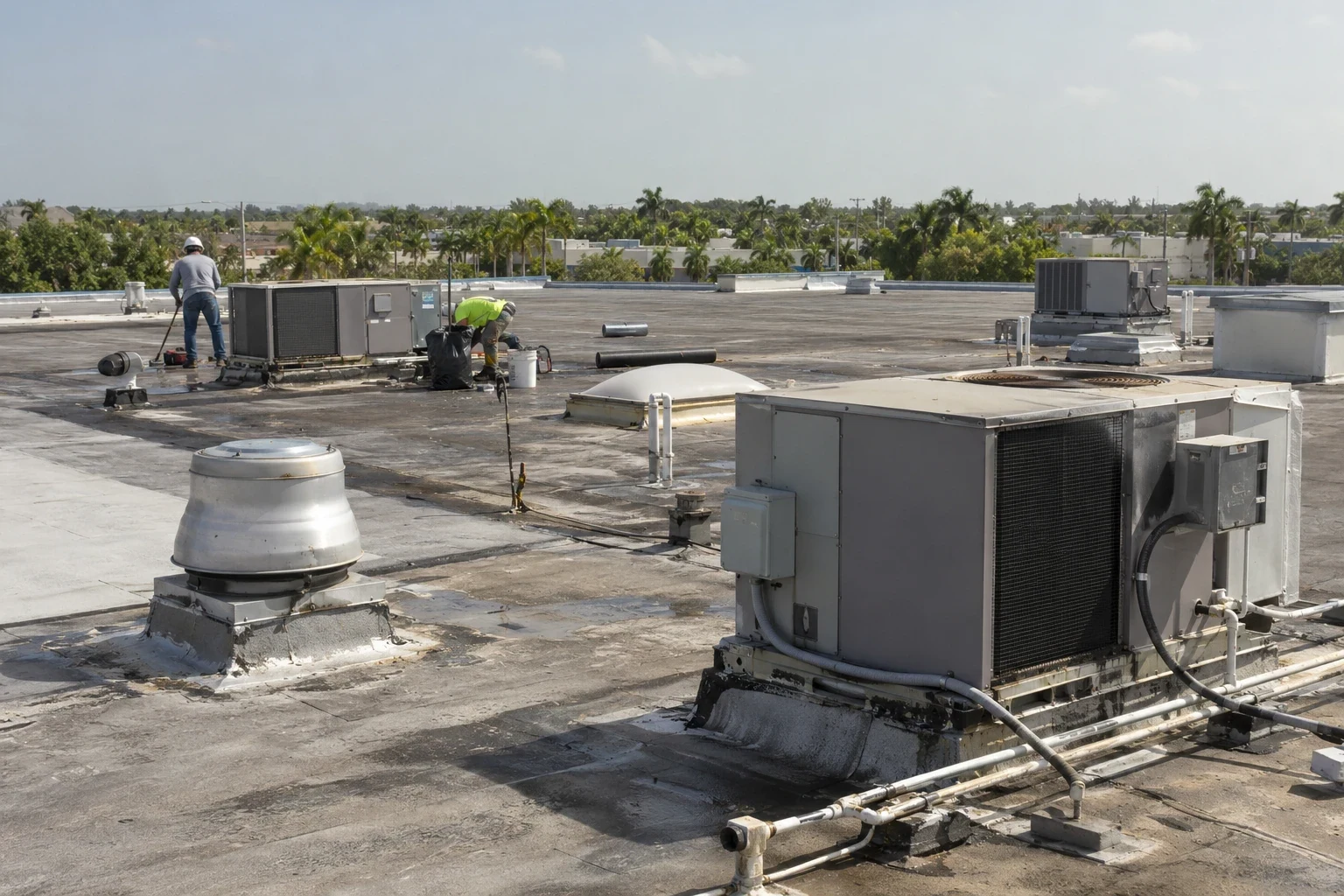
We start with the property address, reported event date, interior leak locations, prior repair records, and any safe access constraints. On the roof, we inspect seams, membrane, metal, flashings, equipment curbs, perimeter attachment, drains, and debris impacts. Photos identify each finding in place and show its relationship to the roof plan. We distinguish visible damage from older wear when the evidence allows it and mark unresolved areas that require testing or another access window.
Weather-event records can help organize a claim timeline. We compare the reported date with the owner's account, maintenance history, and site photographs, then inspect each roof section for current damage. A Gainesville Regional Airport area inspection begins with the property address and current roof evidence.
For a current loss, we record the event date supplied by the owner and compare it with dated photographs, maintenance records and the condition found during inspection. Older weather records include a 2019 tornado near Paynes Prairie and 1997 hail reports in Gainesville and near Archer. During Hurricane Idalia in 2023, Gainesville Regional Airport recorded a 40 mph gust. We keep that event separate from the 2019 tornado and 1997 hail records, then match a current loss to its reported date and the roof evidence at the insured property. The storm damage assessment organizes the field findings by roof section, notes temporary measures already in place and identifies any area that still needs testing.
Separate Temporary Protection From Permanent Repair
For urgent water entry, we can arrange a stabilization visit at night or on a holiday as access and weather conditions allow. We coordinate safe access with the owner or site contact, protect the interior as directed, and stabilize the opening where conditions allow. The service record identifies material used, location, date, and limits of temporary work. It should not be confused with permanent repairs that require drying, testing, or replacement after the roof assembly can be opened.
A temporary cover can reduce additional entry, but it does not establish how far moisture traveled under the membrane. We use infrared readings or test openings where they can clarify insulation and deck condition. The test location, materials found, and opening closure are documented. A moisture survey may guide sampling, while a roof inspection maps damage, unrelated wear, and sections that could not be accessed.
Gainesville received 46.80 inches of precipitation in 2025, including a highest 24-hour total of 3.06 inches. Heavy rain can reveal drainage and flashing problems even when the weather event itself has passed. We check roof drains, scuppers, overflow routes, and ponding evidence, then note whether a defect appears related to the reported event or remains undetermined.
Prepare a Repair Scope the Parties Can Review
A measured scope describes the building, roof system, affected area, removal quantities, material, flashings, drains, and interior protection. It states the observed condition that supports each repair and separates unrelated maintenance from event-specific work where evidence allows. If concealed insulation or deck damage remains unknown, the scope identifies a test or unit-price process instead of presenting the uncertainty as a confirmed quantity.
A localized repair can be appropriate where adjacent materials remain sound. Widespread wet insulation, loose attachment, or multiple failed details may require broader replacement. A recover or coating can be considered when the assembly, surface, and drainage support it. A repair estimate describes a limited corrective scope; a replacement proposal identifies removal and new work. The adjuster and property owner evaluate coverage, while the roofing contractor documents means, quantities, and field conditions.
Local permit submissions dated December 31, 2023 or later are reviewed under Florida's 2023 eighth-edition building code. The owner and design team can confirm the provisions triggered by this repair. When a repair changes an assembly or insulation, the project team can review code requirements and permit needs for the building. We list the existing system and proposed work so the owner and insurer can see what is being repaired and what is a code or capital upgrade question.
Coordinate Work Around Tenants and Operations
A commercial claim can involve occupied offices, retail customers, warehouse inventory, or a public service area. The site contact identifies hours, loading restrictions, sensitive interiors, and access approval before crews arrive. If a repair is phased, we show the roof boundary and daily tie-in so an open section is protected before weather changes. A property management contact plan can organize tenant notifications, and a general contractor coordination sequence can align roof work with other repairs.
Gainesville's 2022 weather record listed thunderstorms on 104 days and heavy rain on 82, with a peak gust of 62 mph. Weather can affect dry-in, material installation, and access. We document pauses, secure exposed work, and tell the site contact which tasks are complete and which remain open. If another storm arrives during repair, the record identifies the protection in place and the next inspection needed.
For a multibuilding loss, each address receives a separate photo set, roof plan, and scope. The owner can link those records to the claim file without confusing an affected building with one that was merely inspected. Any area not reached due to access restrictions appears as a limitation, not an assumption.
Provide a Dated Handoff
The handoff lists inspection date, weather event reported, building and roof section, materials, measured quantities, temporary work, permanent repairs, and open questions. Photos show the location and condition before and after the repair when available. We identify test openings, moisture findings, deck observations, and any area requiring additional review. This record gives the owner, adjuster, and contractor a common reference for the next decision.
For a Gainesville storm or insurance restoration review, provide the address, reported event date, roof plans, repair and maintenance history, interior leak locations, claim contact, site access rules, and any temporary protection record. We will inspect the roof, document the conditions found, and prepare a measured scope for the property's review.
The final record keeps event-related observations, existing maintenance items and open testing questions in separate entries. We label each photograph by building and roof section, include the inspection date, and connect every proposed repair quantity to a measured area or detail. Gainesville's frequent thunderstorms make prompt review useful, but the scope remains tied to what the inspection establishes at that property. The owner and claim representative can compare the dated evidence with their own records while permanent work and temporary protection stay clearly distinguished.
Frequently Asked Questions
Can you tell whether storm damage is new?
Sometimes, when dated photos, maintenance records, and current field conditions support the comparison. When timing cannot be established, we describe the visible condition without assigning a date or cause.
Does a temporary tarp complete the roof repair?
No. It is a stabilization measure that should be logged by date, location, and material. Permanent repair may require inspection, drying, or testing after safe access is available.
What belongs in a contractor's insurance repair estimate?
List the roof area, observed damage, removal quantity, material, tie-ins, protection, testing, and assumptions. Keep any unrelated maintenance or upgrade work identified separately for review.
Can you inspect multiple locations after one storm?
Yes, when access and timing allow. Each site receives a separate inspection record and photo plan so the owner can connect findings to the correct address and claim file.
Related Roofing Work
Request a Gainesville Restoration Roof Inspection
Share the property address, reported event date, roof records, interior leak locations, temporary protection details, claim contact, access rules, and work window. We will document the roof condition and prepare measured repair quantities.