
Self-Storage Roofing in Gainesville, FL
Protect Gainesville storage units with roof inspections and repairs planned around tenant access, water paths, drainage, heat and verified assembly conditions.
Property Types We Roof: Self-Storage Roofing
A water mark in a storage unit can threaten belongings long before a tenant reaches the office to report it. We identify the affected unit, aisle, and roof section, then coordinate entry and protection with the site manager. In Gainesville, FL, frequent thunderstorms, intense summer heat, and heavy rain make drainage and roof details important to check. The unit location helps focus the inspection, but the roof assembly and moisture boundary determine the repair. A property-specific plan keeps tenants informed while preserving access to unaffected units.
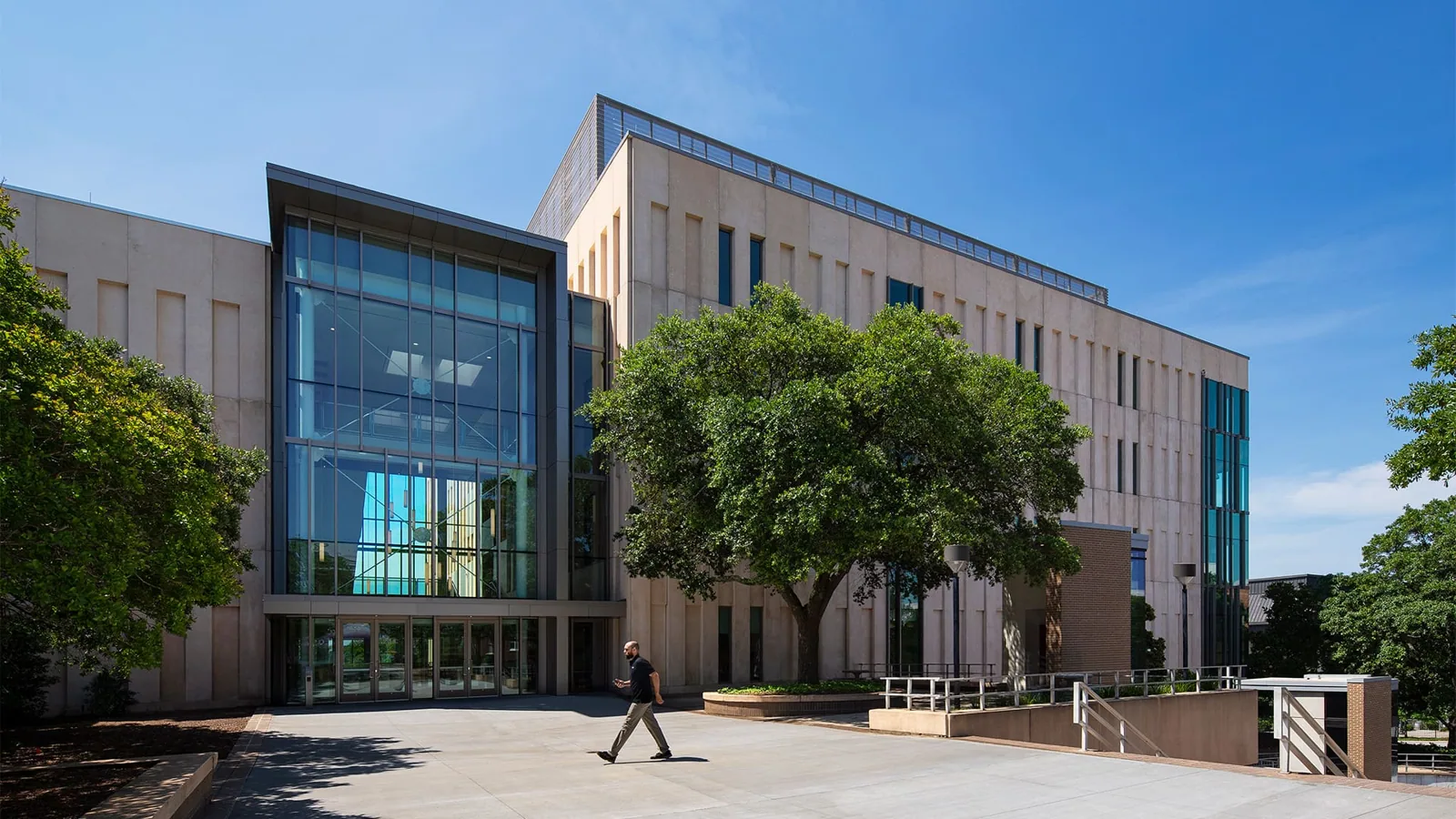
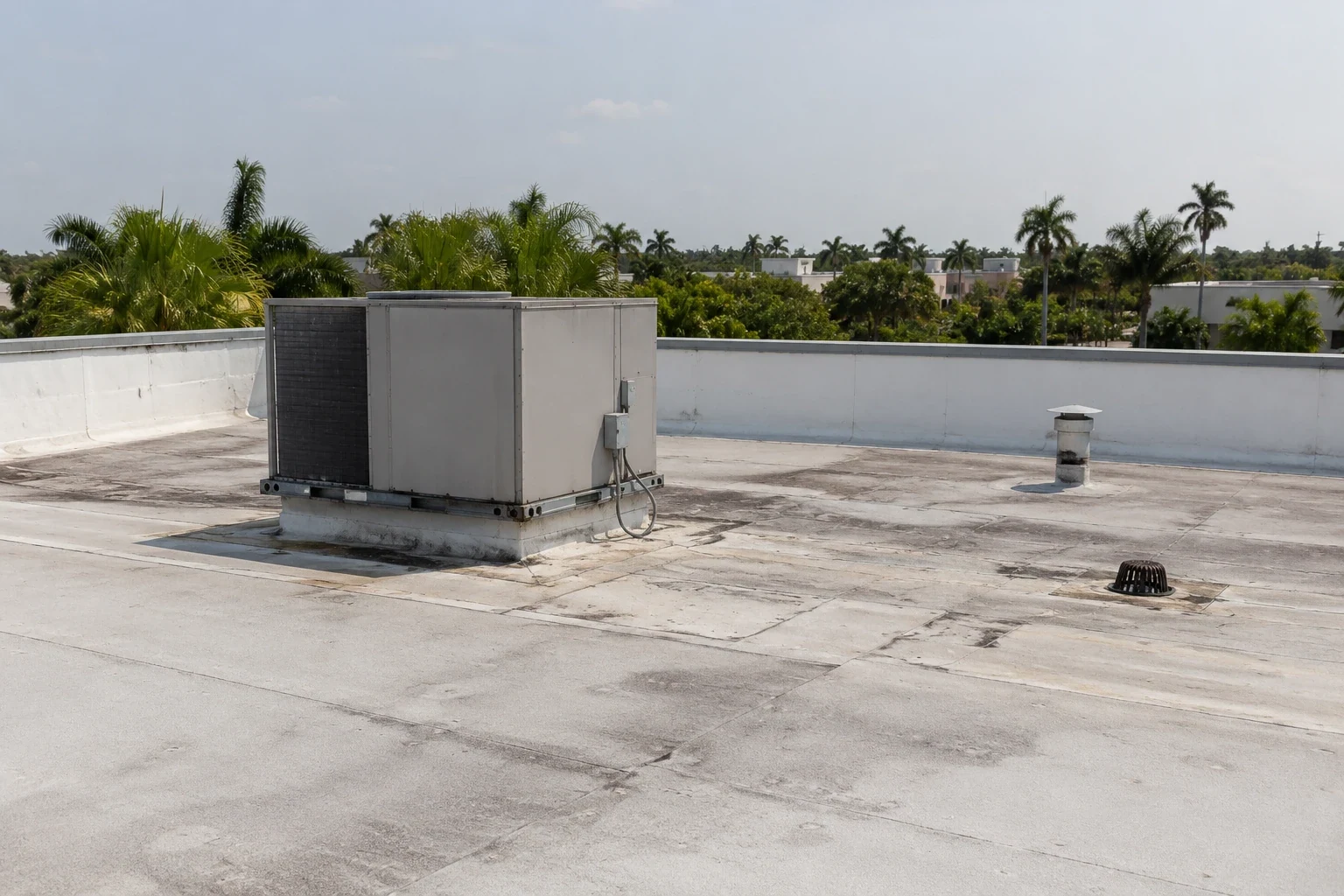
Trace Water Without Guessing at the Unit
Storage buildings may have long corridors of roll-up doors, separate climate-controlled areas, office space, and loading or drive-up access. A leak above one unit can travel along deck flutes or framing before reaching a ceiling panel, so we compare the tenant report with roof seams, penetrations, drains, and transitions overhead. The manager can identify whether stored goods remain in the unit, whether entry is authorized, and which neighboring doors must stay clear. We record the reported point and the roof evidence separately.
Airport Industrial Park has 285 acres within Gainesville Regional Airport's planning footprint and access from Waldo Road and NE 39th Avenue. A visit to a nearby storage facility starts with its specific address, manager, and roof hatch or ladder access. A roof inspection near Airport Industrial Park still starts by confirming the specific address, manager, and roof hatch or ladder access.
The Gainesville 2025 precipitation record totals 46.80 inches, with 3.06 inches falling in a 24-hour span. We inspect drain bowls, scuppers, low points, and overflow routes after a report of water entry. If runoff is trapped, we note debris, outlet condition, slope, and ponding marks. A drainage service visit may resolve a local outlet issue, while wet insulation or a failed seam calls for separate work. The scope identifies each condition rather than treating a wet unit as proof of a full-roof defect.
Check Surface, Seams, and Unit Divisions
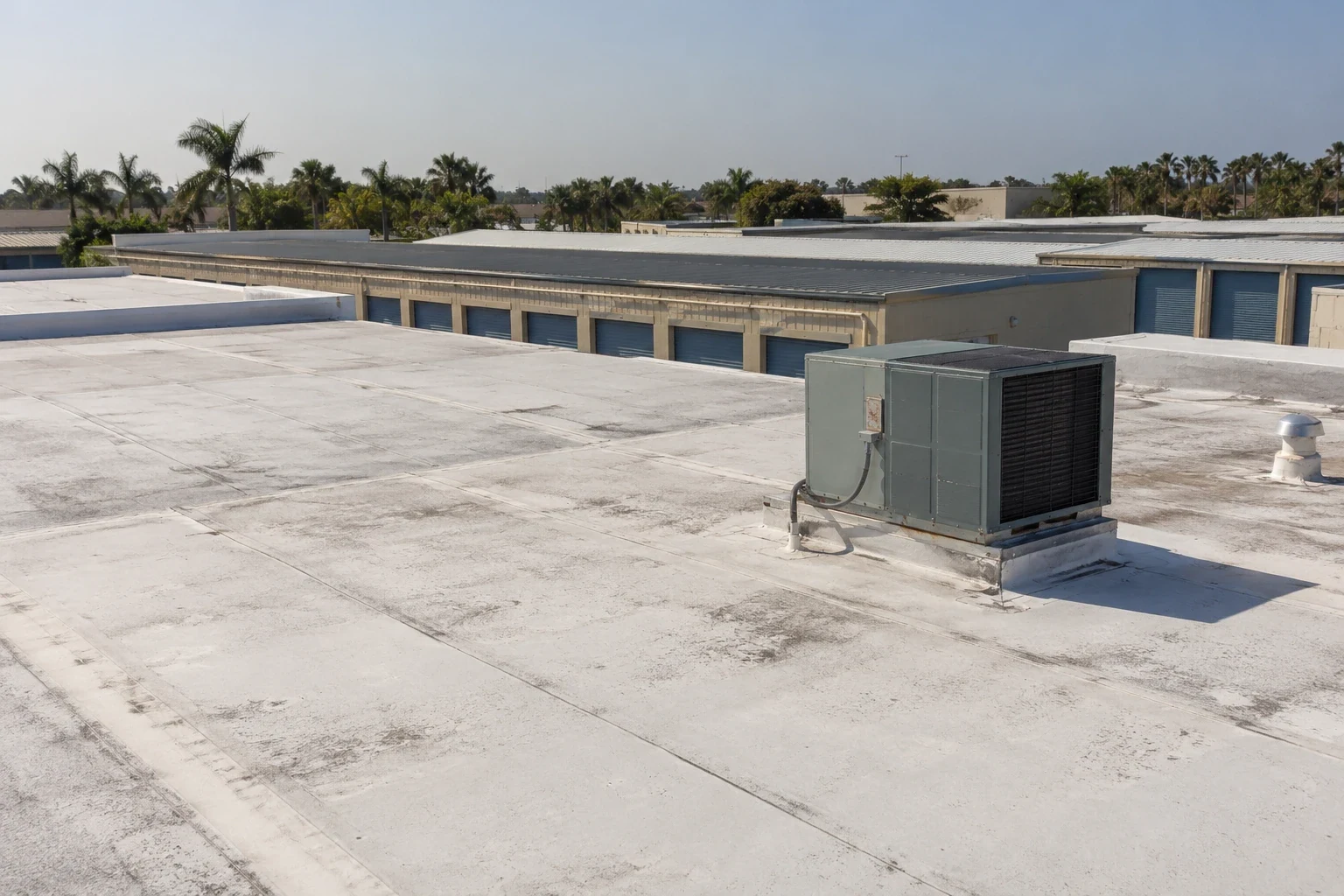
We verify whether the roof is single-ply, built-up, modified bitumen, metal, or another assembly. Storage properties can include different additions or repaired areas, so the inspection may need to map more than one section. We look at membrane laps, fasteners, flashings, curb corners, expansion joints, and the perimeter. Where climate-controlled units sit below a section, the manager can flag temperature-sensitive contents and equipment so we plan interior protection before testing.
Heat exposure affects sealants, membranes, and rooftop details over time. Gainesville recorded 133 days at or above 90°F in 2025. We inspect for open seams, surface deterioration, loose edge metal, and prior patch failures after reviewing the roof's actual exposure. We check for open seams, surface deterioration, loose edge metal, and prior patch failures. A photo-documented inspection notes the assembly, conditions, and any limitation on access. If moisture remains uncertain, a test opening can verify insulation at the proposed repair boundary.
NOAA's April 1997 storm log places 0.75-inch hail in Gainesville and one-inch hail five miles east of Archer. Following a new hail or wind event, we inspect for punctures, displaced flashing, impact marks, and debris damage rather than assuming all units are affected. A post-weather roof check can tie findings to the date and roof area. The manager can then notify tenants in the units below confirmed damage and keep other spaces available.
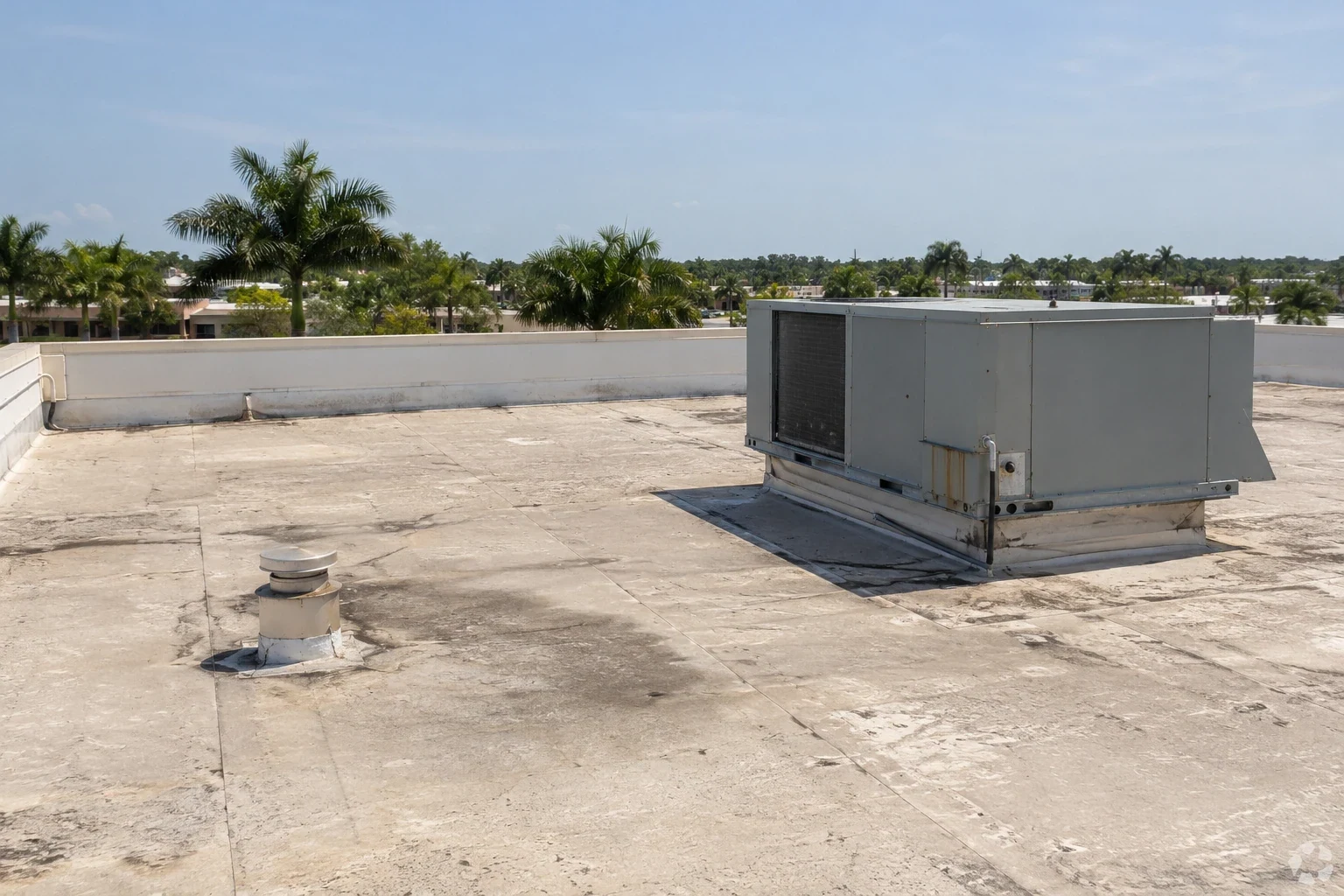
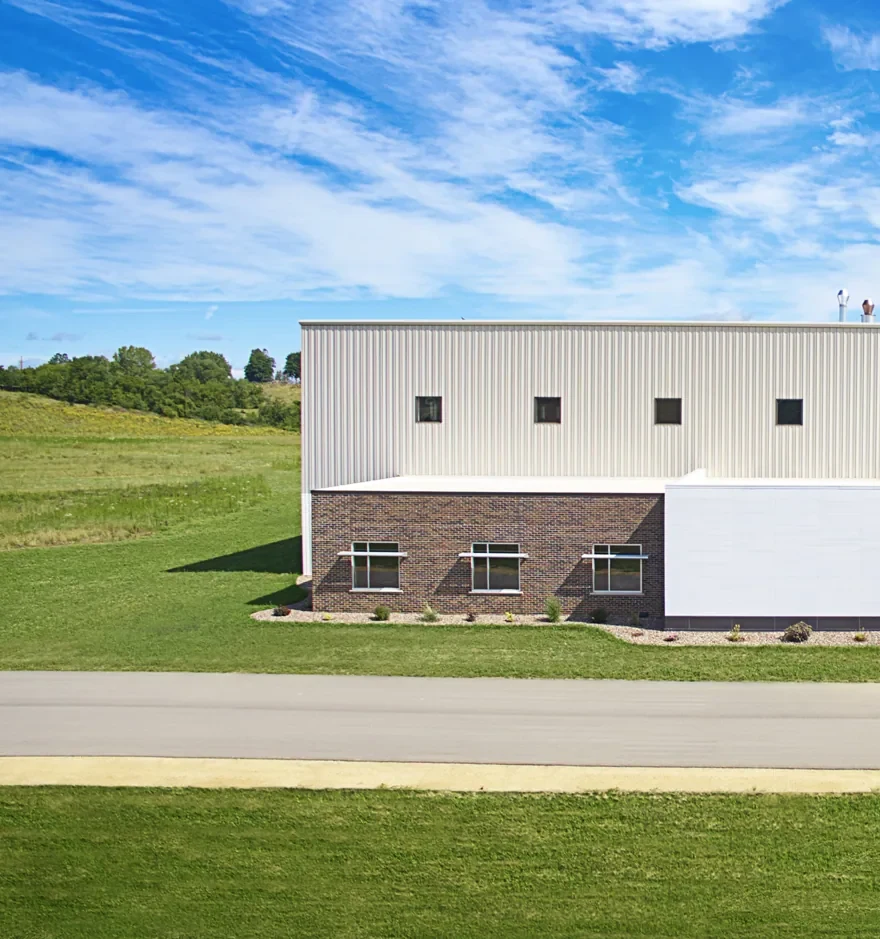
Keep Tenant Access Predictable
Before work begins, we agree with management on notices, access to units, vehicle lanes, gate hours, and any storage areas that cannot be entered without tenant approval. Materials and lifts should not block a drive aisle or emergency route. If the work needs entry to a unit, the manager coordinates authorization and helps identify valuables or sensitive contents to protect. A day-by-day map shows which roof section is active and whether any unit access is temporarily restricted.
When water is active, our emergency response is available around the clock, seven days a week, holidays included. We first assess safe roof access and stabilize the opening, while the manager handles unit entry and tenant communications under the property's procedures. Temporary protection is documented separately, followed by an inspection that defines permanent work. This keeps a short-term patch from being confused with a completed repair.
Storage operators near Butler Plaza or the Gainesville Regional Airport serve different traffic patterns. The center's location can shape the arrival route; each facility's gate, keypad, and manager process controls the work plan. A warehouse roof assessment can share concerns about inventory and loading movement, while apartment roof work also requires resident access planning. Unit numbering and roof section labels should stay consistent in notices and closeout photos.
Compare Repair With Larger Work
A localized puncture, failed lap, or damaged curb can often be addressed where adjacent materials are sound. Broader wet insulation, deck corrosion, repeated attachment problems, or multiple failed sections can point toward more extensive repair or replacement. We document test openings, material removed, and the limits of the confirmed damage. The manager can review options with quantities tied to specific roof sections and unit rows, not a vague allowance across the entire facility.
A recover or coating may be feasible if the existing system, surface condition, attachment, and drainage support it. Replacement may require more interior protection and a longer staging sequence. We outline removal, new insulation, perimeter details, penetrations, and tie-ins so ownership can compare cost and timing drivers. For applications submitted to Gainesville from December 31, 2023, the permit review uses the 2023 eighth edition of Florida's building code, including its Existing Building volume. The design team confirms project-specific requirements for the proposed work.
Weather and material lead time affect when a roof section can open and close. We identify the temporary tie-in plan, confirm an access window with management, and leave the surface secured at each daily stopping point. If the property has multiple roof sections, the schedule can protect unaffected rows while work proceeds elsewhere.

Connect the Repair to Unit Records
The closeout record should identify the building, roof section, affected unit row, materials installed, drainage or edge details addressed, and any area that needs monitoring. Photos show the repair in context and help management answer later tenant questions. We note whether access was limited, what testing was performed, and which conditions remain outside the measured scope. Keeping these records with each building helps the next maintenance visit find the prior work quickly.
For a Gainesville storage roof review, provide the facility address, unit or aisle numbers, roof records, active leak reports, gate and access instructions, manager contact, and preferred work window. We will map the reported condition, coordinate tenant protection, and prepare a measured scope based on the roof and insulation evidence.
Frequently Asked Questions
Will tenants need to empty a unit before roof repair?
Only if access or protection at that unit requires it. We first locate the roof work and determine whether the unit interior needs inspection or a temporary barrier, then management coordinates any tenant notice or entry.
How can management match a leak report to the right roof area?
Unit number, aisle, time observed, and recent weather are useful starting points. We compare those details with roof plans and inspect nearby seams, drains, and penetrations before setting a repair boundary.
Can work continue without blocking drive-up units?
Often, if lift placement and material routes are planned with the manager. We identify vehicle lanes, gate hours, and emergency access before dividing the roof into work sections.
What happens if the roof is wet above several units?
We map the affected section and use test openings where needed to confirm how far moisture extends. The measured scope separates confirmed wet materials from areas that have not been tested.
Related Roofing Work
Schedule a Gainesville Storage Roof Assessment
Share the property address, unit or aisle reports, roof records, active leaks, tenant-access rules, manager contact, and preferred window. We will document the affected section and prepare a measured repair or replacement scope.