
Commercial Roof Capital Planning in Gainesville, FL
Plan Gainesville roof spending from inspected conditions, repair options and timing drivers, with budget assumptions tied to each building and operating window.
Roofing Capabilities: Commercial Roof Capital Planning
A capital budget gets difficult when a roof decision is due before the next leak makes the scope obvious. We begin with the building list, current roof records and a field review of the sections that may need work. Gainesville, FL, has a large institutional and research property base: UF manages a substantial building portfolio in Gainesville, and Innovation Square adds research and mixed-use property between downtown and campus. Each roof still needs its own condition and repair quantities before a budget line can be treated as a project.
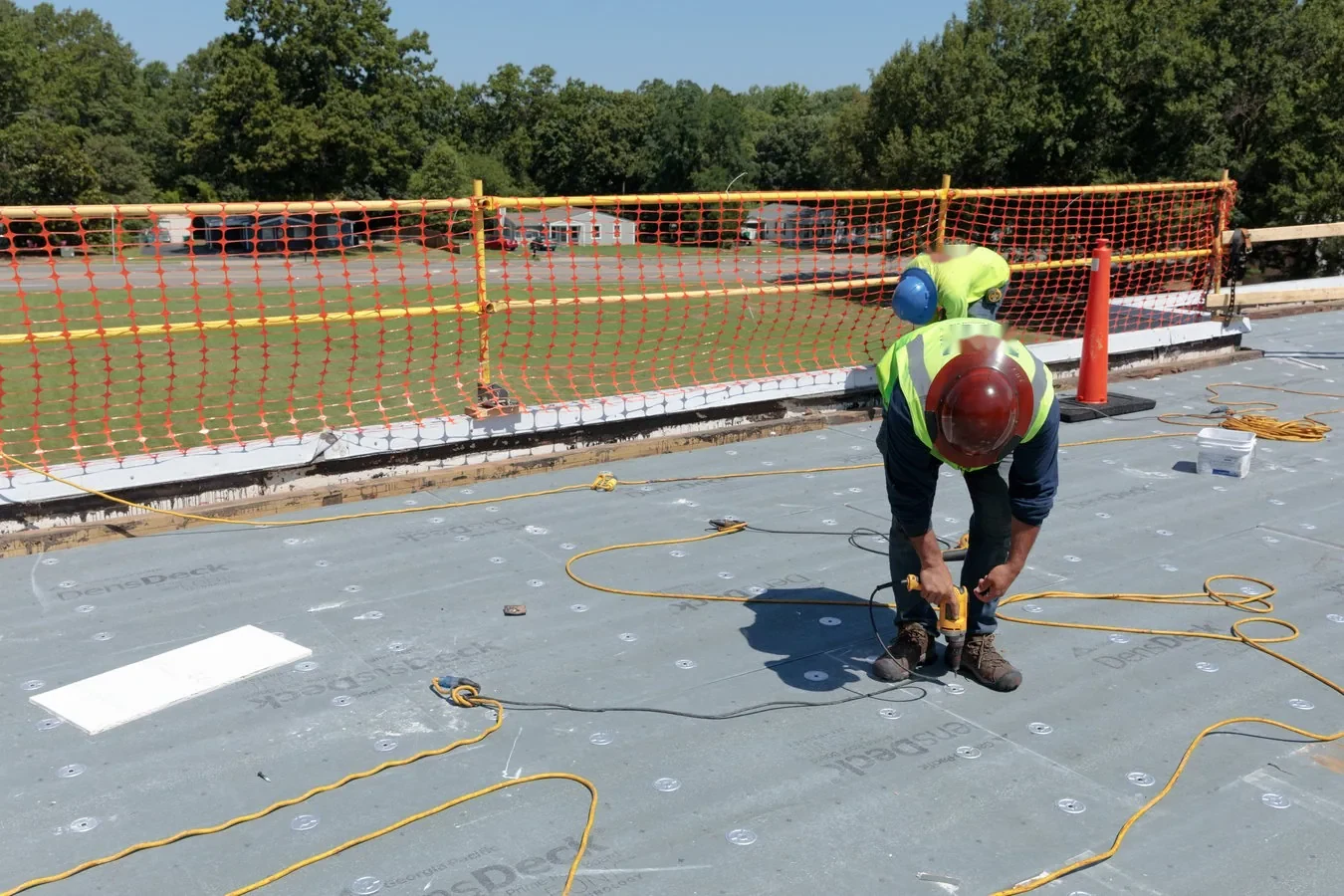

Inspect: Separate Immediate Work from Future Need
We start by mapping reported leaks, open repairs, surface wear, drainage concerns, edge movement and any suspected wet insulation. Photos and roof plans keep each observation tied to the section where it was found. A moisture survey or drone-assisted roof inspection can help review broad or difficult-to-reach areas, but the method and visibility limits go in the record. A condition report makes clear which quantities are measured, which remain allowances and what further testing could change.
Gainesville summers bring prolonged heat, while intense rain can arrive in a short period. For budget planning, those conditions support attention to exposed details and drainage maintenance, not an automatic replacement date. A low roof section with a recurring drain issue may need a different near-term allowance from a roof with secure attachment and dry insulation. Our maintenance review can identify work that belongs in the operating budget rather than a capital project.
Compare: Put Repair and Replacement on the Same Basis
A repair estimate and a replacement allowance should describe the same building limits and access assumptions. We document the existing system, areas of wet material, deck condition where opened, tie-in details, rooftop equipment, drainage and occupied zones. Then we can compare a localized repair, recover where the assembly qualifies, restoration or removal and replacement. The choice turns on observed conditions, project criteria and the consequences of keeping the building in service during work, not on a roof-age label by itself.
Where moisture is suspected beneath a membrane, a selected infrared moisture survey can guide test openings. The test establishes whether insulation is wet at that point; it does not establish the condition of every area. For a Gainesville clinic near the UF Health medical district or a technology tenant near GTEC, we also identify patient, research or production constraints that affect phasing and temporary protection.
Schedule: Match Funding to Access and Weather
Timing depends on the roof system, extent of removal, material lead time, weather windows, lift access and how long an occupied area can be protected. A measured repair may fit between operating periods, while a larger reroof can require multiple sections and temporary dry-in at each stopping point. We list these assumptions with the proposed sequence, so a budget review can distinguish the roofing duration from access approvals or interior coordination.
When comparing years, we separate planned mobilization from the time spent on active roof work. Occupied buildings may need notice periods, room-by-room protection or a shutdown window for specific equipment. If those approvals are not yet set, the schedule labels them as dependencies rather than presenting an assumed start date as fixed. A manager can use this distinction to reserve funding while the operating plan is confirmed.
Local records show recurring thunderstorms and heavy-rain conditions, which should be reflected in the weather window for roof work. A capital schedule should account for periods when surface preparation, adhesives or membrane welding cannot proceed as specified. If the roof must be opened, crews plan a watertight stopping point and a response if rain arrives sooner than forecast. Our occupied-building phasing plan can set boundaries around tenants, loading and essential rooms.
Coordinate: Make the Budget Assumptions Visible
For each proposed project, we identify the roof section, measured area, materials, removal limits, tie-ins, drainage changes and any test work that remains. If deck condition is concealed, the estimate states how an opening would affect quantities and authorization. Cost and timing also move with roof height, access, disposal, edge details and equipment relocation. These are project variables to price and confirm, not a reason to hide uncertainty inside a broad allowance.
For a phased project, the first package should define where each temporary stopping point lands and which roof sections remain in service. We also state whether drainage, curb replacement or equipment support changes belong in the same mobilization. That boundary helps the owner compare a one-stage project with separate work windows.
For Gainesville permits received on or after December 31, 2023, the governing edition is Florida's 2023 Building Code, with Building and Existing Building provisions relevant to roof work. The design team should confirm the requirements that apply to the proposed work and assembly. We can organize Diligence Notes for review, then keep engineering, energy compliance and permit decisions attached to the specific project. For known exposure that cannot wait for budgeting, our around-the-clock emergency response can stabilize an active opening while permanent work is scoped.
Close Out: Carry Decisions into the Next Cycle
A useful capital schedule records the decision, the evidence behind it, the expected work window and any condition that could move the project forward. After completion, closeout photos and installed-system details update the asset history. If the owner chooses monitoring or a limited repair, we note the next inspection point and the condition that would trigger a larger scope. The roof asset record can preserve those decisions across staff and budget cycles.
A field review should also identify work that can proceed independently and conditions that require design coordination. For example, an isolated curb repair may be measured separately from a larger drainage correction, while a roof replacement can change edge metal, insulation and equipment support details together. We explain these relationships so the owner can assess whether phasing reduces disruption or creates a second mobilization and tie-in.
For a Gainesville capital review, send the property list, available roof plans, repair history, leak reports, known funding window and access contacts. We will inspect the selected sections and prepare options tied to the conditions found. A replacement scope or a recover evaluation can then be compared against the same roof boundary and operating needs.
Capital planning begins by separating work that prevents near-term damage from work that can be scheduled as part of a larger project. We list active leaks, failed details, confirmed wet insulation, access constraints, and remaining useful service questions by roof section. Heavy Gainesville rainfall makes drainage problems urgent when they create recurring interior exposure, while a sound roof may still need a planned curb or edge correction. We state what each option includes and what additional testing could change the scope. The resulting sequence gives ownership a practical basis for budgeting without presenting an unsupported replacement date.
Frequently Asked Questions
Can you split roofing work across budget years?
We can identify sections that are independent and sequence them by condition, access and project criteria. The plan should also show where a shared tie-in or drainage change could affect work completed in a later phase.
What makes a roof replacement allowance change?
Concealed deck or insulation condition, removal quantities, access, equipment conflicts, edge details and material availability can change the scope. We state which assumptions are measured and which need confirmation.
Can maintenance reduce a planned capital project?
Maintenance can address debris, minor eligible repairs and developing details, but it does not reverse widespread material failure. We separate work that supports continued service from conditions that need a capital decision.
How do you compare several Gainesville buildings?
We give each roof its own boundary, system, condition notes, access assumptions and proposed action. A shared schedule can then compare urgency and phasing without treating different buildings as identical.
Related Roofing Work
Build a Gainesville Roof Capital Plan
Share the building list, roof records, leak history, planned funding window and site contacts. We will inspect priority sections and document options, assumptions and timing drivers.