Commercial Roof Seam Failure Repair in Gainesville, FL
Repair Gainesville commercial roof seams by identifying the installed membrane, testing open laps, documenting wet materials and planning compatible tie-ins.
Roof Damage Repair: Commercial Roof Seam Failure Repair
A seam that has opened can admit water under a membrane while the roof surface still looks mostly intact. We identify the system, examine the lap, and trace the report to adjacent insulation and deck before choosing a repair. Gainesville, FL, sees frequent thunderstorms and long periods of heat, conditions that can make roof seams a useful maintenance check. A compatible repair depends on material, surface preparation, moisture, and the length of separation, not just the visible gap.
Inspect: Find the Failure Along the Lap
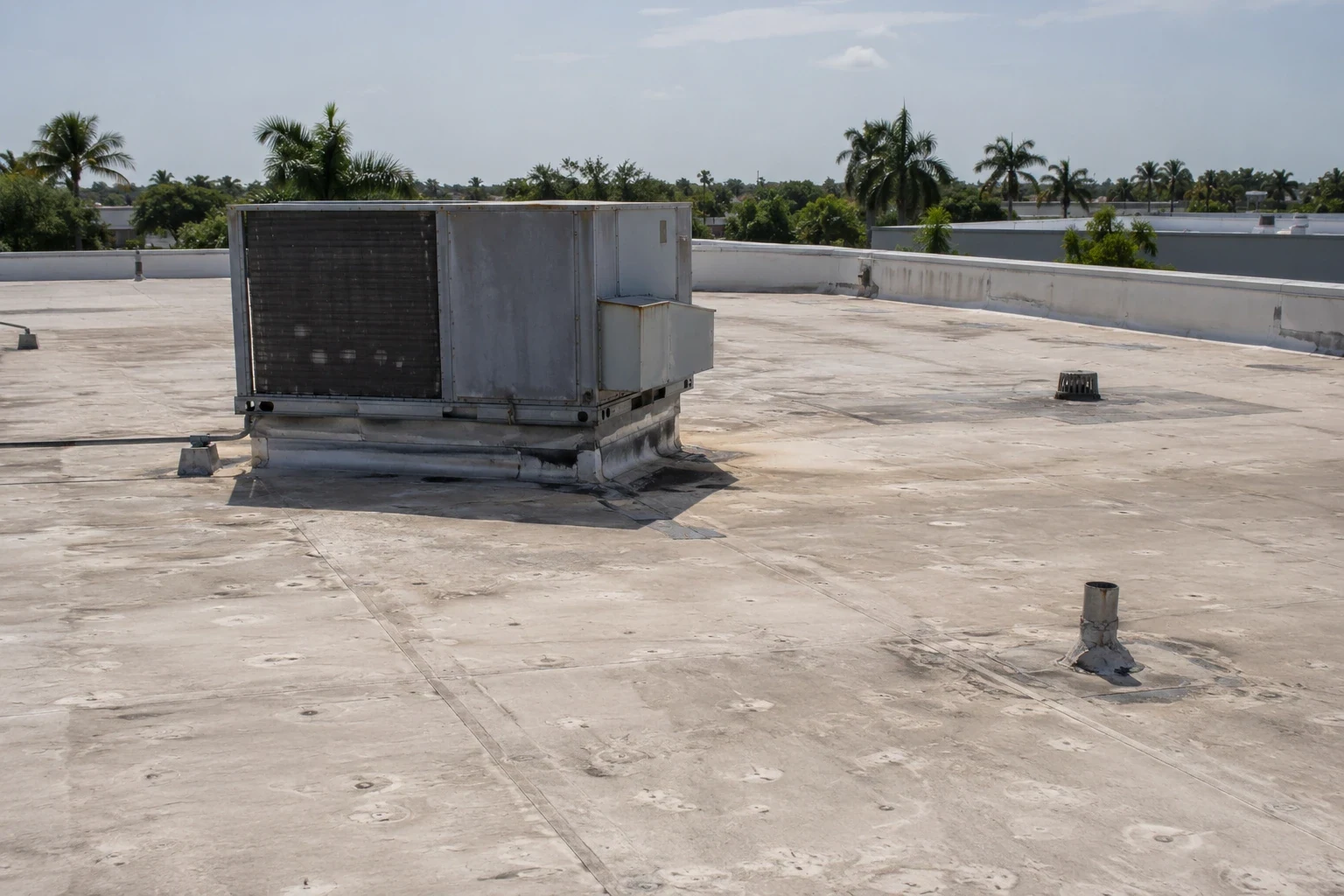
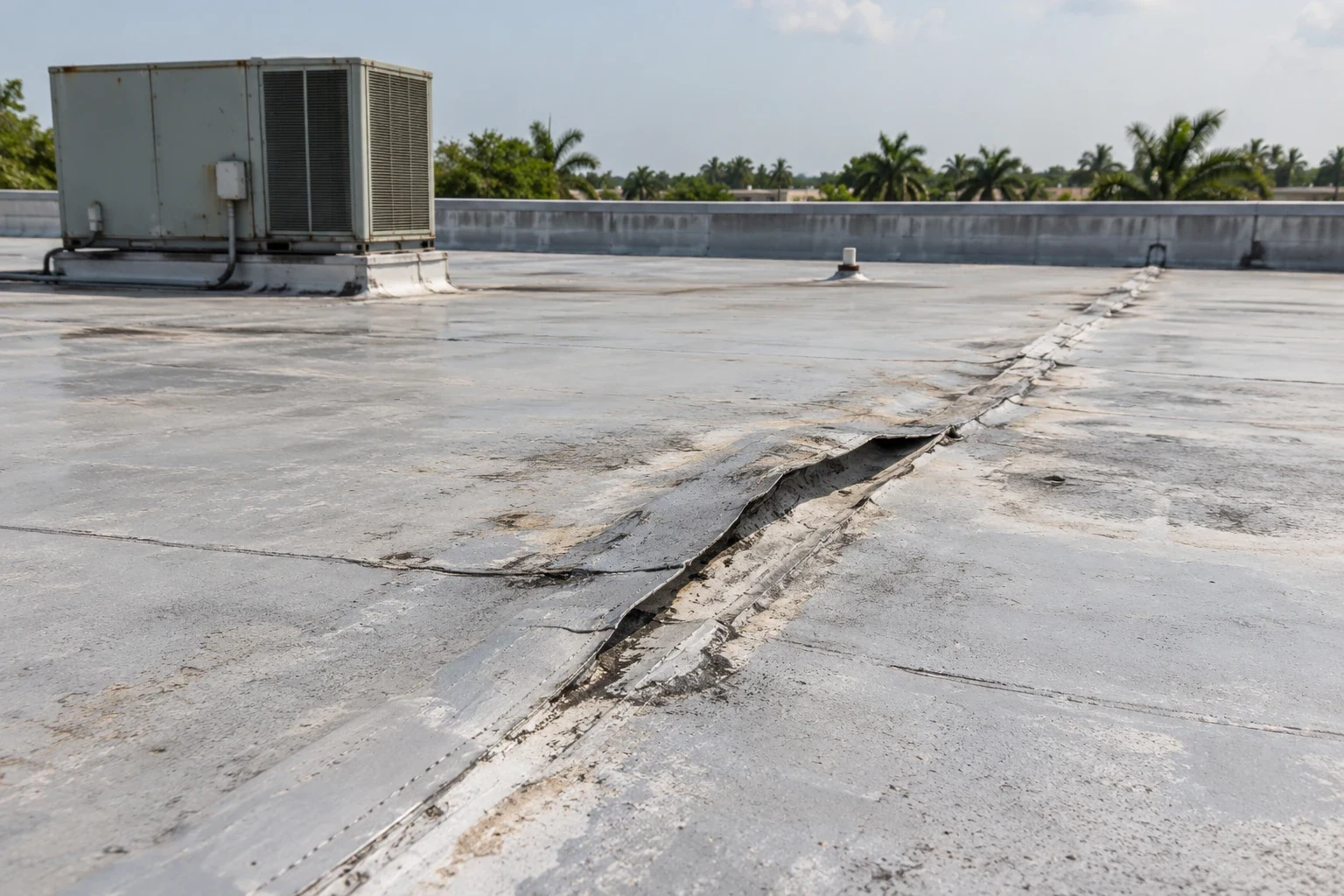
We inspect the seam for open edges, fishmouths, wrinkles, contamination, failed adhesive, weak welds, and movement near a curb or roof transition. The method differs by membrane. Thermoplastic seams require a suitable weld surface and correct preparation; EPDM seams use compatible tape or adhesive; modified bitumen and built-up systems have their own lap details. We confirm the installed assembly before selecting repair materials.
Long hot periods put exposed laps and sealants on the inspection list. We photograph the seam, adjacent material, and prior patch to see whether heat exposure affected the bond, then mark the start and end of any separation. A TPO seam repair and an EPDM lap repair use different materials and field procedures.
At the University of Florida campus, more than 1,000 buildings serve research, residence, and other institutional uses. The campus scale is a reminder that inspection records must identify the building and roof section; a seam issue on one roof does not describe another. A UF campus-area roof visit still begins with approved access, building plans, and the field condition at the address.
Trace: Check What Lies Beneath the Split
A seam may leak even when nearby insulation remains dry, or moisture can travel beyond the visible opening. We compare the interior report with the roof slope and inspect both sides of the lap. Where needed, a test opening shows the insulation and deck at a selected point. We record the location and sample condition, then restore the opening securely. If the water path remains uncertain, a moisture survey can help select additional test locations.
Heavy rain can test a weak lap. We inspect the separation, nearby drains, ponding marks, curbs, and penetrations before setting the repair boundary. A ponding-water assessment addresses a low area or slow outlet separately from a seam bond.
Wind can lift an already weak lap or move materials near the perimeter. Gainesville’s summer storms bring wind and runoff that can test an already weak lap. We inspect the seam, edge attachment, nearby flashing, and any loose components, then record movement beyond the lap itself. A wind damage check records displaced or loose components beyond the seam itself.
Repair: Reconnect Compatible Materials
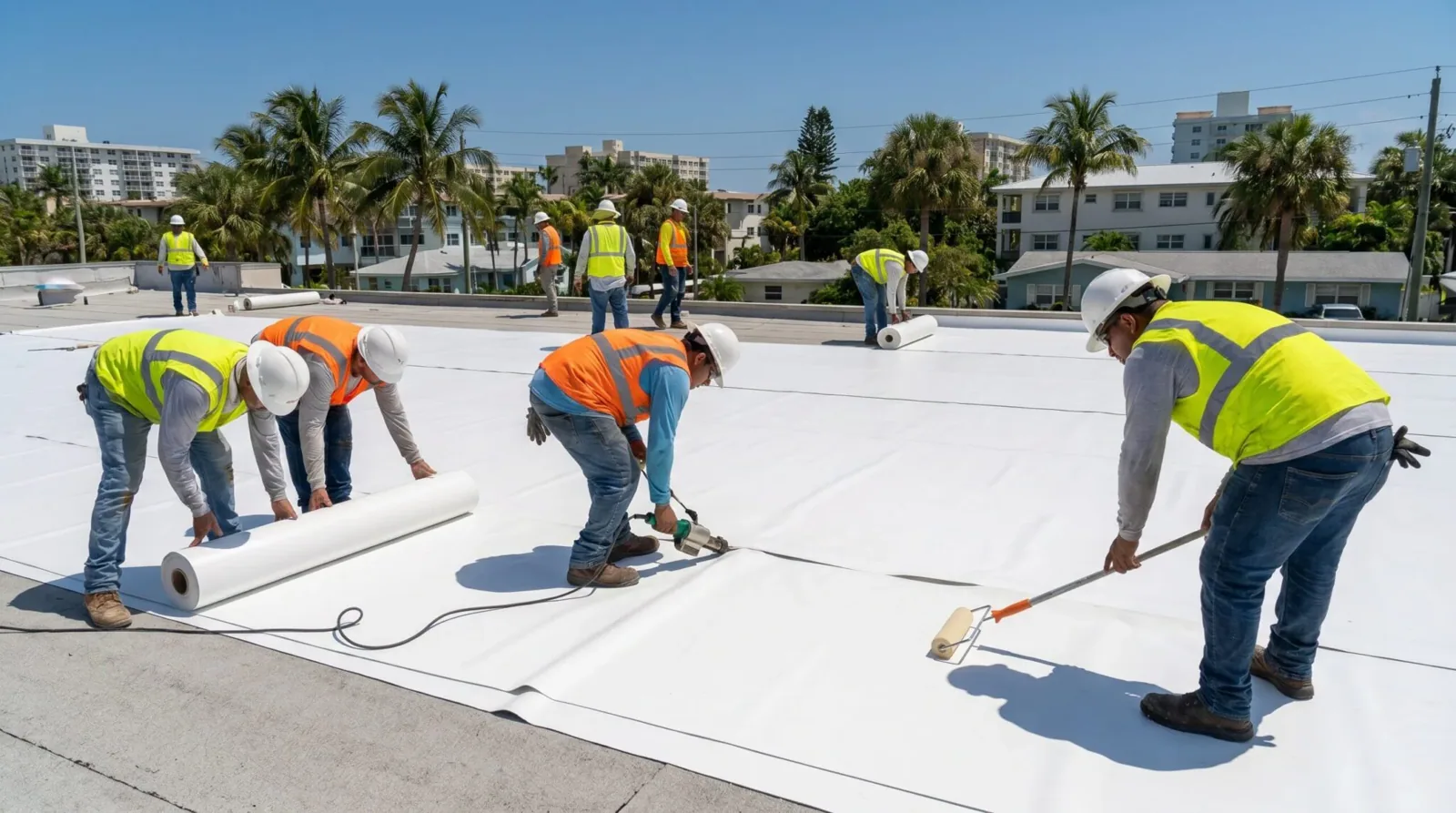
For a thermoplastic membrane, we clean and prepare the surface, confirm suitable welding conditions, and make a test weld before completing the repair. An EPDM seam may require removal of incompatible material, primer, and seam tape. Modified bitumen or built-up repairs follow the installed system's construction. A contaminated or wet bond line needs preparation or removal before a new seam can tie into sound material. The repair record identifies the material and the tie-in width. We also note whether the seam met the field test after repair and whether nearby sections were left untouched. That distinction keeps a passing test at one location from being treated as proof about an untested length of roof.
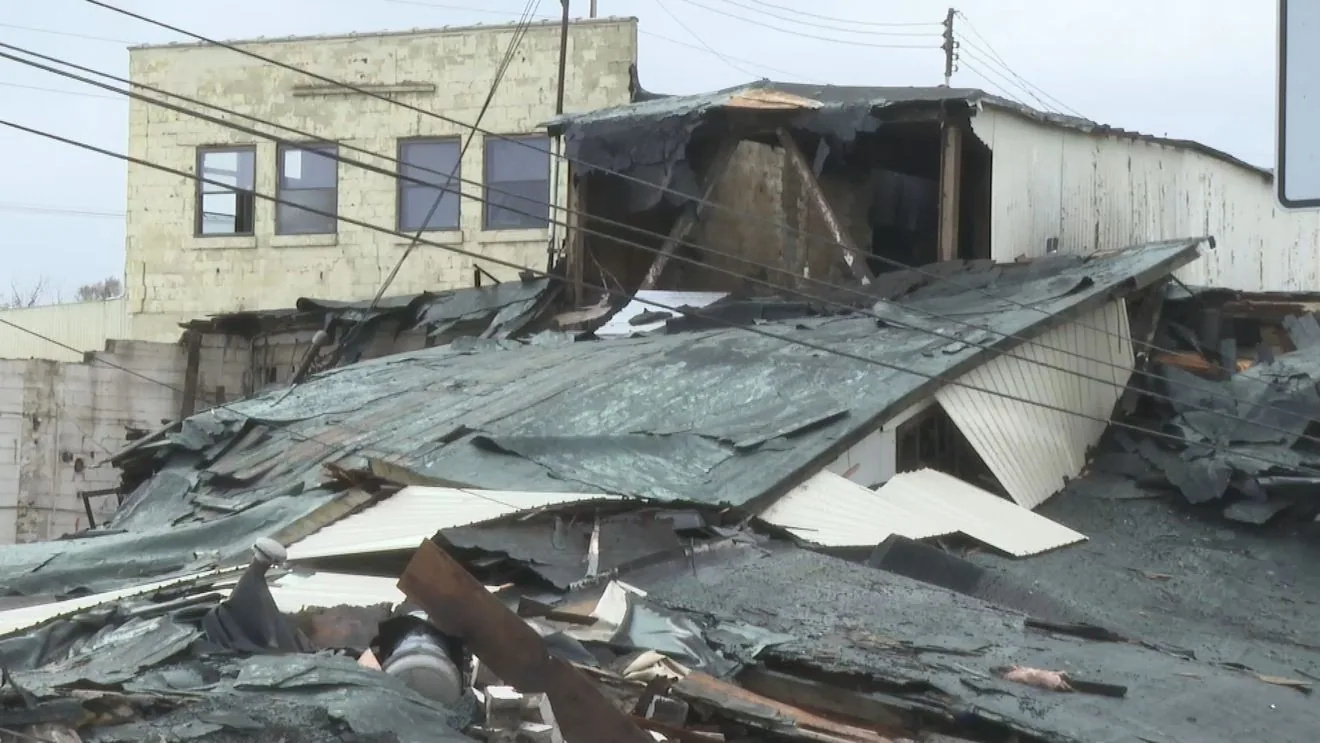
If the split extends across a large area, the membrane is brittle, or test openings reveal wet insulation, a local lap repair may not address the full condition. We define the material to remove and the boundary of new work. A flashing repair can address a separate curb or wall transition, while a puncture repair covers a field opening from impact or service traffic. Each detail is scoped separately.
When water is active, response can be arranged after hours, on weekends, and on holidays. We coordinate roof access and interior protection with the site contact. Any temporary patch is identified as stabilization, followed by a permanent seam repair once the surface can be prepared and tested.
Seams need a repair boundary that includes enough sound material to make a dependable connection. We check whether separation is isolated at one point, follows the length of a lap or continues into a field sheet. For heat-welded membranes, a test weld helps confirm the surface can fuse under current conditions. For taped seams, the repair may need removal of the old bond line and careful primer application before new tape is rolled into place. A short patch placed over contamination can leave the original weakness beneath it. On built-up or modified-bitumen roofs, the repair follows the installed plies and surfacing instead of copying a single-ply detail. The report notes the seam type, prepared length and tie-in so future inspections compare the same area. Where a defect approaches a curb or drain, that intersection is checked separately because water can enter at the transition rather than through the open lap.
Schedule: Choose a Dry Work Window
Seam work requires a surface and temperature window that suits the specified materials. We review the forecast, confirm roof access, and sequence repairs so the edge can be secured before rain returns. The facility contact identifies equipment, tenant, or delivery areas below the active section. If several laps are open, a roof plan marks which are being repaired that day and what remains for the next visit.
Gainesville Regional Airport and Airport Industrial Park are accessed through Waldo Road and NE 39th Avenue. That roadway context can matter for a roof crew approaching a nearby facility, while the property contact determines where materials may be staged. A roof repair near Airport Industrial Park should include the actual access instructions and approved window.
At day's end, the crew checks completed welds or bonded laps, removes loose materials, and leaves no open section exposed. If rain threatens before a permanent repair can be completed, temporary protection is documented and the return work is scheduled based on the conditions required for the system.
Close Out: Record the Lap and Test Results
Closeout identifies the roof type, seam location, preparation and repair material, test weld or adhesion check, and any open item. Photos show the full run and close-up detail. If a test opening found moisture, the report lists the sampled area and any added removal quantity. That gives maintenance staff a reference for checking adjacent laps on a later roof walk without assuming they failed too.
For a Gainesville seam repair, send the address, roof system, leak location, roof plan, prior repair records, site contact, and preferred access window. We will inspect the lap, determine whether testing is needed, and prepare a measured scope for the compatible repair method.
Frequently Asked Questions
Can an open seam be heat-welded over an old patch?
Only if the surface and previous material accept a reliable weld. We inspect and prepare a test area before deciding whether to remove the patch or use another compatible repair detail.
How do you know if water traveled beyond the seam?
We compare the reported interior area with roof slope and inspect insulation at selected test points. A moisture survey may help locate where further testing has value.
Will a seam repair work on every membrane?
No. TPO, PVC, EPDM, modified bitumen, and built-up systems require different preparation and materials. We identify the installed system before specifying the lap repair.
Can the repair be done during Gainesville's rainy season?
Yes, when the surface and forecast provide a suitable work window. We sequence the repair, keep open areas limited, and leave a secure tie-in if weather interrupts the task.
Related Roofing Work
Arrange a Gainesville Roof Seam Inspection
Provide the property address, roof system, leak location, roof plans, prior repairs, site contact, and access window. We will inspect the lap, document any testing, and prepare a compatible repair scope.