Big-Box Retail Roofing in Gainesville, FL
Plan Gainesville big-box retail roof repairs around customer hours, inventory protection, rooftop equipment, drainage and the store's loading schedule.
Property Types We Roof: Big-Box Retail Roofing
Merchandise on the sales floor, stock in the back, and customers at the entrance all shape a big-box roof repair. We identify which department or receiving area reported water, then plan the inspection around store hours, truck access, and interior protection. In Gainesville, FL, afternoon storms and sustained heat put drains, seams, and roof-edge details under recurring stress. We confirm the existing assembly and measure the affected section before comparing a patch with wider work.
Store Operations Below the Roof
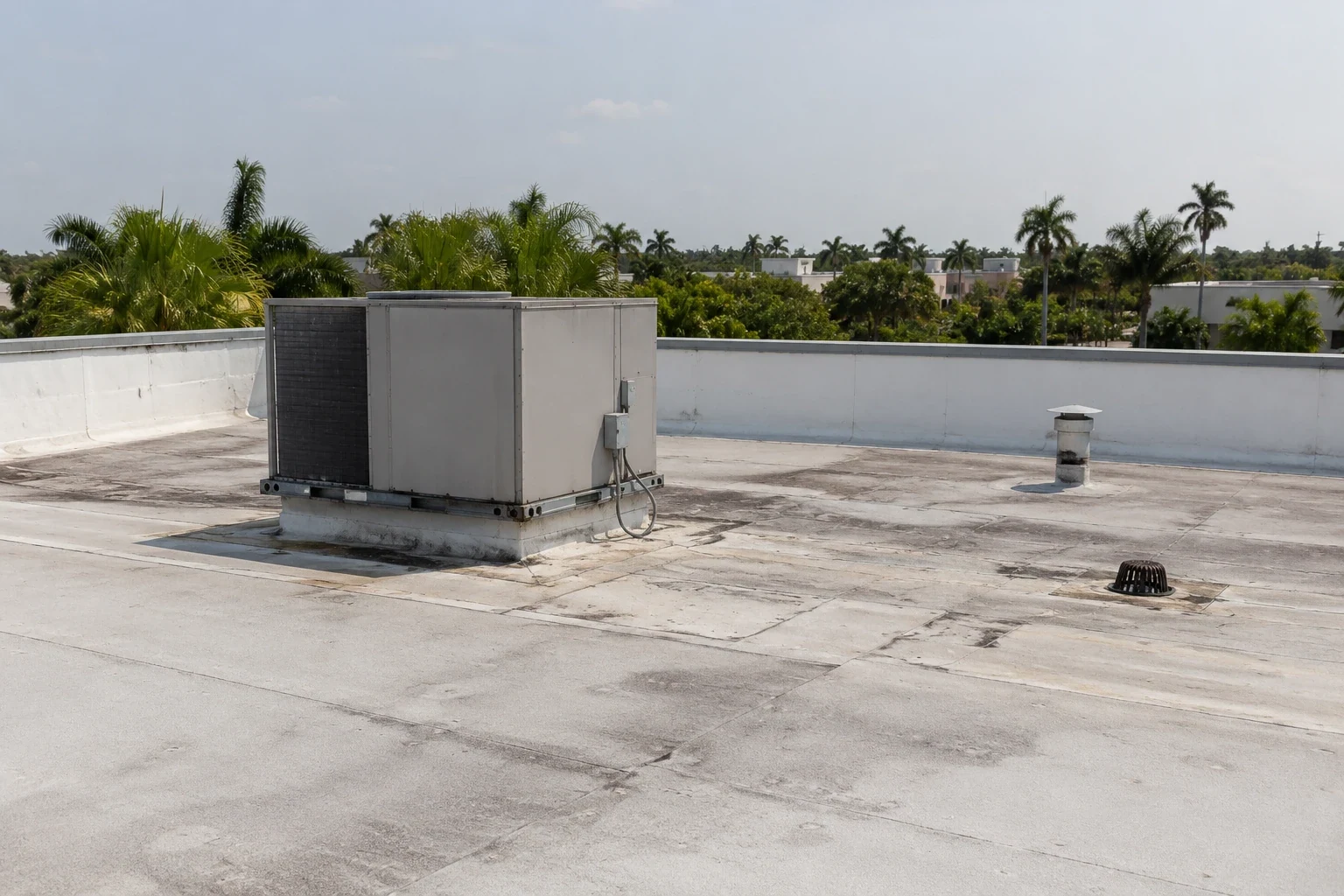
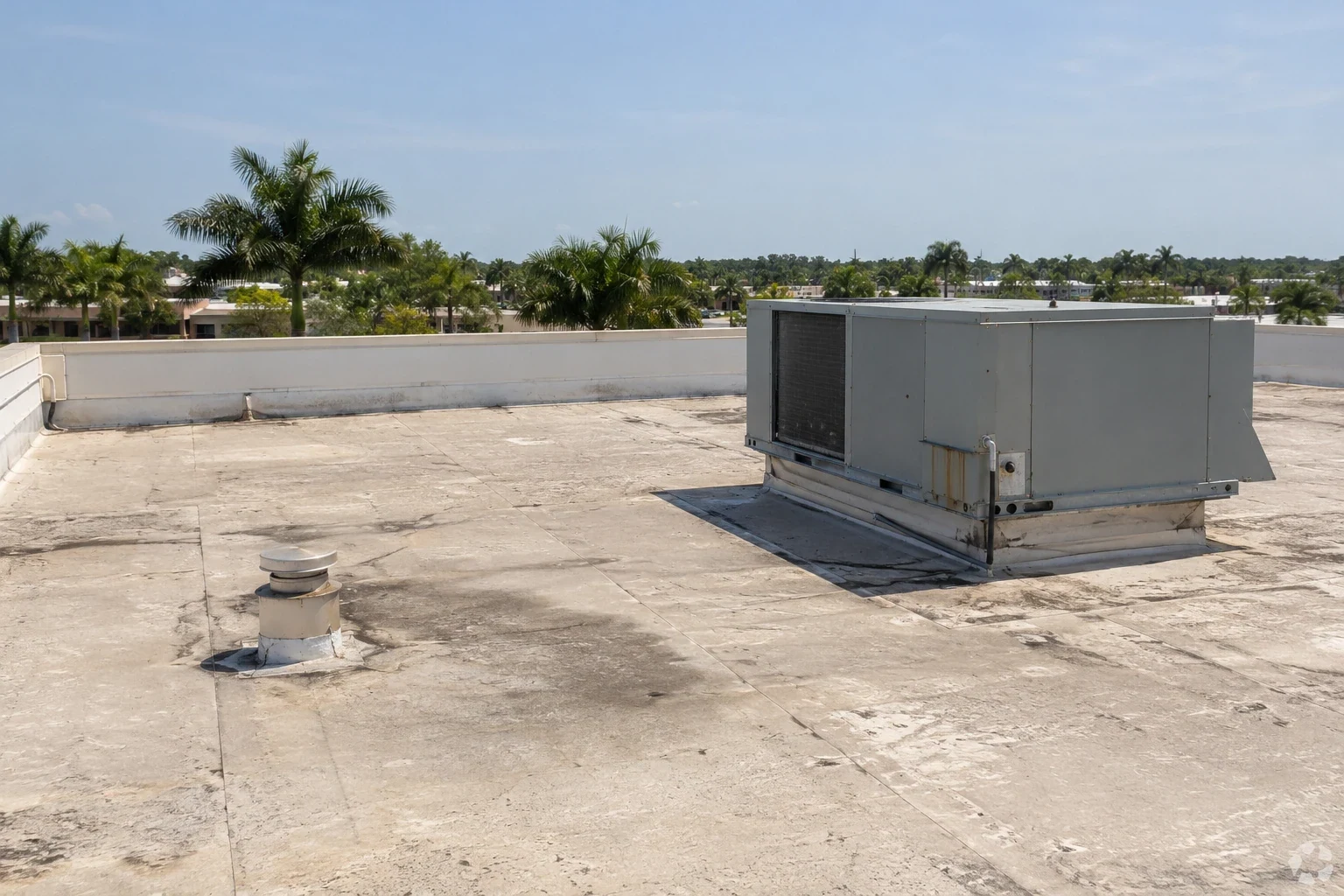
A leak over seasonal merchandise may need a different protection plan than one above registers, coolers, or a stockroom. The site contact can identify where products, point-of-sale equipment, and staff routes need protection. We map that location to the roof and check seams, curbs, drains, skylights, and mechanical units above it. The inspection record notes the department, time of the report, recent weather, and the roof section that could be reached.
Butler North contains destination retail, specialty shops, services, and restaurants along Clark Butler Boulevard. Butler Plaza combines grocery, big-box, restaurant, and service tenants along Archer Road. The store’s delivery access and customer circulation shape the work plan; the facility contact confirms the building’s system and roof access. A Butler North roof visit or Butler Plaza assessment begins with the store address, operating contact, and available roof plans.
Large-format stores may receive deliveries throughout the day and use roof equipment above sales and stock areas. We confirm the service lane, lift location, active entrances, and whether any tenant vendor has recently altered a penetration. A shopping center roof plan can address neighboring tenants when a store shares a larger property, while the roof detail and building boundary determine the repair.
Inspection: Check Drains, Seams, and Equipment
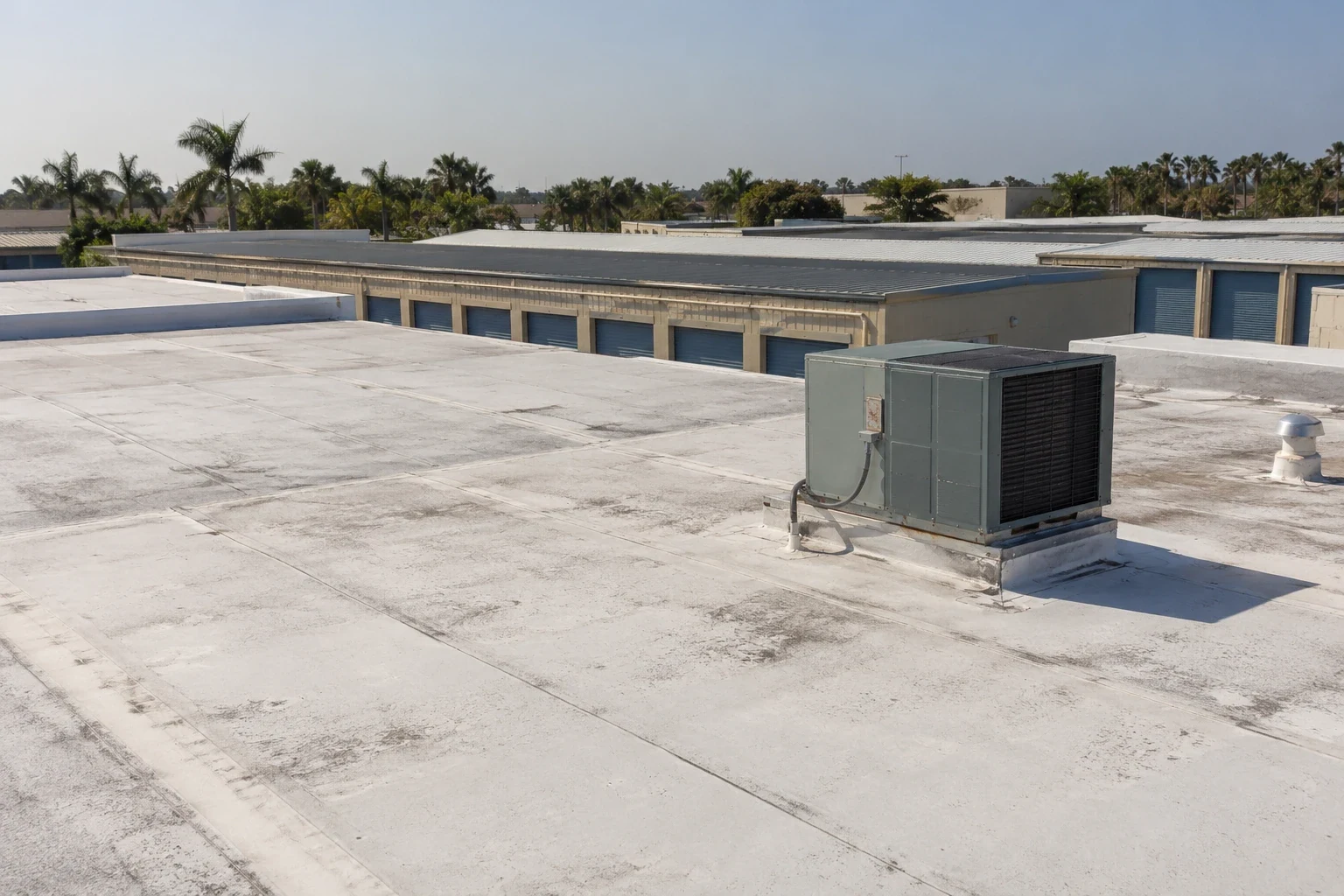
We verify the roof system, then inspect seams, field patches, perimeter attachment, drains, scuppers, curbs, skylights, and penetrations. A rooftop unit may have several flashing transitions and service paths. We look for a loose lap, open seam, puncture, cracked pitch pan, displaced metal, or water held around a drain. Photos locate the finding on a roof plan and show which detail can be repaired without making assumptions about the rest of the store.
At least 90°F was recorded on 133 Gainesville days during 2025. We inspect the roof surface, seams, and records to determine whether repair is needed. Heavy rain tests outlets and low areas. If water stands after nearby sections drain, we check the outlet, slope, and insulation below before recommending correction. A drainage repair scope can address an outlet or low spot; a moisture survey can help select test locations where layers may be wet.
Hail reached 0.75 inch in Gainesville and 1 inch east of Archer in April 1997. If store staff report impact after a storm, we inspect skylights, metal, membrane, edge attachment, and rooftop equipment for actual damage. A storm follow-up separates visible findings from wear that may have preceded the event. The report records the inspection date and areas that could not be reached.

Repair: Protect Inventory and Restore the Assembly
A small puncture or seam failure can be repaired when the surrounding membrane is sound and dry. We select materials that match the system, prepare the surface, rebuild the detail, and check the tie-in. If a test opening reveals wet insulation, we measure the removal boundary and note any deck issue before closing the roof. The work record describes which interior area sits beneath the repair and whether any stock or fixtures needed protection.
A single-ply system may use welded or bonded seams, while a metal roof relies on panel movement, fasteners, and flashing. The repair method has to match the assembly. A TPO roof detail cannot be treated like a metal lap or an EPDM seam. If repairs repeat across a broad area or wet materials extend beyond one section, a grocery roof review may help compare refrigeration or stockroom constraints, while a replacement assessment can define a larger capital option for this store.
Cost and timing follow confirmed quantities, tear-off, insulation replacement, deck repairs, equipment access, delivery staging, and weather. The scope separates included work from conditions that need testing after opening. That gives the store manager a clear basis for planning aisle protection, inventory moves, and the next work window.
Schedule: Keep Customer and Truck Routes Open
We ask about opening hours, truck appointments, customer entrances, stock deliveries, and any department that cannot be closed. Materials and lifts are staged away from active doors where possible. If a work zone sits over an occupied sales floor, the store contact identifies whether interior barriers, aisle closures, or after-hours access are needed. The schedule lists the roof area active each day and when the floor beneath it can return to normal use.
Summer storms can form quickly in Gainesville. We check weather before removing roofing and leave a secure tie-in if the forecast changes. Drains remain clear, and the crew closes any exposed section before pausing. For active water entry outside the usual workday, emergency response is available at all hours, including holidays. We stabilize first and document the permanent repair that follows inspection.
Butler North's road and retail layout includes a transfer station and walking trails in the district. Work planning should account for actual pedestrian paths, delivery drives, and staging areas at the store. We review those routes with the manager rather than assume access from a map. If the job includes several roof sections, we can sequence them around restocking periods and confirm each handoff with the store contact.
Close Out: Tie the Work to a Store Area
Closeout lists the roof system, repair location, materials used, test openings, and any remaining observation. Photos connect the roof detail with the store area below when the location is known. We record which entrances or aisles were restricted and when they were returned to the manager. A later service call can be compared with the documented boundary instead of starting with an unclear work history.
For a Gainesville big-box roof review, provide the store address, sales or stock area affected, roof records, leak dates, equipment changes, truck schedule, site contact, and access window. We will inspect the assembly and prepare a measured repair or replacement scope that accounts for store operations.
A big-box store usually needs a work sequence that preserves the customer entrance, receiving doors, fire lanes, and stocking operations. We divide a large roof into manageable sections and tie each work zone to the departments or aisles below it. A drain or curb repair can involve interior protection if the space beneath carries merchandise or equipment, so the store contact helps confirm the route before the roof is opened. We plan lift placement and material staging away from busy circulation, schedule noisy activity around store operations, and record each daily tie-in so managers know which areas are complete and which remain protected.
Frequently Asked Questions
Can roof repairs happen while the store remains open?
Often, if roof access, staging, noise, and interior protection can be coordinated with the manager. We identify the active department and any aisle or entrance that needs temporary limits.
How do you keep merchandise dry during a roof opening?
The location and size of the repair determine the protection. We identify stock or fixtures below the active section, plan interior barriers or moves with store staff, and close the roof at a secure stopping point.
Does heat mean the roof is at the end of its life?
No. We inspect the membrane, seams, flashing, insulation, and repair history. The recommendation follows the conditions that can be confirmed, not temperature records by themselves.
What should we tell you about deliveries?
Share truck windows, dock restrictions, lift access, customer entrances, and any periods when material staging is not possible. Those details help set a work sequence that fits store operations.
Related Roofing Work
Arrange a Gainesville Big-Box Roof Assessment
Send the store address, affected department, roof records, leak dates, equipment changes, truck schedule, site contact, and access window. We will coordinate an inspection and document repair options.