Shopping Center Roofing in Gainesville, FL
Coordinate Gainesville shopping center roof repairs around tenant access, customer traffic, restaurant exhaust, drainage and documented roof conditions.
Property Types We Roof: Shopping Center Roofing
A shopping center roof serves multiple tenants with different hours, deliveries, kitchens, and customer entrances. We identify which suite or common area reported water, then map it to the roof section and plan access around the active businesses below. In Gainesville, FL, thunderstorms can bring heavy rain and wind to a property with many roof transitions. We check drains, seams, equipment curbs, and tenant demising walls together so the owner can see whether the repair is local or reaches beyond one storefront.
Tenant Mix and Roof Sections
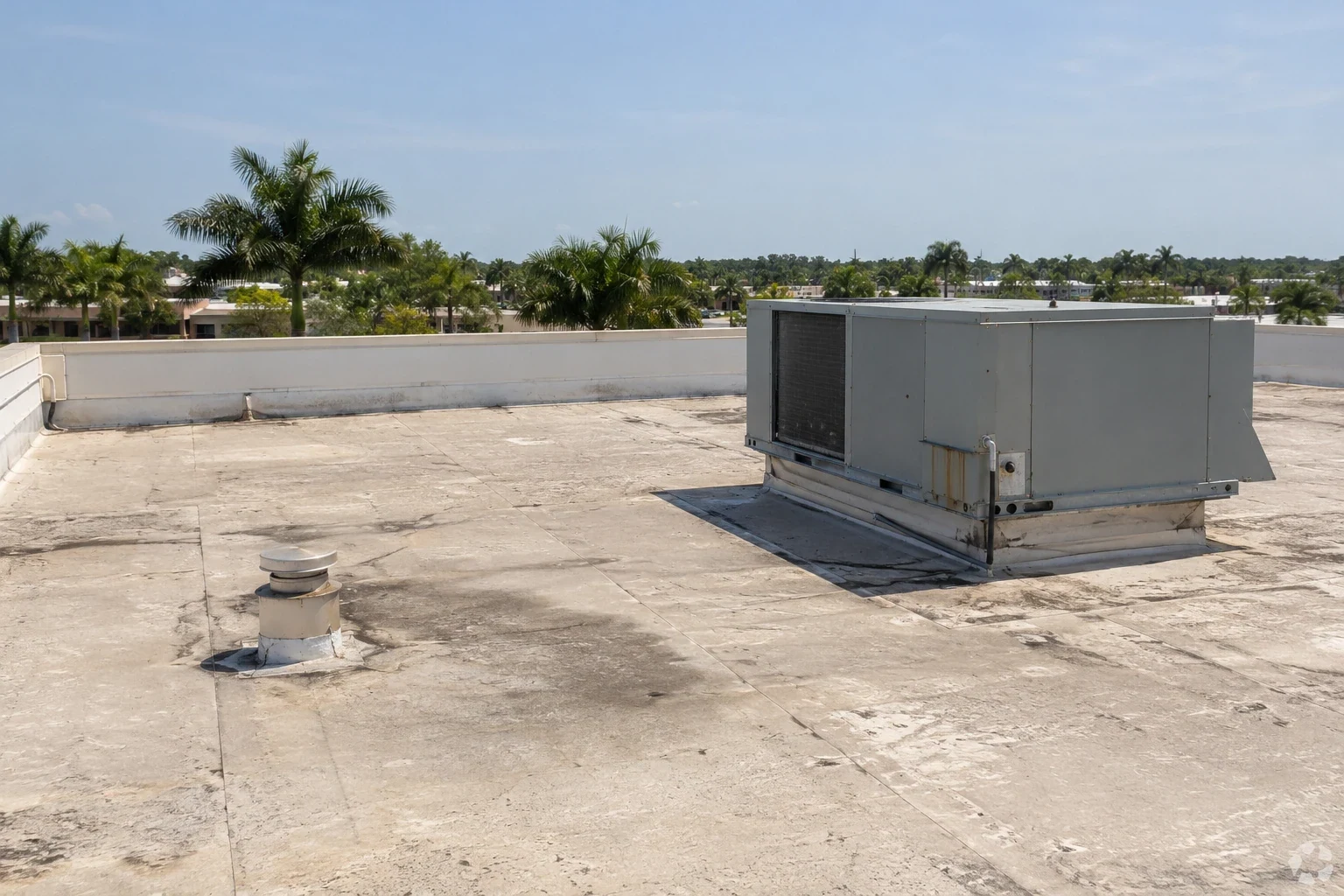
Retail centers often combine grocery, restaurants, service businesses, and larger stores. That mix can put kitchen exhaust, rooftop units, signs, and service penetrations across adjacent roof areas. We verify the assembly and note which tenant equipment serves each section. If a leak appears inside one suite, we inspect the roof above it and nearby transitions because water can travel before it reaches the ceiling. The report identifies the unit, roof section, and any area needing a test opening.
Butler Plaza along Archer Road includes grocery, big-box, restaurant, and service tenants. Those operations make delivery routes and business hours useful inputs for a roof visit. A Butler Plaza roof assessment starts with the exact property, tenant contact, access route, and roof records.
Butler Town Center is an open-air retail and dining district with major tenant spaces, while Celebration Pointe includes City Walk's shops, restaurants, entertainment, and apartments. We plan work in each district around the individual building and its current operations, not the district description alone. A Celebration Pointe repair visit still needs the property's access rules and tenant schedule.
Inspection: Connect the Interior Report to the Roof
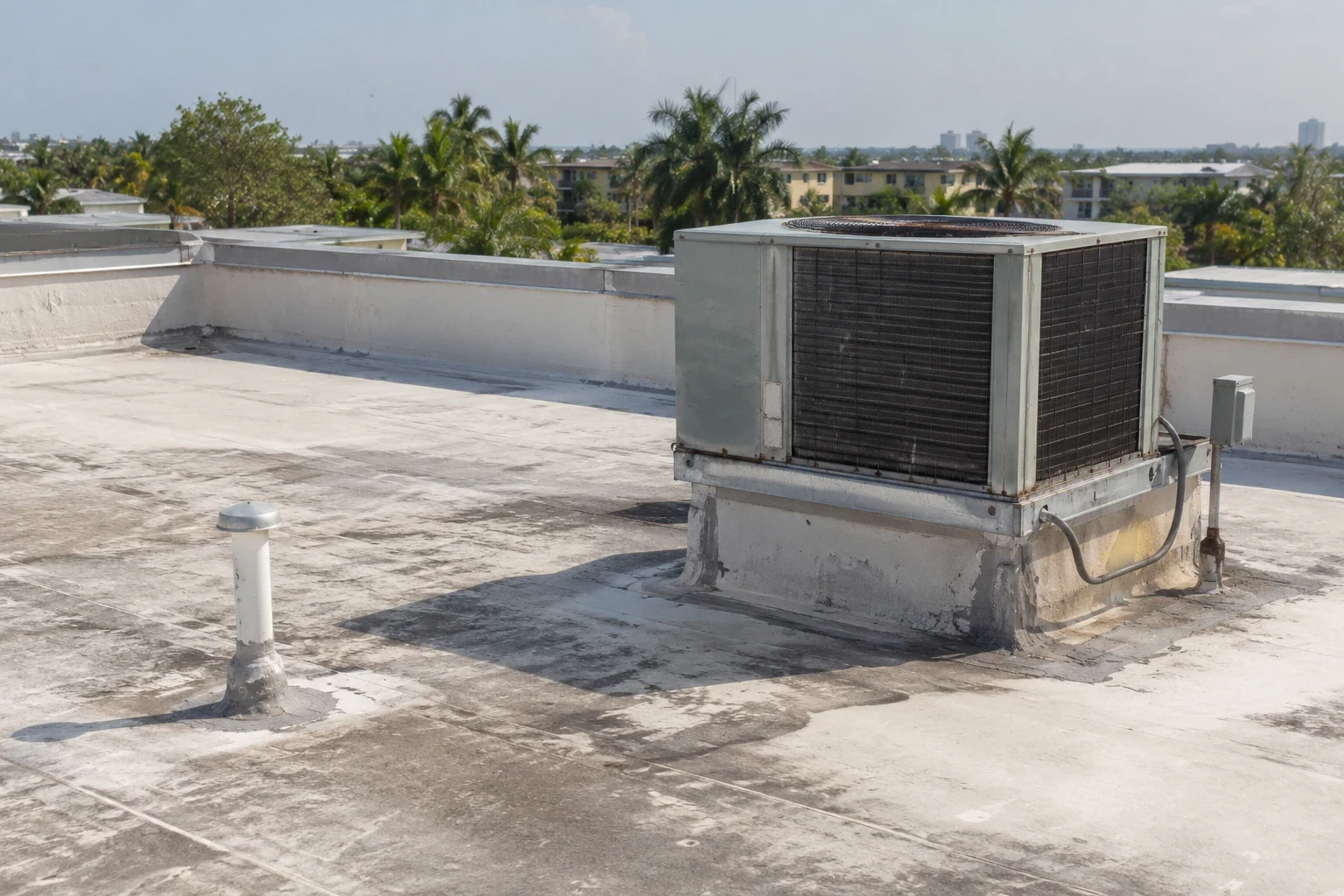
We inspect membrane seams, roof drains, scuppers, gutters, parapet corners, rooftop equipment, skylights, and wall transitions above a reported suite. Restaurant exhaust hoods and make-up air can create flashing details that need cleaning or repair; HVAC service can leave disturbed seams or loose equipment supports. We look for visible damage and record what we can confirm. If an interior stain does not line up with the closest opening, a leak investigation can trace the water path before the scope expands.
For a shopping center, a storm follow-up checks roof drains, exposed edges, and equipment curbs across the areas named in tenant reports. The inspection records the conditions found at the property. We inspect actual fastening, membrane, and drain conditions rather than treat the regional record as evidence that a particular center was damaged. If hail or wind is reported, a storm review records the affected area and separates observed damage from pre-existing wear when the timing is unclear.
Water held around a drain, curb, or low point can wet insulation and affect a neighboring tenant suite. We clear the outlet if that work is included, inspect the flashing, and note any ponding or soft surface. A drainage correction can address a blocked outlet or a slope detail, while a test opening can confirm whether insulation needs replacement.

Scope: Repair Without Losing Tenant Context
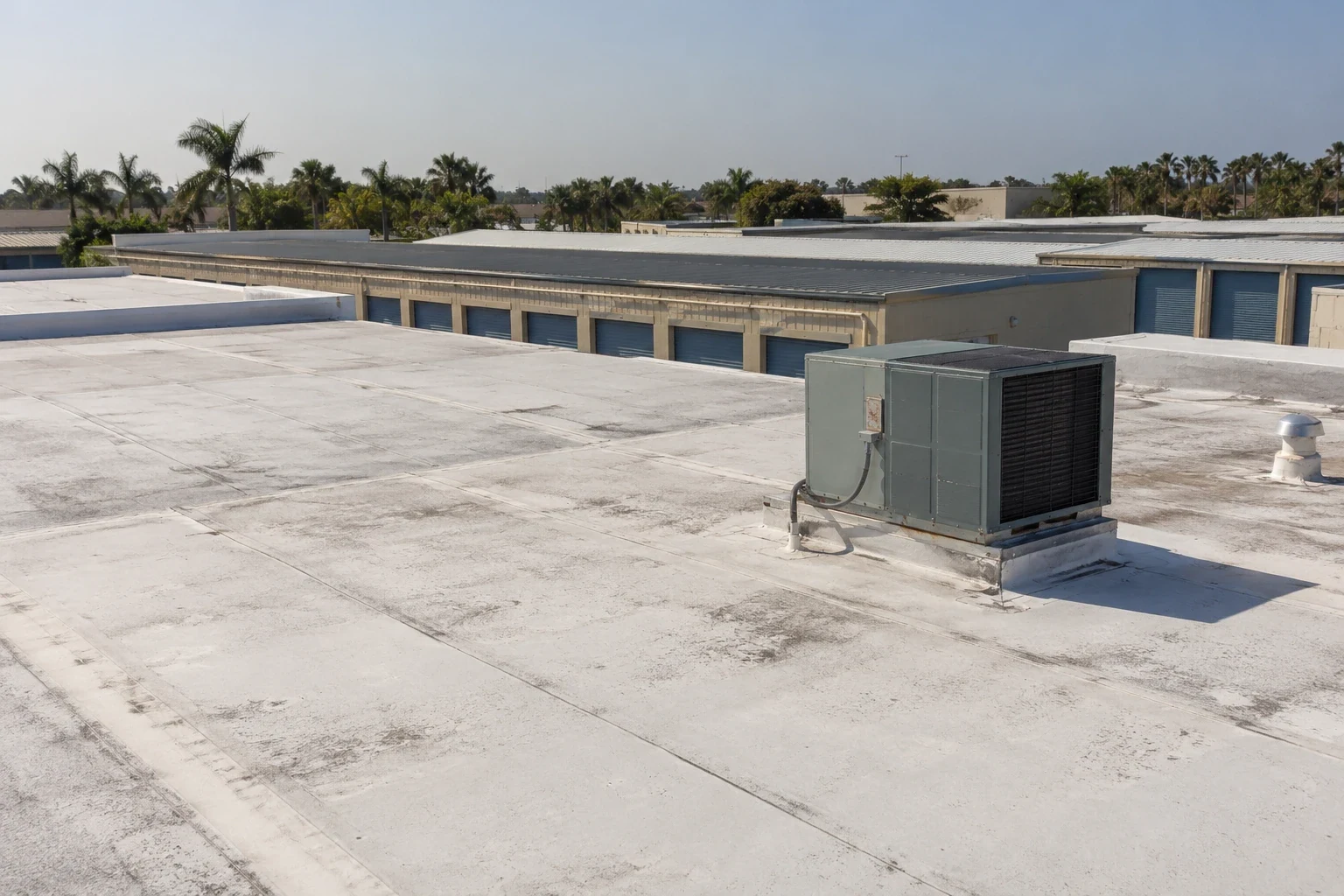
A localized seam or flashing repair may be enough when adjacent material remains sound and dry. We mark the repair boundary, identify the compatible materials, and record nearby details that were inspected but left untouched. If test cuts show wet insulation across several roof sections, the proposal shows confirmed quantities separately from areas still closed. That distinction helps the property manager allocate work by building or tenant area.
Scope and timing depend on the roof system, number of penetrations, equipment access, wet materials, deck condition, delivery space, and tenant restrictions. Cost drivers are stated by material removal, replacement layers, flashing, and protection needs rather than blended into one broad item. A big-box roof plan may involve a different dock and aisle sequence than a restaurant roof repair around exhaust and dining hours. We document those operating differences without assuming a standard roof layout.
If a center has repeated failures or widespread moisture, a recover or replacement may be compared with continued repair. We inspect the existing assembly, check transitions at doors and curbs, and identify which buildings can be phased. A replacement scope should name each included roof area and any separate tenant coordination, so an owner can schedule project phases around leases and seasonal business.
Coordinate: Keep Customers and Deliveries Moving
Before work, we confirm tenant hours, delivery windows, service-lane access, customer entrances, dumpster locations, and any outdoor seating or walkways beneath the roof section. We coordinate lift placement and material staging with the property manager. If a storefront needs interior protection, the tenant receives notice about the timing and access required. Each active area is marked so customers and staff can use other parts of the center safely.
Gainesville's frequent thunderstorms can change the work sequence during the day. We check conditions before opening the roof, keep drains clear, and close the section at a secure stopping point if rain approaches. Work may be phased by building or tenant row. For urgent water entry, emergency response is available at any hour, including weekends and holidays; the first visit stabilizes the opening, then a permanent repair follows after inspection.
For an occupied center, a roof maintenance visit can track drain condition, rooftop service changes, and repairs by tenant area. That record helps the property manager distinguish a new report from an earlier repair and plan work before the next wet period.
Close Out: Tie Photos to the Tenant Area
Closeout lists the building, roof section, tenant area when known, materials installed, drain or edge work, test openings, and remaining issues. Photos show the repair in context so a future service call can be compared with the same roof plan. We note where access was limited and what remains to test. The property manager can keep the record with tenant notices, roof history, and upcoming capital work.
For a Gainesville shopping center roof review, send the property address, suite or common area, roof records, active leak locations, tenant hours, delivery restrictions, site contact, and preferred access window. We will inspect the roof section and prepare a measured scope around the center's operating schedule.
Retail-center roofs often extend across multiple tenant bays, but leak reports and access rights still need to be tied to a specific space. We inspect party-wall transitions, rooftop units, drains, loading zones, and signs of prior repairs, then map observations by tenant and roof section. At Butler Plaza, retail and service activity makes delivery routes and customer entrances important parts of the staging plan. The property contact identifies lease boundaries and each tenant's operating hours before a repair is scheduled. That coordination limits avoidable disruption and keeps a shared-roof issue from being mistaken for a defect in every suite.
Frequently Asked Questions
Can roof repairs be scheduled without closing a tenant suite?
Often, by planning roof access and interior protection around the tenant's hours. We identify the active roof section, noise, staging, and any room that needs temporary access limits before work begins.
How do you locate a leak in one suite of a multi-tenant center?
We use the suite location as a starting point, then inspect the roof above and nearby seams, curbs, drains, and wall transitions. The report distinguishes the visible stain from the roof detail that can be confirmed.
Do restaurant exhaust units need separate roof checks?
Their curbs, flashing, and service history are part of the roof inspection. We note grease, debris, loose transitions, or vendor changes where present and include only the repair that the roof condition supports.
Can you repair just one building in a larger retail center?
Yes. We mark the included building and roof area, then record adjacent sections that were not part of the work. This keeps the repair history useful across a larger property.
Related Roofing Work
Arrange a Gainesville Shopping Center Roof Review
Share the address, tenant or common area, roof history, active leak locations, tenant hours, delivery restrictions, site contact, and access window. We will coordinate the inspection and document the repair boundary.