Duro-Last Commercial Roofing in Gainesville, FL
Inspect Duro-Last PVC roofs in Gainesville and plan repairs around custom-fabricated sheets, transitions, drainage and the building's verified roof condition.
Roofing Manufacturers: Duro-Last Commercial Roofing
A Duro-Last roof may include custom-fabricated membrane panels and accessories, so a repair needs to meet the installed sheet and its field details. We verify the membrane, seams, curbs, drains and edge conditions before defining the work. Duro-Last's commercial system uses PVC with factory-fabricated membrane sheets and related accessories. In Gainesville, FL, prolonged heat and heavy rainfall make exposed seams and water outlets practical inspection points. A facility near the Gainesville Technology Entrepreneurship Center and a medical building on Archer Road each need a roof-specific survey and access plan.
Identify: Locate the Fabricated Sheets and Accessories
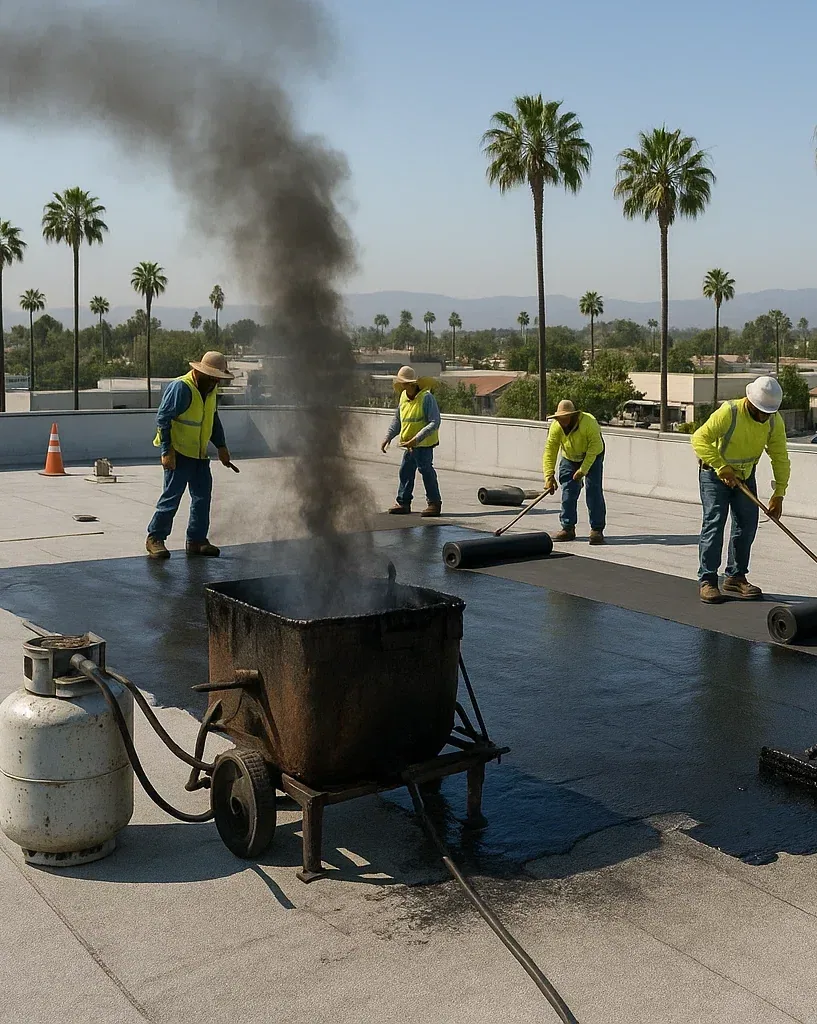
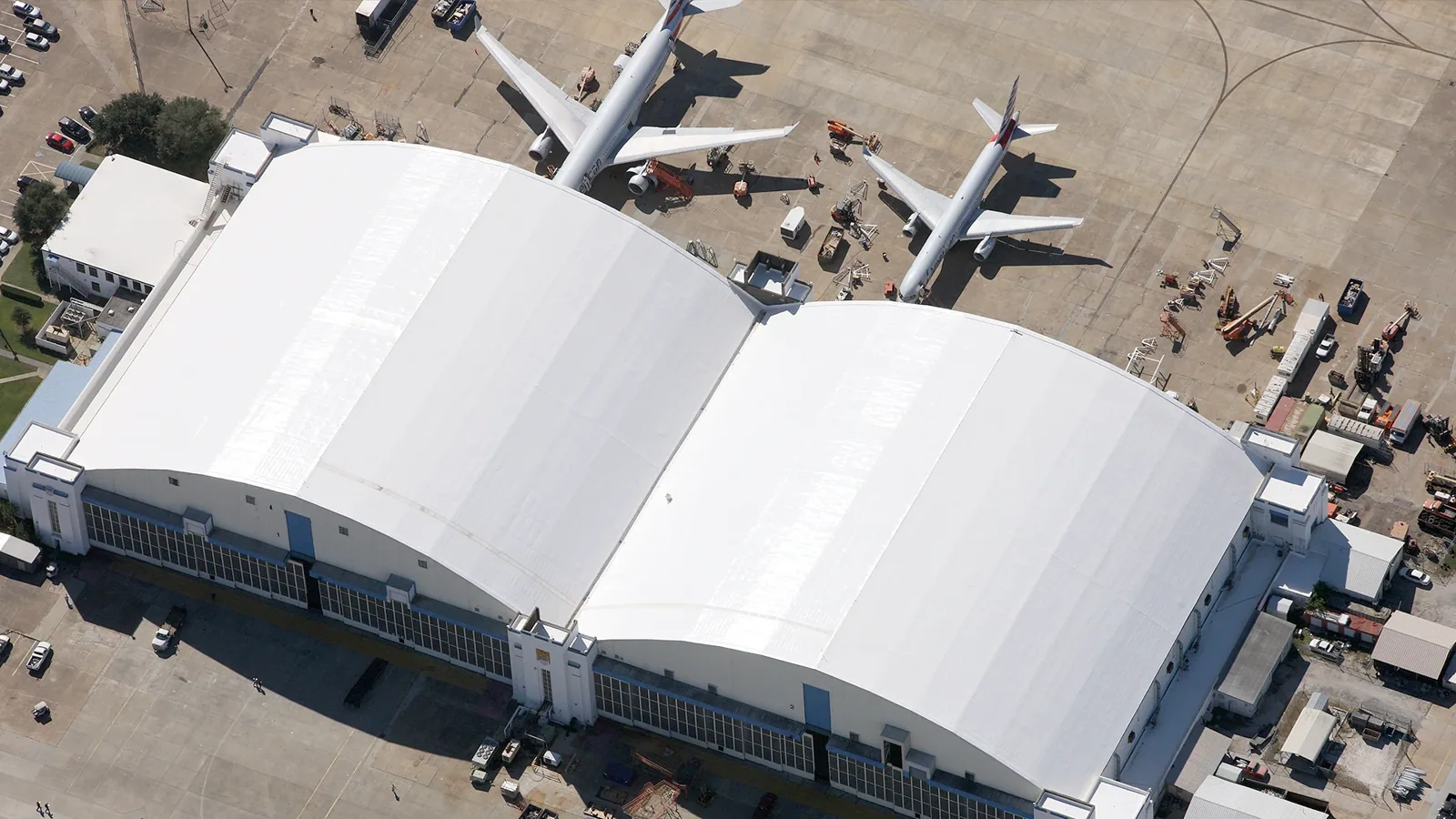
We review the owner’s roof plan, product documents, closeout materials and any repair history, then compare those records with the visible membrane layout. Custom-fabricated panels can reduce field seam work, but the roof still has joints, penetrations, perimeter flashings and changes in plane that need inspection. We identify the sheets and detail materials we can verify, then note areas where a patch or later project changed the original arrangement. A product record is useful when it is tied to the correct section and installation.
GTEC is a technology and light-manufacturing center in east Gainesville, while the VA and UF Health facilities sit across Archer Road. At each address, we confirm the installed system and coordinate roof access with the building contact. A GTEC-area roof visit or medical district inspection starts by confirming the address, roof access and interior areas below the work.
Inspect: Check the Field, Seams and Penetrations
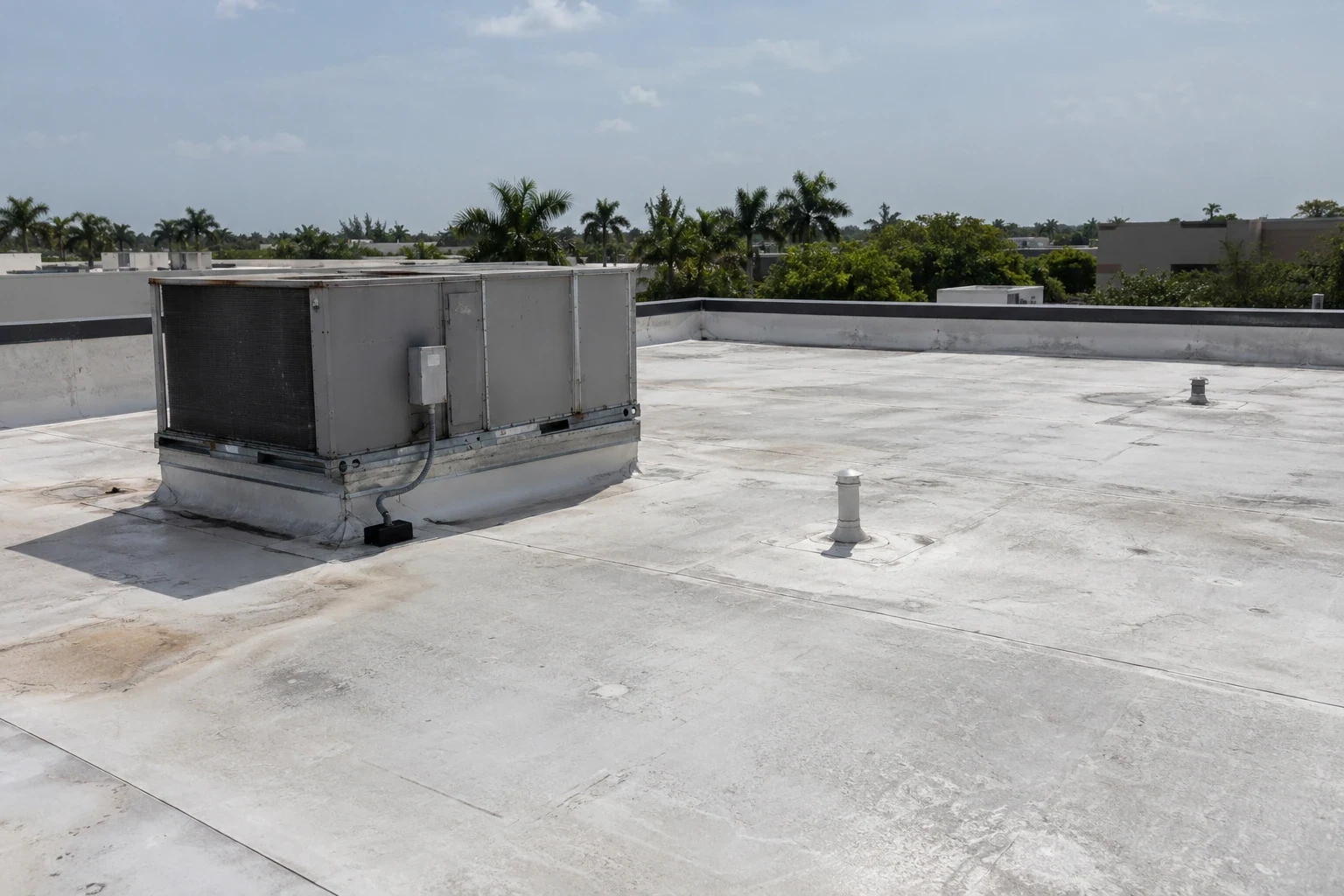
We examine sheet seams, flashing at curbs and pipes, edge terminations, drains and previous patches. Factory-fabricated details do not remove the need to check how the roof meets walls, equipment and drainage outlets. We look for lifted edges, open welds, surface cuts, movement and debris that could affect water flow. Photos show both the specific condition and the surrounding field, so the owner can see whether an issue is isolated or connects to another detail.
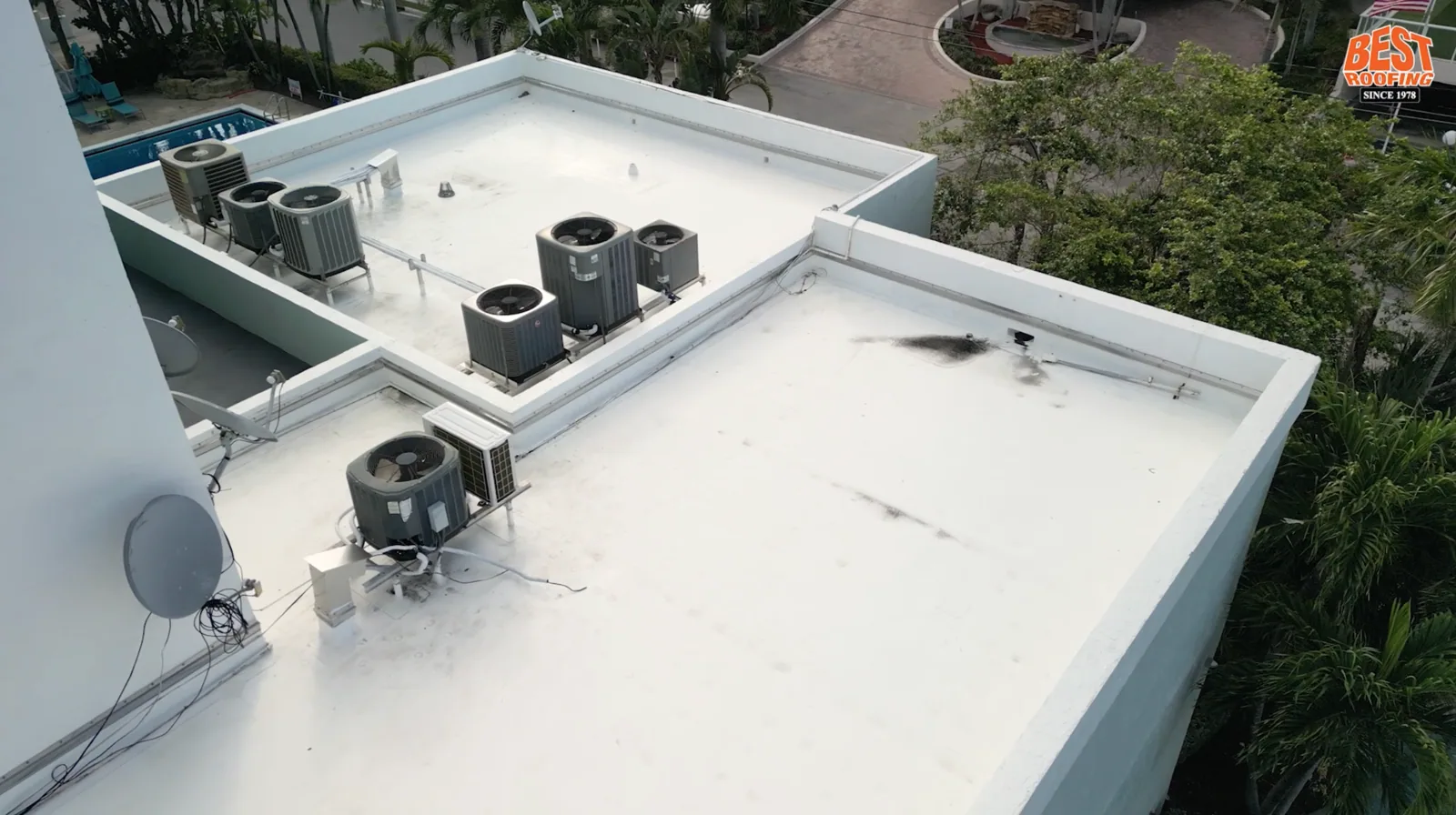
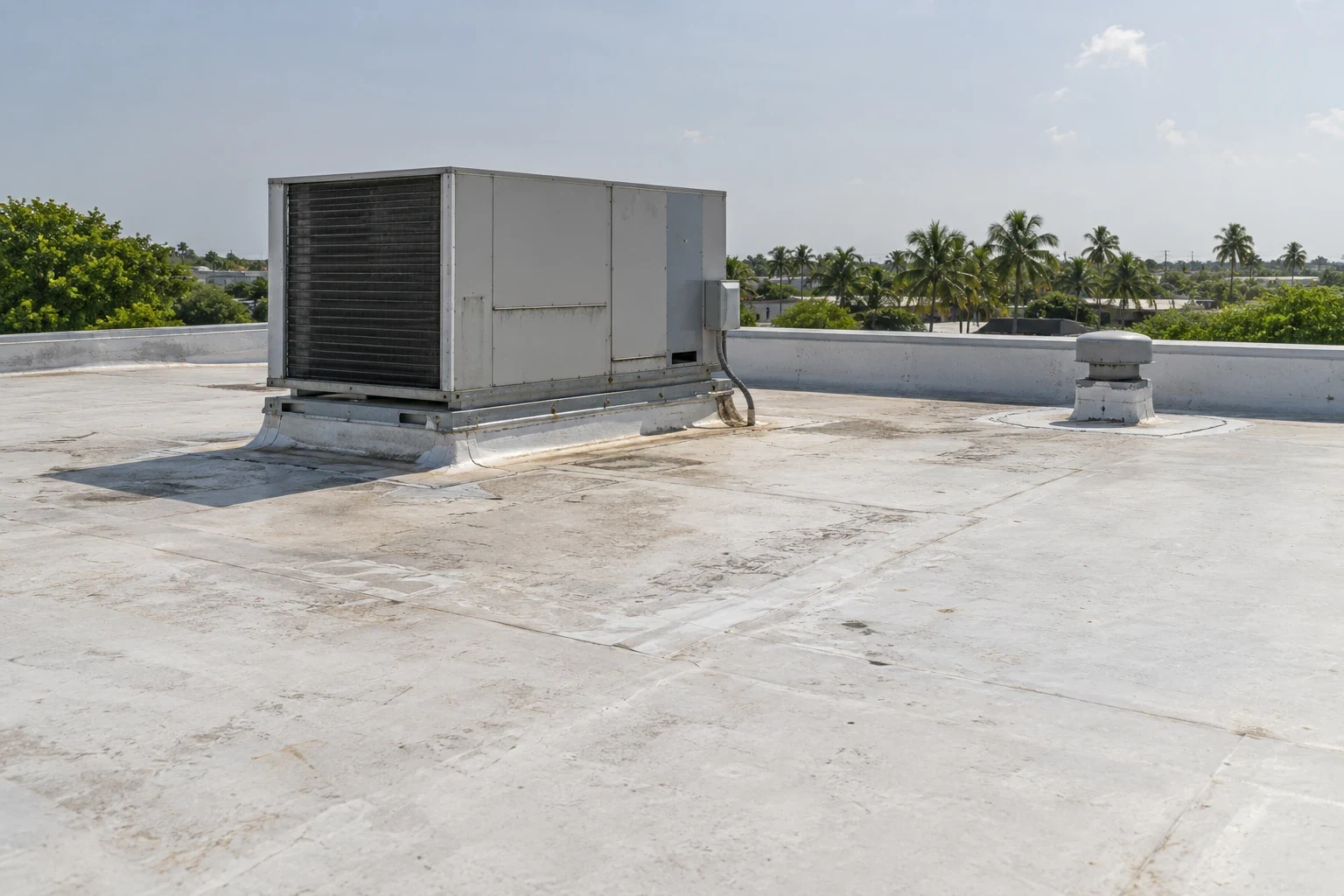
At a roof edge, we check how the membrane terminates against metal, parapet walls and coping. Around equipment, we inspect curb corners and field seams where movement or service traffic may have disturbed a weld. A drain area receives a wider look for debris, standing water and cuts made during prior service. These separate observations help show whether the condition is a single repair or part of a broader detail issue.
The 2022 Gainesville tally included 104 days with thunderstorms and 82 days with heavy rain. After a storm, we can inspect for debris impacts, new water reports and displaced details, then compare those observations with prior photos. A weather event alone does not establish roof damage. If water collects at a low point, a drainage service review can determine whether the outlet or surrounding slope needs attention. Where a surface puncture is visible, a membrane repair assessment can document the opening and confirm its limits.
Compare: Repair the PVC System on Its Own Terms
A small cut or failed seam can be repaired when the surrounding PVC remains sound and the patch can be welded to a prepared surface. We confirm the membrane and accessory type before choosing material, and we measure wet insulation or deck repair separately if a test opening finds concealed damage. Repeated failures, extensive wet material or widespread edge concerns may call for broader work. The scope explains what will be removed, how new sheet ties in and which nearby items remain outside the repair.
Cost and schedule are affected by sheet dimensions, access, edge conditions, penetrations, substrate repair and the amount of interior protection needed. If the roof has several custom-shaped panels or many transitions, we document the tie-in sequence and identify where field welding remains. The estimate should account for both the membrane work and the details that return the roof to a complete assembly.
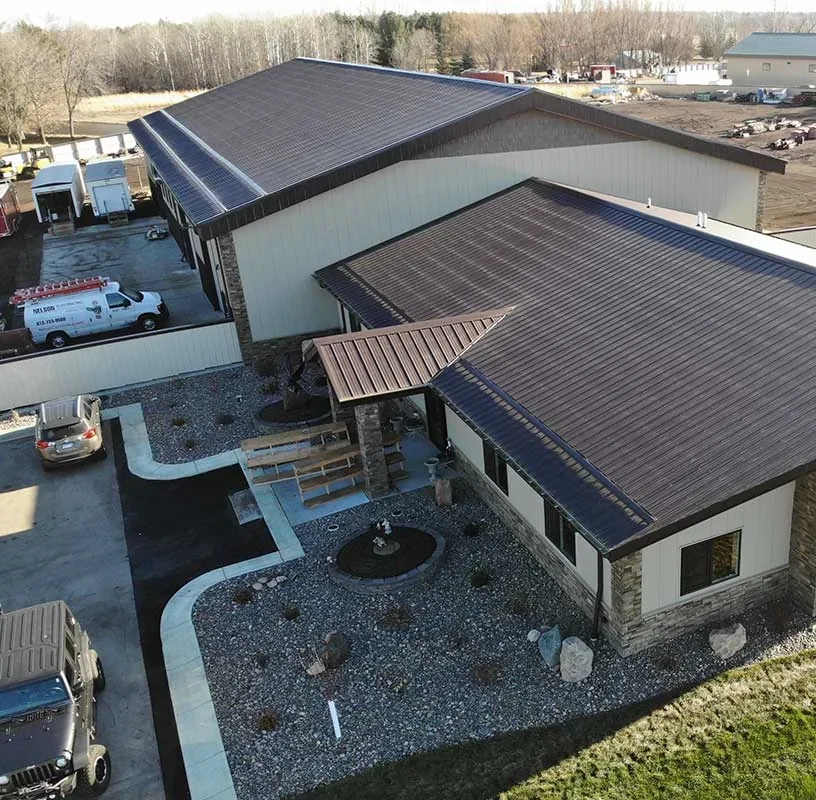
For a proposed recover, we inspect attachment, the number and condition of existing layers, drainage and any moisture concerns. The owner can compare a new PVC sheet with another assembly only after the roof criteria are known. A PVC roof-system review can document the material and detailing, while a metal roof retrofit assessment addresses a different substrate and scope. A Carlisle SynTec system or GAF commercial assembly can be considered as alternatives where project requirements allow.
Coordinate: Prepare the Roof and Interior
The building contact identifies the access window, loading routes, equipment restrictions, occupied areas and interior protection needed below a repair. We plan where membrane and accessories will be staged, keep paths to drains open and coordinate any lift or material movement. If a roof section must be opened, we protect it while work proceeds and close it to a watertight stopping point. Rain, lightning or unsafe surface temperatures can move the schedule, so the contact receives an update if conditions change.
For active water entry, our emergency roof response is available at any hour, weekends and holidays included. We record the temporary cover and return to inspect adjacent material before the permanent scope is set. A maintenance visit can check repaired seams, drains and edges at a later interval. The service record is kept separate from the original installation documents so the owner can follow each change to the roof.
Custom-fabricated sheets and accessories can reduce some field seams, but the finished system still depends on accurate roof dimensions and sound transitions. Before repair or replacement, we compare the installed layout with curbs, penetrations, drains, corners and perimeter conditions. A later equipment change or patch may have altered the original arrangement, so current measurements and visible details matter. We identify which prefabricated section or accessory is involved, how the repair ties into the existing PVC, and whether the surrounding membrane is sound. For Gainesville facilities with occupied areas below, the work sequence also identifies the active roof section and protects it if weather interrupts installation.
Close Out: Carry the Duro-Last Detail Forward
At closeout, we identify the Duro-Last membrane and section repaired, preparation, seam or flashing work, accessories installed and photos. We record whether the repair was tested and whether any nearby detail remains open. If an owner needs to discuss product instructions, the file includes the observed condition and repair scope to support that review. Warranty applicability follows the owner's product documents and the observed roof condition.
For a Gainesville Duro-Last roof review, provide the address, building use, roof plans, product documents, leak locations, service history, site contact and access window. We will inspect accessible sections, confirm the visible assembly and return a measured scope tied to field evidence. The report can be stored with the roof records and used to plan follow-up maintenance. We also identify who should receive future leak reports for the repaired section.
Frequently Asked Questions
Are Duro-Last roof panels custom made?
Duro-Last uses custom-fabricated PVC sheets and accessories. We still inspect the installed layout because field changes and later repairs can affect where new material should tie in.
Can a Duro-Last roof be patched with another PVC product?
The membrane and repair materials need to be compatible, and the surface must be prepared for a sound weld. We identify the existing product and detail before specifying the patch.
Do factory seams mean the roof has no field seams?
No. The installed roof can still have field joints, accessory connections, curbs, penetrations and perimeter transitions. We inspect those locations as part of the system.
What records help with a Duro-Last repair?
Product documentation, roof plans, closeout details, prior repairs, leak locations and access contacts help us match the system to the building. We identify any missing information that affects the repair boundary.
Related Roofing Work
Schedule a Gainesville Duro-Last Roof Inspection
Send the address, building use, roof plans, Duro-Last product papers, active leaks, site contact and access window. We will inspect the PVC assembly and document compatible next steps.