
Hurricane Damage Roof Repair in Gainesville, FL
Inspect Gainesville commercial roofs after tropical storms for edge movement, debris impact, water entry and concealed moisture, then scope measured repairs.
Roof Damage Repair: Hurricane Damage Roof Repair
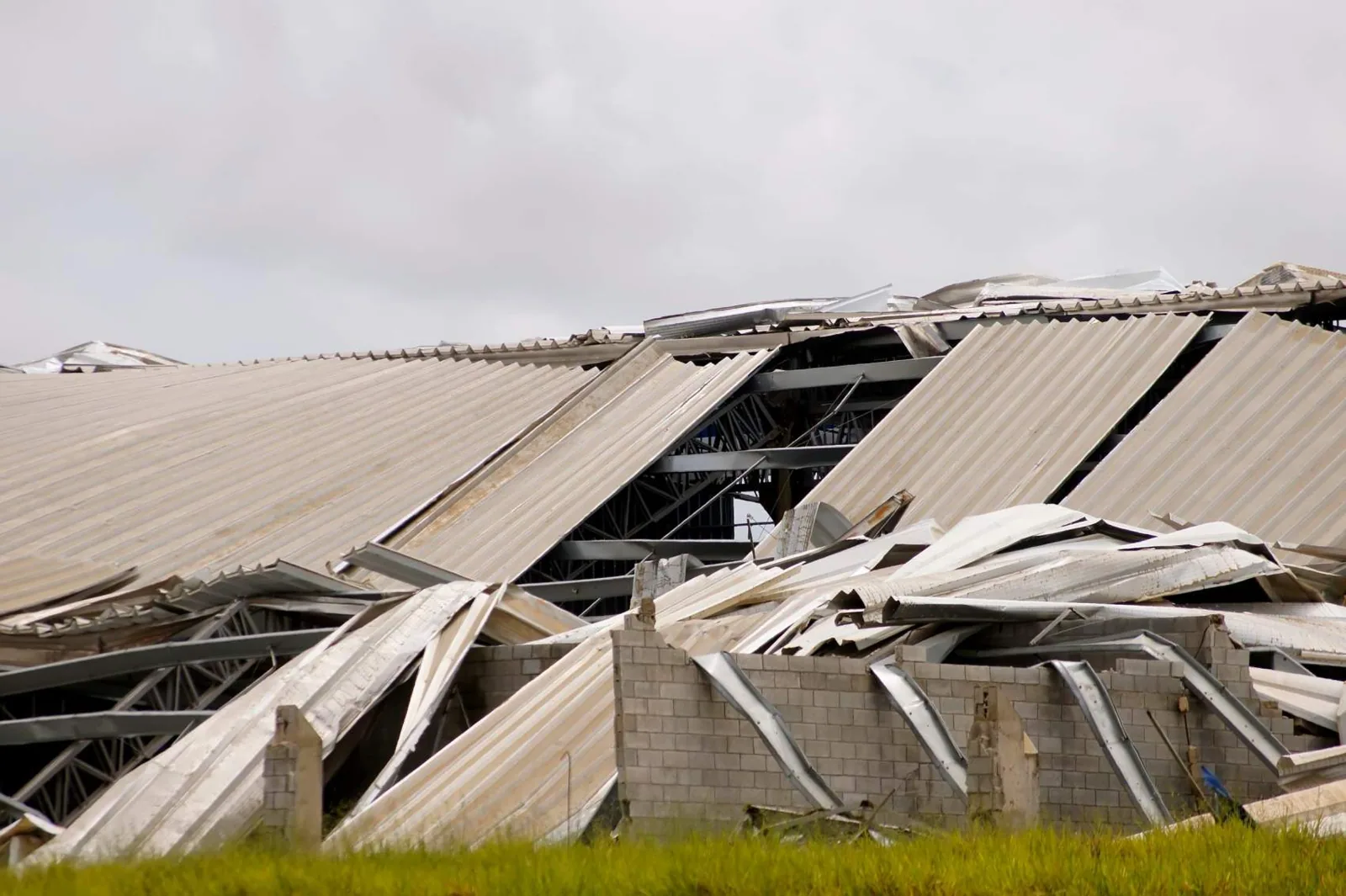
After a tropical storm, the building may be dry at the entrance while water has entered at a roof edge or equipment curb. We check the roof system, perimeter, drainage, and interior reports, then document which conditions are visible. Gainesville, FL, is inland, but tropical weather still brings wind and heavy rain to Alachua County. The inspection identifies actual damage at the property and separates it from older wear or conditions that need testing.
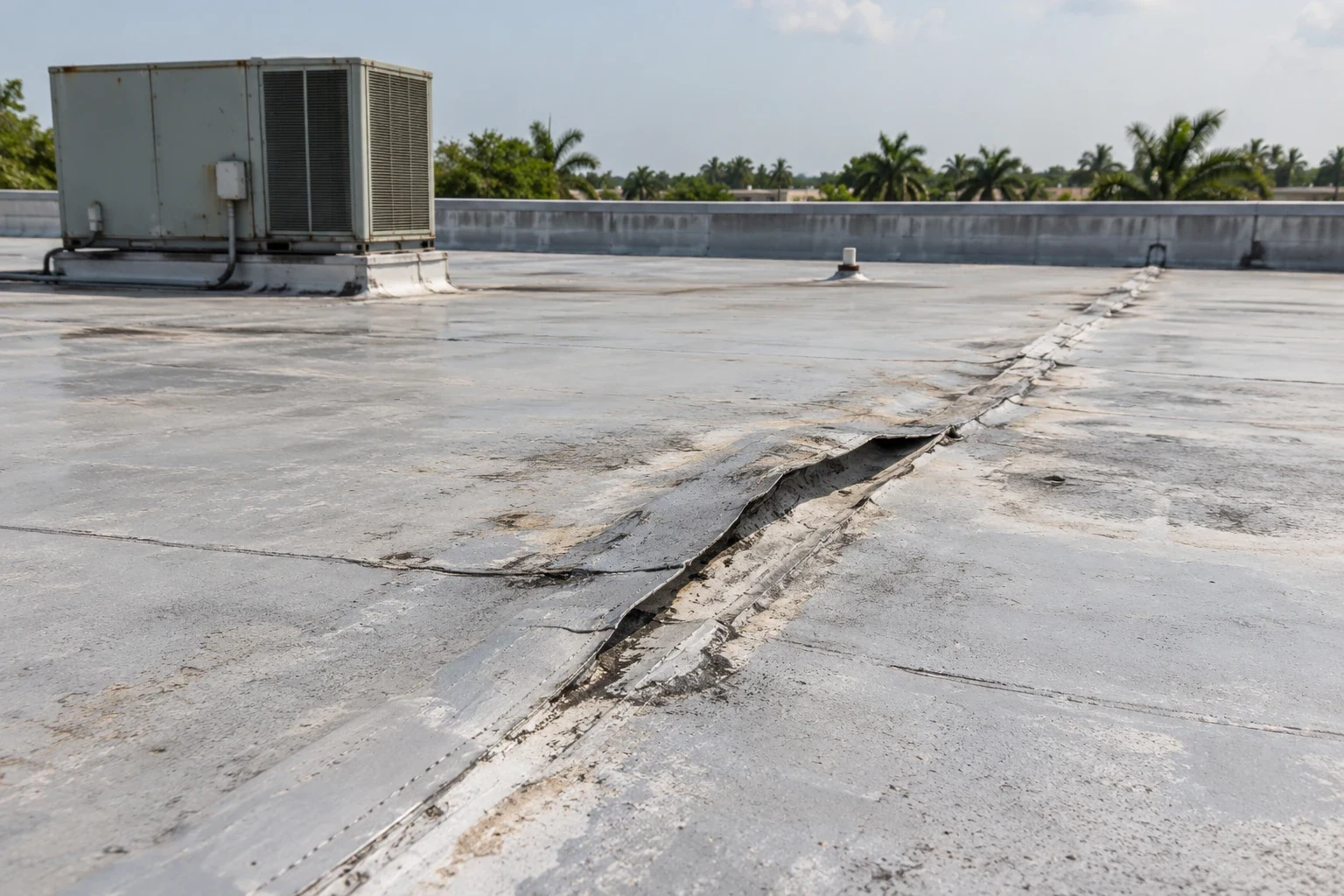
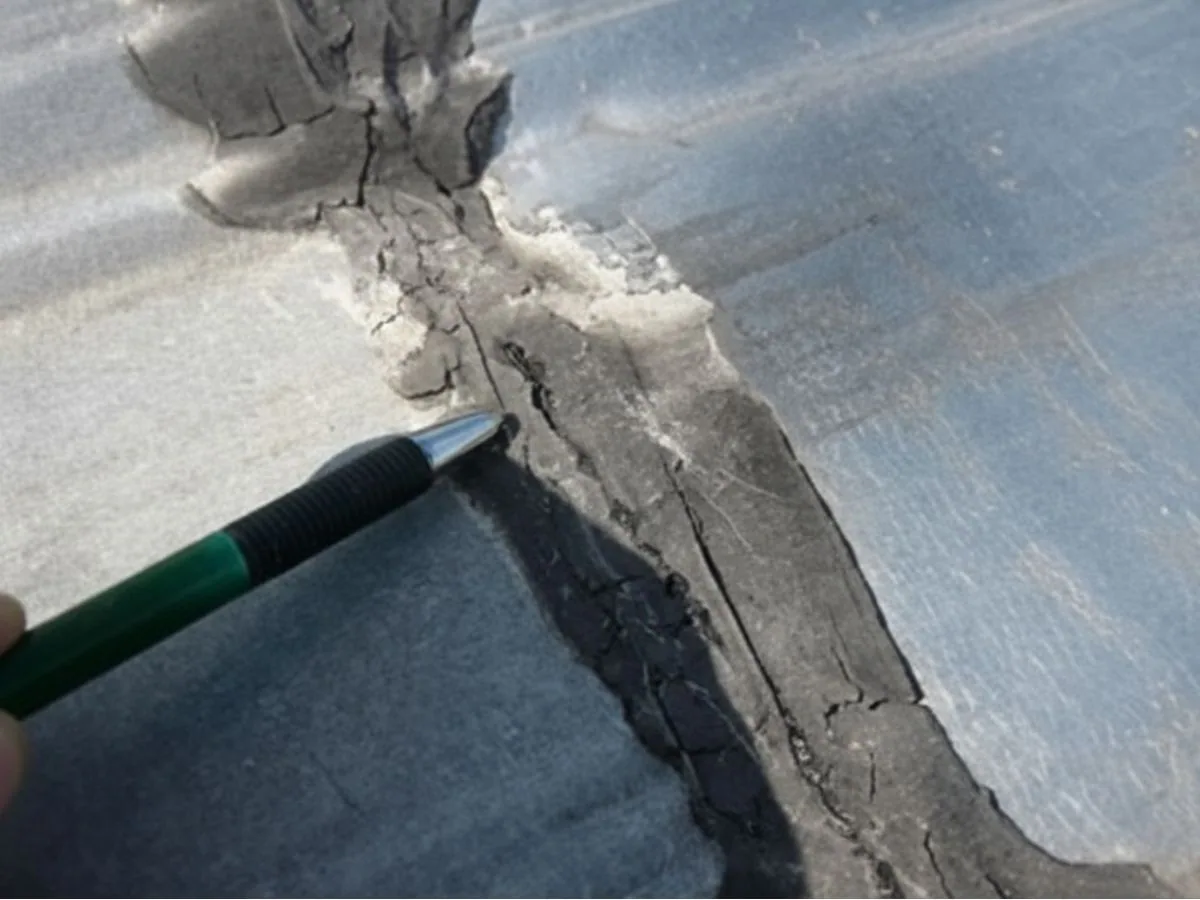
Check the Perimeter and Roof-Mounted Details
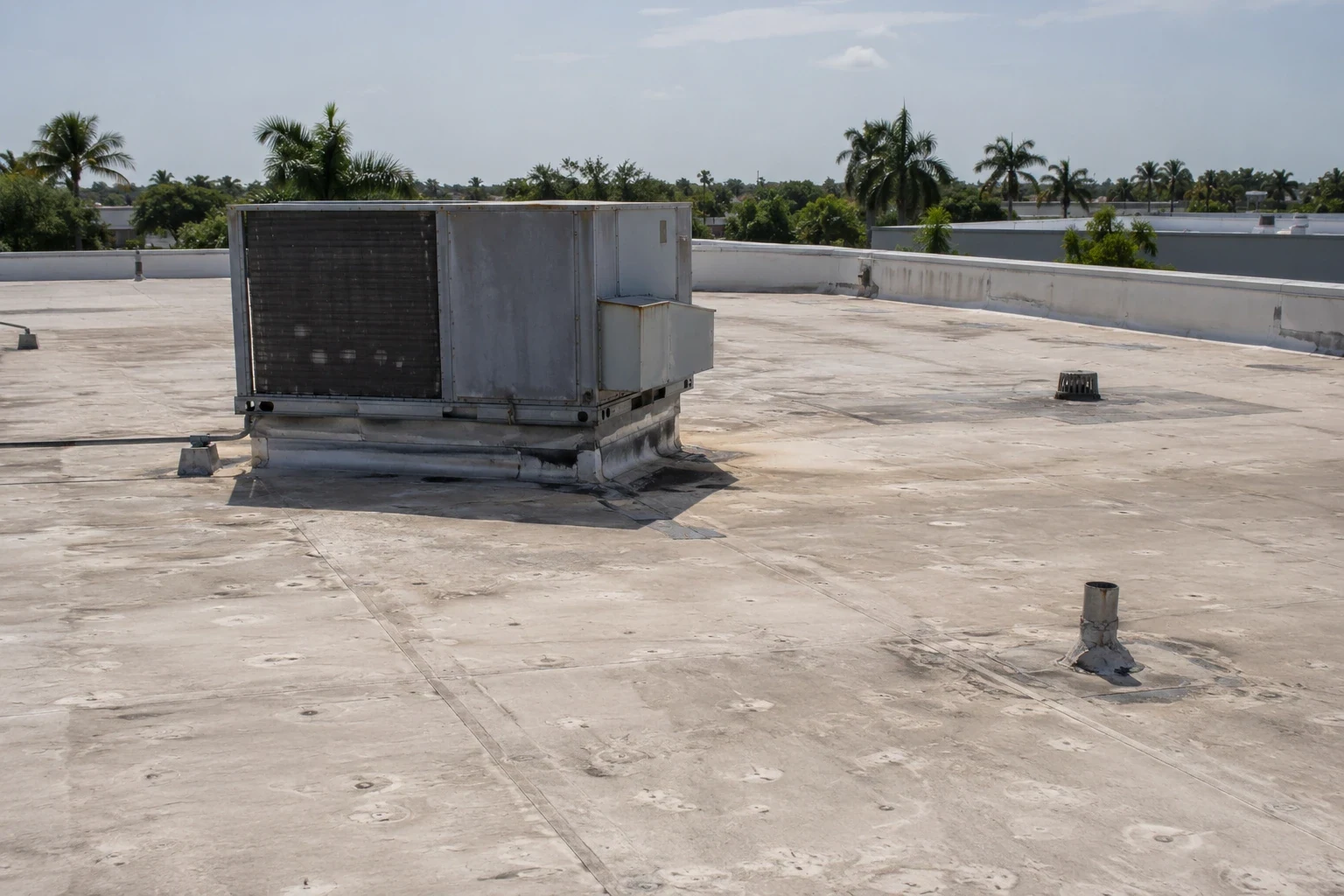
We inspect parapets, coping, edge metal, membrane attachment, metal fasteners, seams, vents, skylights, and equipment supports. Wind can lift a weak termination, while debris can puncture a membrane or damage a panel. We also check drains and scuppers for leaves and other material that may remain after the storm. Photos on a roof plan identify the location, type of condition, and whether the section could be accessed safely.
Hurricane Idalia brought tropical-cyclone winds to Alachua County on August 30, 2023. The Gainesville Regional Airport station logged a 40 mph gust, nearby stations reached 45 to 51 mph, and local reports tallied more than 30 fallen trees and power outages. A Gainesville Regional Airport area roof check begins with the property's records and current field condition.
The airport planning footprint is about 2,000 acres. Of that, 1,715 acres are allocated to aeronautical uses and 285 acres to Airport Industrial Park, reached through Waldo Road and NE 39th Avenue. Waldo Road and NE 39th Avenue provide access to the airport and Airport Industrial Park. The airport and industrial park have site-specific entry and staging rules; the property contact confirms requirements for the building in scope. A Airport Industrial Park inspection still documents an individual roof, not the airport complex as a whole.
Compare the Roof With Existing Records
Dated maintenance photos, prior repair notes, and pre-storm inspections can help show whether a condition appeared after the event. We compare them with current fastener positions, flashing, seam edges, and interior leak reports. If the evidence does not establish when a defect began, the report says so. This is especially important where the roof already had an open lap or patch before the storm.
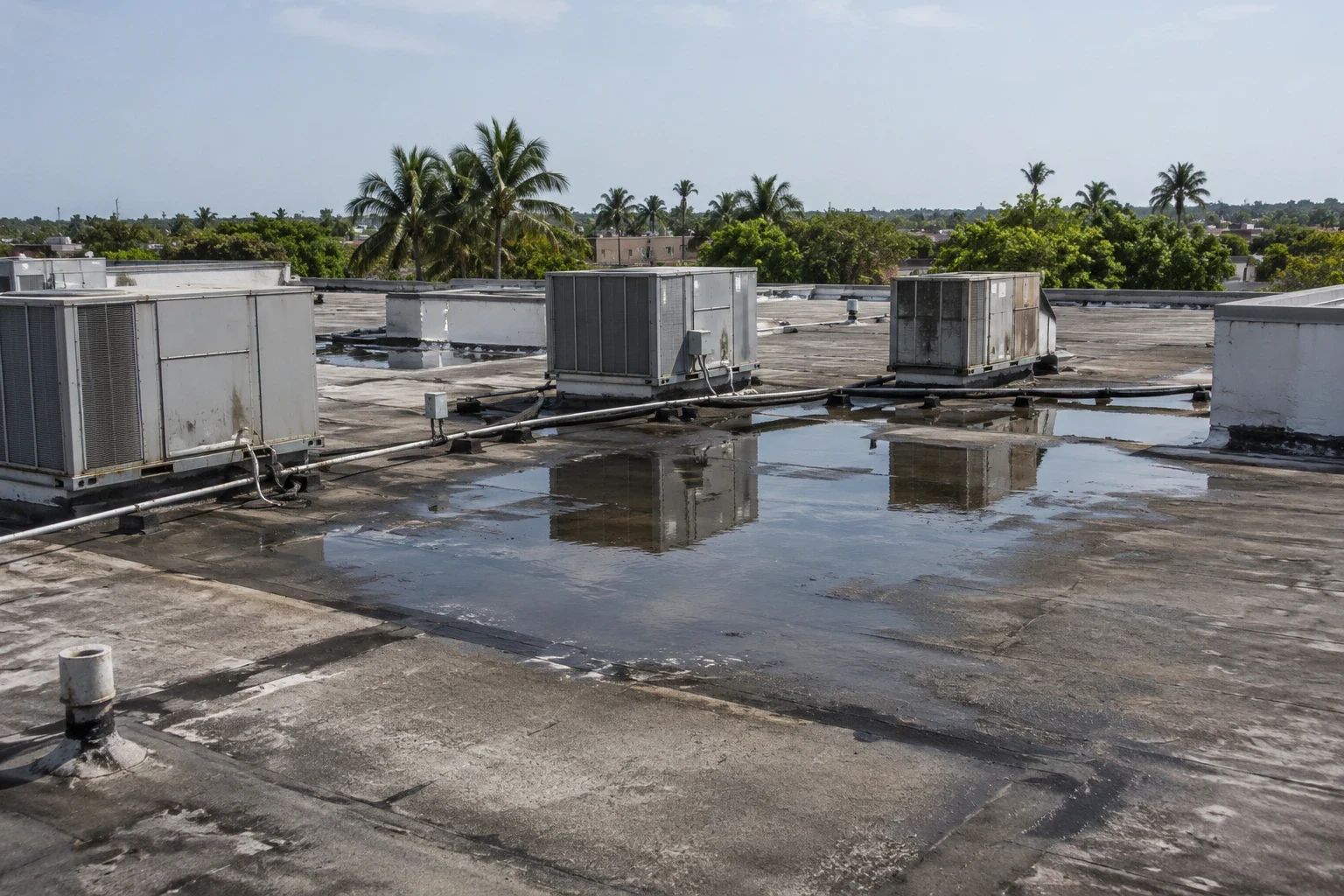
Storm damage may combine with rainwater that travels under the surface. We inspect the likely entry point and test insulation or deck where needed. A moisture survey can guide sample locations; a ponding-water evaluation can document blocked outlets or low areas separately from wind movement. Each finding receives its own photo and repair quantity.
The December 2019 tornado near Paynes Prairie was in Alachua County. April 1997 hail measured 0.75 inch in Gainesville and one inch at a site five miles east of Archer. Tornado and hail impacts leave different evidence, so a tornado damage review or hail inspection maps the affected roof sections and details.
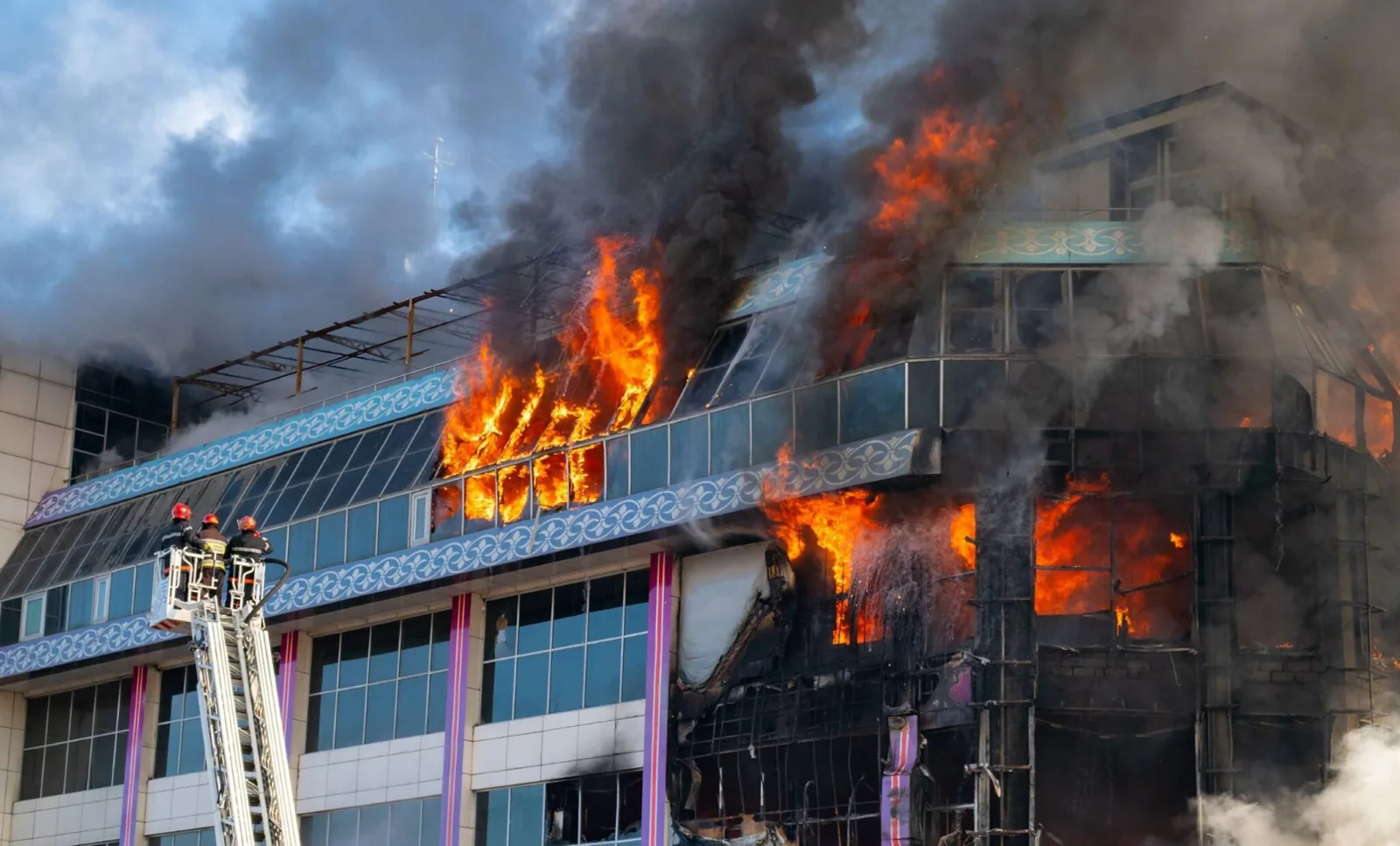
Secure Openings Before Another Rain Band
For an unprotected roof opening, we can schedule stabilization at night or during weekend and holiday hours when safe access is available. We coordinate safe access with the property contact, protect interior areas as directed, and stabilize the opening when conditions allow. The record lists the temporary materials, covered area, and date. A temporary dry-in limits exposure but does not confirm the full extent of wet insulation or deck damage.
Gainesville's 2025 precipitation measurement reached 46.80 inches, with a 3.06-inch maximum over a 24-hour period. Later bands can add water quickly to a damaged section, so we keep drains available and plan a secure stopping point before leaving. If rain prevents permanent work, the site contact receives a clear status: which roof section is covered, what is still exposed, and when inspection can resume.
For occupied properties, the manager identifies tenant areas, customer routes, and equipment below the active roof section. We coordinate lift placement and delivery routes before material arrives. If multiple buildings are involved, every notice and photo set identifies the address and section so teams do not confuse one property's temporary protection with another's repair.
Set Repair Limits From Field Evidence
A localized repair may restore a displaced edge, torn membrane, broken flashing, or puncture when the surrounding assembly remains serviceable. If testing finds widespread wet insulation, deck damage, or loose attachment across several sections, the work may need replacement. We identify what a test opening showed and measure the boundary of removed material. That record allows the owner and claim contacts to review a specific repair rather than an unbounded allowance.
A coating or recover is considered only when the existing assembly and surface meet system requirements. Hurricane exposure does not by itself dictate a full replacement. A wind damage repair can address a localized edge or seam, while a flashing assessment covers damaged curb or wall transitions. A storm response scope can organize inspection and repair documentation for the event.
Roof work requiring a Gainesville permit follows the city's 2023 Florida Building Code, 8th Edition, for applications received beginning December 31, 2023. The design team confirms the provisions for the proposed repair or replacement assembly. Timing and cost depend on the roof system, wet materials, access, material lead times, tenant protection, and weather windows. For buildings with several roof elevations, the proposal lists each elevation separately. If a test opening or material delivery changes the sequence, the owner can identify the affected elevation and the areas that can remain in operation.
A post-storm response benefits from separating roofs by building and function. An occupied clinic, warehouse and office may require different access windows, interior protection and work sequencing even when the weather affected them on the same day. We identify which sections have active water entry, which need temporary protection and which can wait for a complete inspection. Roof-edge conditions are compared with field seams and penetrations because the entry point may be some distance from the reported ceiling stain. Where a membrane or insulation sample is needed, we identify the test location and restore the opening before leaving the area exposed. A phased scope can help the property contact coordinate tenant notices, equipment access and follow-up after another rain band. Each phase should state its limits and remaining items so a temporary dry-in is not mistaken for permanent repair.
Provide a Post-Storm Roof Record
Closeout notes identify the building, reported event, roof section, condition before work, materials used, temporary measures, and completed repair. Photos show each repaired edge or penetration and any remaining concern. We state whether testing confirmed wet insulation or whether a section could not be reached. This gives facilities staff a record to compare against later maintenance and prevents unrelated conditions from being blended into the event file.
For a Gainesville hurricane-damage review, provide the address, storm date, roof plans, maintenance records, interior leak reports, access instructions, site contact, and preferred window. We will document the current condition and prepare a measured repair scope with confirmed findings and open tests identified.
Frequently Asked Questions
Does Idalia's airport gust prove damage to my building?
No. The weather summary describes measurements at named stations. We inspect your roof and document any current displacement, puncture, water entry, or other condition at that address.
Can you tell which roof issues appeared after a hurricane?
Dated photos and repair records can support that comparison. If the available evidence does not establish timing, we describe the condition without assigning it to the event.
How soon should a roof be checked after a tropical storm?
Arrange access once conditions are safe and the site representative authorizes it. Prompt inspection can identify openings and water paths before another rain event adds exposure.
Will a hurricane inspection include the interior?
We use the site's leak reports and authorized access to check affected interior areas. The roof inspection maps those reports to the assembly and documents limits if rooms are unavailable.
Related Roofing Work
Schedule a Gainesville Hurricane Roof Inspection
Send the property address, storm date, roof and maintenance records, interior leak reports, access rules, and site contact. We will inspect the roof and prepare a measured repair plan tied to observed conditions.